Choose an Insurance Quote
Compare the Best Mortgage Rates in Edmonton, Alberta
Compare current fixed and variable mortgage rates from multiple lenders to find a competitive rate for your Edmonton home.
Today's Best Mortgage Rates in Edmonton, Alberta
Evaluate Edmonton’s best mortgage rates in one place. You can compare the most current mortgage rates and monthly payments from 175+ banks and lenders across Alberta.

Rates are based on an average mortgage of $500,000 and subject to change based on filter criteria.
Lender  | Insured | Insurable | Uninsured |
|---|---|---|---|
 Mortgageline Inc. | 3.45%  $2,483.17 / month | 3.65% $2,536.10 / month | 3.45% $2,483.17 / month |
 MMG Mortgages | 3.55% $2,509.57 / month | 3.60% $2,522.81 / month | 3.55% $2,509.57 / month |
 Verico MortgagePal Inc. | 3.55% $2,509.57 / month | 3.60% $2,522.81 / month | 3.55% $2,509.57 / month |
ATB Financials | 3.65% $2,536.10 / month | 3.65% $2,536.10 / month | 3.65% $2,536.10 / month |
 City Wide Financial Corp | 3.84% $2,586.91 / month | 3.84% $2,586.91 / month | 3.84% $2,586.91 / month |
 Dominion Lending Centres | 3.9% $2,603.07 / month | 3.9% $2,603.07 / month | 3.9% $2,603.07 / month |
 Alterna Savings | 3.94% $2,613.86 / month | 3.94% $2,613.86 / month | 3.94% $2,613.86 / month |
 Mortgage Centre | 3.94% $2,613.86 / month | 3.94% $2,613.86 / month | 3.94% $2,613.86 / month |
 First Foundation | 4.09% $2,654.55 / month | 4.09% $2,654.55 / month | 4.09% $2,654.55 / month |
 Laurentian Bank Canada | 4.09% $2,654.55 / month | 4.09% $2,654.55 / month | 4.09% $2,654.55 / month |
 CIBC | 4.19% $2,681.85 / month | 4.19% $2,681.85 / month | 4.19% $2,681.85 / month |
 DLC Brokers for Life | 4.19% $2,681.85 / month | 4.19% $2,681.85 / month | 4.19% $2,681.85 / month |
 Mortgage Alliance | 4.19% $2,681.85 / month | 4.19% $2,681.85 / month | 4.19% $2,681.85 / month |
 First National Financial | 4.3% $2,712.04 / month | 4.3% $2,712.04 / month | 4.3% $2,712.04 / month |
 connectFirst | 4.44% $2,750.71 / month | 4.44% $2,750.71 / month | 4.44% $2,750.71 / month |
 Canada Mortgage Direct | 5.24% $2,976.71 / month | 5.24% $2,976.71 / month | 5.24% $2,976.71 / month |
 CMLS | 6.99% $3,498.99 / month | 6.99% $3,498.99 / month | 6.99% $3,498.99 / month |
 Nesto | 3.5% $2,496.35 / month | 3.5% $2,496.35 / month | 3.5% $2,496.35 / month |
 Royal Bank of Canada | 4.45% $2,753.48 / month | 4.45% $2,753.48 / month | 4.45% $2,753.48 / month |
 Servus Credit Union | 6.094% $3,227.02 / month | 6.094% $3,227.02 / month | 6.094% $3,227.02 / month |
 Motusbank | 6.69% $3,406.91 / month | 6.69% $3,406.91 / month | 6.69% $3,406.91 / month |

Written By Joel Kranc
Freelance writer
How much down payment do you need to buy a home in Edmonton?
For a $470,000 home in Edmonton, the minimum down payment would be $23,500. This example is close to the Greater Edmonton Area's average residential selling price of $469,602 in August 2026, which includes Edmonton and surrounding communities.
Under Canadian minimum down payment requirements, a home priced at $500,000 or less requires at least 5% down. For homes above $500,000 and below $1.5 million, you'll need 5% on the first $500,000 and 10% on the rest. Homes costing $1.5 million or more require at least 20%.
Minimum down payment calculation: $470,000 × 5% = $23,500.
Here's how three down payment options would affect your mortgage on a $470,000 home.
Down payment options on a $470,000 Edmonton home
| Down payment option | Down payment amount | Mortgage amount* | Mortgage default insurance |
|---|---|---|---|
| Minimum required (5%) | $23,500 | $446,500 | Typically required |
| 10% | $47,000 | $423,000 | Typically required |
| 20% | $94,000 | $376,000 | Typically not required |
*Mortgage amounts shown before any mortgage default insurance premium is added.
Choosing 20% down instead of the minimum means putting another $70,500 upfront. Your mortgage would fall from $446,500 to $376,000, before insurance.
If you put down less than 20%, you'll typically need mortgage default insurance. This protects your lender if you can't repay the loan. You can usually add the premium to your mortgage, although that means paying interest on it.
When deciding how much to put down, leave room in your savings for closing costs, moving expenses and any work your new home needs.
Read more: How much down payment do I need?
What should you know before getting a mortgage in Edmonton?
Your down payment is only part of the upfront cost of buying a home. In Edmonton, you'll also need to budget for Alberta's land title and mortgage registration fees, legal work and other purchase expenses.
How much are Alberta's property registration fees?
Alberta charges $50 plus $5 for every $5,000 of property value, or part of that amount, to register a land transfer. A separate mortgage registration fee uses the same formula based on the registered mortgage amount.
For a $470,000 Edmonton home with a 20% down payment of $94,000, the mortgage would be $376,000. Assuming that amount is registered and the purchase involves one title, the fees would be:
| Registration charge | Calculation | Estimated fee |
|---|---|---|
| Land title transfer | $50 + (94 × $5) | $520 |
| Mortgage registration | $50 + (76 × $5) | $430 |
| Total | Both registration charges | $950 |
The mortgage calculation rounds $376,000 up to the next $5,000 increment, giving 76 increments. The $950 total covers these two registration charges only; legal fees and other closing expenses are extra.
These calculations follow Alberta's land registration fee schedule. Ask your lawyer to confirm the charges, particularly if your lender registers a higher mortgage amount or your purchase includes additional titles.
What other costs should you budget for?
- Legal fees and expenses: Request an itemized estimate so you can see which registration charges, searches and other costs are included.
- Home inspection: Get a quote based on the property's size, age and the inspection services you want.
- Appraisal: Ask your lender whether an appraisal is needed and who pays for it.
- Title insurance: Check with your lawyer and lender whether it is required and included in your estimate.
- Property tax adjustments: Ask whether you'll need to reimburse the seller for taxes already paid for the period after you take possession.
- Home insurance: Get a quote before finalizing your budget, along with estimates for moving and any immediate repairs.
Your mortgage choice matters, too. Consider how comfortable you are with changing interest rates, whether you might move during the term and whether you want to make extra payments.
Learn more: Fixed vs. Variable Mortgage Rates
Can you pay Edmonton property taxes monthly?
Edmonton offers a monthly property tax payment plan to help spread payments throughout the year. Check the enrolment requirements and confirm whether your lender will collect property taxes with your mortgage payments before arranging separate payments.
What is the average mortgage payment in Edmonton?
In 2025Q4, the average mortgage payment in Edmonton was $1,845, compared with the Canadian average of $2,009. The local average was 8.16% lower than the national average.
The average mortgage payment in Edmonton changed by -0.86% from the previous quarter and by 0.05% compared with the same quarter a year earlier.
The table below compares average mortgage payments in Edmonton with the Canadian average over time.
| Period | Canada | Edmonton | Quarter VS Quarter Changes | YoY Changes |
|---|---|---|---|---|
| 2025Q4 | $2,009 | $1,845 | -0.86% | 0.05% |
| 2025Q3 | $2,039 | $1,861 | 2.25% | -1.27% |
| 2025Q2 | $2,006 | $1,820 | 0.33% | -2.73% |
| 2025Q1 | $2,086 | $1,814 | -1.63% | -5.82% |
| 2024Q4 | $2,042 | $1,844 | -2.18% | -1.28% |
| 2024Q3 | $2,141 | $1,885 | 0.75% | 2.22% |
| 2024Q2 | $2,099 | $1,871 | -2.86% | 6.01% |
| 2024Q1 | $2,135 | $1,926 | 3.1% | 6.82% |
| 2023Q4 | $2,143 | $1,868 | 1.3% | |
| 2023Q3 | $2,074 | $1,844 | 4.48% | |
| 2023Q2 | $1,920 | $1,765 | -2.11% | |
| 2023Q1 | $1,984 | $1,803 | - |
What is the average mortgage amount in Edmonton?
In 2025Q4, the average new mortgage in Edmonton was $323,987. The Canadian average was $360,597 during the same period. The local average changed by -0.03% from the previous quarter.
The average mortgage amount in Edmonton was 10.15% lower than the national average and 6.36% higher than in the same quarter a year earlier.
The local average shows what borrowers financed on average, but your mortgage amount will depend on the home’s price, your down payment and how much you qualify to borrow. It isn’t an amount you need to aim for.
Use the local average as a reference point, then work out what fits your budget:
- Estimate how much you may need to borrow: Subtract your planned down payment from the price of homes you’re considering.
- Check the monthly cost: Calculate payments at a few mortgage amounts and include property taxes, insurance, utilities and other homeownership costs in your budget.
- Compare mortgage options: Look at rates, terms, payment flexibility and prepayment options before choosing an offer.
Average loan amount in Edmonton
| Period | Canada average mortgage loan | Edmonton average mortgage loan | Changes from previous quarter | Change from same quarter last year |
|---|---|---|---|---|
| 2025Q4 | $360,597 | $323,987 | -0.03% | +6.36% |
| 2025Q3 | $360,986 | $324,077 | +3.86% | +5.66% |
| 2025Q2 | $350,281 | $312,019 | +1.96% | +5.05% |
| 2025Q1 | $356,831 | $306,034 | +0.47% | +4.41% |
| 2024Q4 | $343,271 | $304,617 | -0.68% | +6.40% |
| 2024Q3 | $349,364 | $306,710 | +3.26% | +2.61% |
| 2024Q2 | $332,825 | $297,020 | +1.33% | +3.47% |
| 2024Q1 | $323,537 | $293,116 | +2.39% | +2.20% |
| 2023Q4 | $327,899 | $286,283 | -4.22% | -3.91% |
| 2023Q3 | $338,522 | $298,909 | +4.12% | -7.31% |
| 2023Q2 | $314,540 | $287,070 | +0.09% | -10.54% |
| 2023Q1 | $320,298 | $286,808 | -3.73% | -9.01% |
| 2022Q4 | $325,612 | $297,928 | -7.62% | -3.15% |
| 2022Q3 | $363,654 | $322,497 | +0.50% | - |
| 2022Q2 | $371,063 | $320,881 | +1.80% | - |
| 2022Q1 | $368,936 | $315,215 | +2.47% | - |
| 2021Q4 | $355,907 | $307,620 | - | - |
Compare fixed and variable mortgage rates by term in Edmonton
Compare fixed and variable mortgage rates in Edmonton across different terms using the Rates.ca Rate Matrix. See how rates vary by mortgage type, term and loan-to-value ratio to find an option that fits your needs.

Rates are based on an average mortgage of $500,000 and subject to change based on filter criteria.
Updated 12:37 on Oct 21, 2026| Placeholder | Insured The rates in this column apply to borrowers who have purchased mortgage default insurance. This is required when you purchase a home with less than a 20% down payment. The home must be owner-occupied and the amortization must be 25 years or less. | 80% LTV The rates in this column apply to mortgage amounts between 65.01% and 80% of the property value. The home must be owner-occupied and have an amortization of 25 years or less. You must have purchased it for less than $1 million. These rates are not available on refinances. Refinances require "Uninsured" rates. | 65% LTV The rates in this column apply to mortgage amounts that are 65% of the property value or less. The home must be owner-occupied and have an amortization of 25 years or less. You must have purchased it for less than $1 million. These rates are not available on refinances. Refinances require "Uninsured" rates. | Uninsured The rates in this column apply to purchases over $1 million, refinances and amortizations over 25 years. More info on the differences between insured and uninsured rates. | Bank Rate Bank Rate is the mortgage interest rate posted by the big banks in Canada. |
|---|---|---|---|---|---|
| 1-year fixed rate | 4.64% | 4.79% | 4.79% | 4.99% | 4.99%  |
| 2-years fixed rate | 3.99% | 4.29% | 4.29% | 4.44% | 4.53%  |
| 3-years fixed rate | 3.89% | 3.94% | 3.90% | 3.90% | 4.39% |
| 4-years fixed rate | 3.99% | 4.24% | 4.24% | 4.39% | 4.44% |
| 5-years fixed rate | 3.69% | 3.94% | 3.69% | 3.69% | 4.19% |
| 7-years fixed rate | 4.89% | 4.89% | 5.00% | 4.89% | 5.00%  |
| 10-years fixed rate | 5.24% | 5.24% | 5.34% | 5.24% | 6.09% |
| 3-years variable rate | 3.90% | 4.05% | 3.90% | 3.90% | 5.95%  |
| 5-years variable rate | 3.45% | 3.70% | 3.50% | 3.50% | 4.24%  |
| HELOC rate | N/A | N/A | N/A | N/A | N/A |
| Stress Test | 5.45% | 5.45% | 5.45% | 5.50% | N/A |
Should you choose a fixed or variable mortgage rate?
A fixed-rate mortgage keeps the same interest rate for the length of your term. A variable-rate mortgage changes when your lender's prime rate changes. Fixed gives you payment certainty. Variable can start lower, but your costs can rise.
The Bank of Canada's policy rate is 2.25%, unchanged at its September 2, 2026 announcement. Lenders use their prime rate, currently 4.45% at major banks, as the benchmark for variable-rate mortgages. Your actual rate is set as a discount or premium to prime, so it won't match the Bank of Canada rate. The next announcement is scheduled for October 28, 2026 and could affect prime and variable mortgage pricing.
For example, using the lowest 5-year insured rates in the Rate Matrix above:
| Comparison | Fixed mortgage | Variable mortgage |
|---|---|---|
| Starting mortgage rate | 3.69% | 3.45% |
| How the rate is set | Locked in when you sign | Prime (4.45%) minus 1.00% |
| What happens if the Bank of Canada raises rates? | Fixed rate stays at 3.69% for the term | Variable rate may increase |
| What happens if the Bank of Canada lowers rates? | Fixed rate stays at 3.69% for the term | Variable rate may decrease |
Rate change example
What if rates rise by 0.50%?
If the Bank of Canada raised its policy rate by 0.50 percentage points and lenders raised prime by the same amount, prime would go from 4.45% to 4.95%. A variable rate set at prime minus 1.00% would rise from 3.45% to about 3.95%.
The example below assumes a variable-rate mortgage with payments that adjust when the interest rate changes. With a fixed-payment variable mortgage, a rate increase may instead mean more of your payment goes toward interest and less toward paying down your mortgage.
On a $500,000 mortgage with a 25-year amortization, that is roughly $2,483 per month at 3.45% and $2,617 per month at 3.95%, about $134 more each month. The 3.69% fixed rate would stay at about $2,547 per month.
The variable-rate borrower could pay more if rates rise, but could also save money if rates stay low or fall. Fixed rates don't change during the term, but you may face a different rate at renewal.
Which one suits you?
- Fixed may suit you if you want predictable payments and have a tight monthly budget.
- Variable may suit you if you can handle payment changes and want to benefit if rates fall.
Learn more: Fixed vs. variable mortgages. Compare today's 5-year fixed and 5-year variable rates.
This example is for illustration only. Payments are estimates. Mortgage rates vary by lender, borrower, mortgage type and eligibility.
What happens when you renew your mortgage in Edmonton?
When your mortgage term ends, you can renew with your current lender or switch to another lender if you qualify. Start comparing offers a few months beforehand so you have time to find a mortgage that suits your budget and plans.
- Negotiate with your current lender: Ask whether they can improve the rate or terms in your renewal offer. Quotes from other lenders can help with that conversation.
- Compare the cost of switching: Look at the potential savings alongside any appraisal, legal, discharge or registration charges. Ask whether the new lender will cover any of these costs.
- Review the mortgage features: Consider extra-payment options, penalties for breaking the mortgage and whether you can take it with you if you move.
You're not required to accept your lender's first renewal offer. Even if staying feels easier, comparing a few options can help you decide whether the offer is competitive.
If you're moving an uninsured mortgage between federally regulated lenders at renewal, OSFI's prescribed stress-test rate does not apply to an eligible straight switch. Your mortgage amount and remaining amortization must not increase, and the new lender will still review and approve your application.
Want to borrow more for renovations or other expenses? That would generally involve refinancing rather than a straightforward renewal. Your Edmonton home's current value, the amount you owe and your financial situation will affect your options.
Read more: Mortgage Renewal Guide
How does mortgage refinancing work in Edmonton?
Mortgage refinancing lets you replace your current mortgage with a new one, often to access equity for renovations, consolidate debt or change your mortgage terms. With a standard refinance, you can generally borrow up to 80% of your home's appraised value, subject to lender approval.
The amount available depends on what your home is worth today and how much you already owe against it. Your loan-to-value ratio compares that borrowing with your property's value.
How much equity could you access from an Edmonton home?
Suppose your Edmonton home is appraised at $470,000, with a remaining mortgage balance of $300,000 and no other borrowing secured against the property. Here's how the calculation would work:
| Example | Amount |
|---|---|
| Current appraised home value | $470,000 |
| 80% of home value | $376,000 |
| Existing mortgage balance | $300,000 |
| Potential additional borrowing before costs | $76,000 |
In this example, you could potentially access $76,000 before costs. Your lender would still need to review your income, debts, credit history and property value to decide how much you qualify to borrow.
Before moving ahead, ask for an estimate that includes appraisal and legal fees, any applicable Alberta mortgage registration charges and any penalty for ending your current mortgage early. These costs reduce the benefit of refinancing, especially if you're borrowing a smaller amount.
If you're using your mortgage to pay off other debts, compare the total interest cost as well as the monthly payment. Spreading repayments over more years can mean paying more interest overall, even with a lower rate.
Considering refinancing? Compare mortgage rates in Edmonton to see what rates are available.
Read more: Mortgage Refinancing Guide
Frequently asked questions about mortgages in Edmonton
Got more questions about Edmonton mortgages? We’ve got answers.

Why might my mortgage rate be different from the advertised rate?
The mortgage rate you qualify for in Edmonton depends on your financial profile and the conditions attached to the offer. Lenders consider factors such as your credit history, mortgage term and rate type, and some advertised rates are available only to borrowers who meet specific requirements. When comparing offers, use the same mortgage details and ask the lender to confirm your eligibility, fees and restrictions.
Are Edmonton mortgage rates higher than rates in other Alberta cities?
You should not assume your mortgage rate will be higher simply because you are buying in Edmonton. A meaningful comparison requires quotes for the same mortgage term, rate type and borrower circumstances. Your credit history, the lender you choose and your eligibility for discounts can affect your offer. Compare mortgage rates separately from home prices: a less expensive home does not necessarily come with a lower interest rate.
How much income do I need to qualify for a mortgage in Edmonton?
There is no single income requirement for an Edmonton mortgage. The income you need depends on how much you borrow, the qualifying interest rate, your amortization and your existing debts. Lenders also include property taxes and heating costs when assessing whether you can afford the home.
For an initial estimate, federal consumer guidance suggests keeping housing costs within approximately 39% of gross household income and total debt payments, including housing costs, within approximately 44%. These are guidelines, not a guarantee of approval. Use the taxes and estimated heating costs for the Edmonton property you intend to buy when preparing your budget.
Do I need to pass a mortgage stress test in Edmonton?
When applying for a new mortgage with a federally regulated lender, such as a bank, you generally need to pass the mortgage stress test. The lender assesses whether you can afford payments at the higher of 5.25% or your mortgage interest rate plus two percentage points. The requirement applies to both fixed- and variable-rate mortgages.
For example, if your mortgage rate is 4.5%, you would need to qualify at 6.5%. The higher rate is used to assess affordability; your payments are calculated using your actual mortgage contract rate.
Can I get a 30-year mortgage amortization in Edmonton?
Yes. Eligible first-time homebuyers and buyers purchasing a newly built home can qualify for an insured mortgage with a 30-year amortization. For other insured purchases, the maximum is generally 25 years. If your mortgage does not require default insurance, ask your lender which amortization options are available.
A 30-year amortization spreads repayment over a longer period than a 25-year amortization. For the same mortgage amount and interest rate, that means smaller regular payments but more interest paid overall. The amortization is your repayment timeline, while the mortgage term is how long your current contract lasts.
Can I qualify for a mortgage in Edmonton if I’m self-employed?
Yes. Being self-employed does not automatically prevent you from getting a mortgage in Edmonton. Lenders assess your income, existing debts and credit history to determine whether you can manage the payments. Self-employment can also affect the rate you are offered, and your lender may require a larger down payment.
Before applying, ask which documents the lender needs to verify your income and how it assesses income that varies from year to year. Compare offers using the same borrowing amount, term and amortization so you can assess both the rate and the mortgage conditions.

Joel Kranc, Freelance writer
Joel Kranc is a freelance writer and content provider who has worked with Rates.ca since 2019. He holds an MA in political science from the University of Toronto and a film certificate from New York University.
He has been published in and worked for such companies as CNN, Rogers Media, Institutional Investor Magazine, The Globe and Mail, Infrastructure Investor, BenefitsPRO Magazine, Global Finance Magazine, With Intelligence, the CPP Investment Board, Hospitals of Ontario Pension Plan, and many more financial services and industry publications.
He is the author of "Retirement Planning in 8 Easy Steps," which, when released in 2015, was No. 11 on the Publisher's Weekly US Bestseller List for Business and Finance, beating out Mark Cuban's "How to Win at the Sport of Business."
Mortgage Calculators

Home Closing Cost Calculator

Home Sale Proceeds Calculator
Mortgage Payment Calculator

Mortgage Renewal Calculator

Mortgage Affordability Calculator

Mortgage Stress Test Calculator

Mortgage Insurance Calculator
Land Transfer Tax Calculator
Latest mortgage articles:
What is mortgage insurance in Canada?
Mortgage insurance is mandatory in Canada if your down payment is under 20%. Here's what it costs, who qualifies, and how to lower your premium.

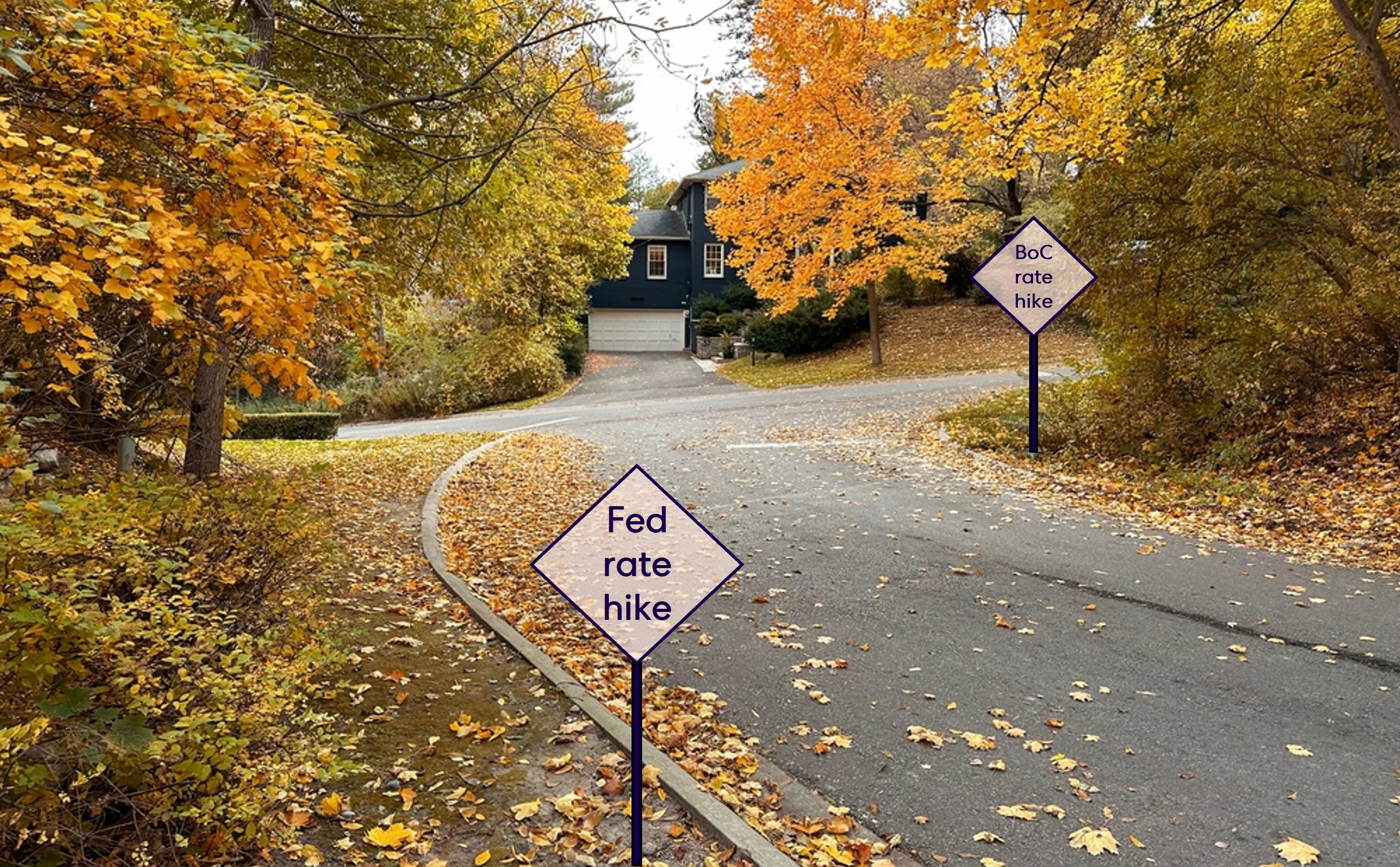
Ask the mortgage expert: What a U.S. Fed rate hike could imply for Canadian mortgage rates
An analysis of U.S and Canada central bank hiking cycles over 30 years to help you plan and navigate a long-term mortgage strategy.
Does debt affect how much mortgage you qualify for in Canada?
Personal debt shrinks the mortgage you may qualify for—every extra $100 in monthly payments can reduce total loan amount by $15,000–$20,000.

How to secure a mortgage as a single parent
An overview of important considerations when applying for a mortgage as a single parent.

Bank of Canada holds rates at 2.25% amidst tariff uncertainty, persistent energy inflation
BoC overnight lending rates remain unchanged, but higher gas prices, new U.S. tariffs, and a slowing economy could shape what's next for Canadians.
Nearly half of Canadians renewing mortgages spend over 50% of their budget on housing
Canada's mortgage renewal wave has nearly half of homeowners spending 50%+ of monthly outgoings on housing; younger Canadians and newcomers most strained.

Find a better mortgage rate
Ajax Brampton Burlington Calgary Edmonton Guelph Halifax Hamilton Kitchener London Moncton Mississauga Newmarket North York Oakville Oshawa Ottawa Regina Saskatoon Surrey Toronto Vancouver Victoria Windsor Winnipeg
Alberta British Columbia Manitoba New Brunswick Newfoundland and Labrador Nova Scotia Ontario Prince Edward Island Quebec Saskatchewan
Bank of Montreal CIBC MCAP Neo Financial Scotiabank Simplii Financial Tangerine Bank TD Canada Trust True North Mortgage National Bank Royal Bank of Canada Desjardins
6 month fixed closed 6 month fixed open 1 year fixed 1 year variable 1 year fixed open 1 year fixed closed 2 year fixed 3 year fixed 3 year variable 3 year open variable 4 year fixed 5 year fixed 5 year variable 5 year variable open 7 year fixed closed 10 year fixed 10 year fixed closed 15 year fixed 25 year fixed HELOC Renewal Reverse mortgage High ratio mortgage Second mortgages Self-employed Prime rate Bank of Canada