
Choose an Insurance Quote
The Best Home Insurance Quotes in Sudbury
Save $300 or more on home insurance with Rates.ca.*
Compare home insurance quotes with other top providers in Sudbury





Jump straight to:
- Average home insurance cost in Sudbury 2026
- What risks do homeowners face in Sudbury?
- 2026 home insurance cost in Sudbury vs. Ontario’s biggest cities
- Why are Sudbury homeowners paying more than other major Ontario cities?
- 2026 average home insurance prices in Sudbury by area/forward sortation area (FSA)
- Why is Sudbury home insurance so expensive in certain neighbourhoods?
- Choosing the right home insurance policy in Sudbury
- Types of home insurance in Sudbury
- Standard home insurance coverage in Sudbury
- Add-ons to home insurance coverage in Sudbury
- What is not covered under your Sudbury home insurance
- Factors that affect your Sudbury home insurance premium
- How to get the cheapest home insurance in Sudbury
- Frequently asked questions about home insurance in Sudbury

Written By Joel Kranc
Freelance writer
How much does home insurance cost in {{OntarioHomeCompare(SF):city}} in 2026?
The estimated average home insurance premium in {{OntarioHomeCompare(SF):city}} is {{OntarioHomeCompare(SF):avgprem_amount}} per year as of Q2 2026, which is around {{OntarioHomeCompare(SF):avg_home_insurance_premium_monthly}} per month, according to the latest Rates.ca Home Insuramap data. By contrast, Ontario's estimated average premium is $2,235 per year.
Key numbers: {{OntarioHomeCompare(SF):city}} home insurance — 2026
- In Ontario, {{OntarioHomeCompare(SF):city}} ranks in the {{OntarioHomeCompare(SF):rank_copy}} spot out of 176 for annual home insurance premiums – from cheapest to most expensive.
- Homeowners with P3A postal codes pay the lowest premiums in Sudbury, averaging at $2,684 per year, or around $224 per month.
- Homeowners with P3E postal codes pay the highest premiums in Sudbury, averaging at $3,144 per year, or around $262 per month.
How Rates.ca finds the average home insurance premium
Rates.ca’s Home Insuramap is an interactive online map, which allows Ontario residents to see how their home, condo or tenant insurance rates compare to other parts of their city or province.
The estimated premiums for each Forward Sortation Area (FSA) are based on the average of the lowest three quoted premiums, with maximum available coverage for water protection. The premiums were acquired using a profile of a 40-year-old homeowner, who has been insured for at least 10 years and lives in a 2,500 sq ft detached house, built 40 years ago, with brick veneer, wood frame construction, natural gas heat, a 10-year-old roof and replacement cost of $500,000.
The city averages were calculated using the FSA premiums from the Insuramap data for each city. However, instead of equal weighting for each FSA within the city, we looked at the number of actual quotes from Rates.ca’s websites in Q4 2025 and used those as weights.
The Ontario average was taken using the average premium for each city weighted by the number of quotes in each city from Rates.ca’s websites in Q4 2025.
Why your profile matters: Even though your location is a major factor in determining your rate, it’s not the only factor. Other factors, such as the age of your roof, the materials used in your home’s construction, the number of claims you’ve filed and so on can all have a major impact on your premium.
What risks do homeowners face in Sudbury?
Severe weather and flooding are some of the biggest risks Sudbury homeowners are facing in 2025.
The summer floods of 2024 cost Ontario $1 billion in insured losses, according to the Insurance Bureau of Canada (IBC).
The overall trend across the province is that home insurance premiums are increasing, and severe weather is one of the biggest reasons. According to Applied Rating Index, personal property lines in Ontario saw a 5.7% increase in premium rate change year over year in Q1 2025. Throughout 2024, the rate change fluctuated between 13% and 9%. For context, this percentage used to hover around 1% in the early 2020s.
‘Flooding plays a significant role in influencing premiums, especially in areas with higher water-related risks,’ says Rates.ca insurance expert Daniel Ivans. ‘Some data we're working on shows that in regions prone to flooding, water coverage costs make up 10% of the premiums.’
Sudbury vs. Ontario’s largest cities: average home insurance rates (2026)
| Rank | City | Average premium | Difference vs. Sudbury |
|---|---|---|---|
| 1 | Hamilton | $2,161 ($180/month) | 27.07% lower |
| 2 | Ottawa | $2,163 ($180/month) | 27% lower |
| 3 | St. Catharines | $2,164 ($180/month) | 26.97% lower |
| 4 | London | $2,287 ($191/month) | 22.81% lower |
| 5 | Toronto | $2,296 ($191/month) | 22.51% lower |
| 6 | Sudbury | $2,963 ($247/month) | 0% no change |
Estimated 2026 average premium in Ontario: $2,235
(Updated: June 2026)
Largest cities were chosen based on their population size, sourced from Canada Statistics, 2025 Population Estimates.
Why are Sudbury homeowners paying more than other major Ontario cities?
As of 2025, Sudbury homeowners are paying some of the highest premiums in Ontario. Here are some factors that could be influencing this:
- Freezing temperatures: Canadian winters can cause extensive damage to pipes, causing them to freeze and burst.
- Flooding and water damage: Warmer temperatures in Sudbury (as a result of climate) could lead to severe flooding. In addition, heavy snowfall can do damage to roofs and other structures. Snow thawing can be equally threatening, especially to homes with basements.
- Sewage pipe back-up: A home's pipes can get clogged or backed up if the main sewer lines become clogged. This can cause significant damage to a home.
- Attic rain: Hot and cold weather can cause freezing in the winter and melting in the spring. The resulting water then trickles down into the rest of your home, causing stains, structural damage, leakage around electrical fixtures and black mould.
The takeaway: In combination with weather-related damage, these factors can all add up to higher premiums. However, it’s worth noting that your FSA could play an even bigger role in determining your premium than the actual city. More on that below.
Sudbury home insurance: average rates by postal code (2026)
| Postal Code | Average premium |
|---|---|
| P3A | $2,684 ($224/month) |
| P3B | $2,827 ($236/month) |
| P3G | $2,941 ($245/month) |
| P3C | $3,072 ($256/month) |
| P3E | $3,144 ($262/month) |
Estimated 2026 average premium in {{OntarioHomeCompare(SF):city}}: {{OntarioHomeCompare(SF):avgprem_amount}}
(Updated: June 2026)
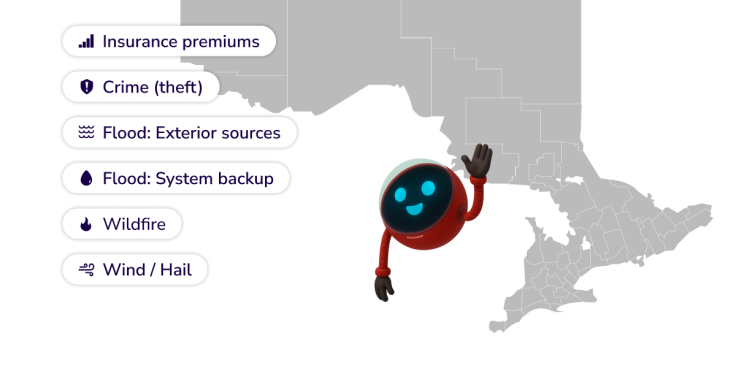
Home Insuramap
The estimated average home insurance premium in Ontario is $2,235 per year as of Q2 2026, which is around $185 per month, according to the latest Rates.ca Home Insuramap data.
What’s a forward sortation area (FSA)? It’s the first three characters of your postal code, designating a specific geographical area for mail delivery. Insurers use FSAs to group and assess area-specific risks. For instance, if your FSA is associated with too many fire-related claims, then your FSA would be flagged as risky in that category (your premium could also go up as a result).
Why is Sudbury home insurance so expensive in certain neighbourhoods?
The reason homes cost more to insure in some neighbourhoods versus others in Sudbury is because of the risks associated with your FSA and the area it represents.
Typically, insurers look at your area's FSA, then check the number and frequency of claims filed within it, plus how much they cost. They use this information to determine the premiums. Insurers also assess the likelihood of certain perils occurring more than once in the area. For instance, if your neighbourhood is vulnerable to flooding, which you can check using Conservation Sudbury's floodplain map, then this could play a role in determining your premium.
That said, this state of things isn't permanent, so if your area has high premiums now (in 2025), there's a chance they might be lower next year. Do note that your current provider isn't likely to lower your specific premium, if that were to happen. You'd have to explore other providers and compare their quotes either via a broker or a rate comparison site like Rates.ca
Additionally, be aware that the reason the premium might be high in your area has nothing to do with the area itself. For example, it could just be that more people are filing claims for unrelated reasons, such as accidental indoor flooding, or frivolous reasons like pest infestation. All these factors can increase or decrease the premiums in your area, and by extension, your premiums.
Recent home insurance quotes in Sudbury

Recent home Insurance Quote from Sudbury, ON
Detached 1,900 sq ft
October 10, 2026
Cheapest Quote
$ 248 / month
$ 2,972 / yearAverage Quote
$ 605 / month
$ 7,265 / yearSavings
$ 358 / month
$ 4,296 / year
59 %
Recent home Insurance Quote from Sudbury, ON
Detached 5,243 sq ft
October 10, 2026
Cheapest Quote
$ 230 / month
$ 2,758 / yearAverage Quote
$ 274 / month
$ 3,285 / yearSavings
$ 44 / month
$ 528 / year
16 %
Recent home Insurance Quote from Sudbury, ON
Detached 3,250 sq ft
October 10, 2026
Cheapest Quote
$ 331 / month
$ 3,968 / yearAverage Quote
$ 425 / month
$ 5,100 / yearSavings
$ 94 / month
$ 1,128 / year
22 %
Home insurance quotes are compared from Apollo Insurance, CAA, Economical Insurance, Pembridge, and SGI
Let's get started

Save on Sudbury home insurance
Rates.ca works with home insurance companies and brokers in Sudbury to provide you with a broad selection of quotes.
So, if you're looking for a cheap home insurance rate in Sudbury, be sure to instantly compare quotes from several insurance providers at once here on Rates.ca (for free).
Choosing the right home insurance policy in Sudbury
If you own a home in Sudbury, you’re not required to have it insured. At least, not by law. That said, most lenders in Ontario won’t provide a mortgage unless your home is covered by insurance. That's why most homeowners still need a policy. It's also worth buying it even if you already own your home, since it's likely still the biggest asset in your possession.
The question is, what kind of policy do you need? And more importantly, what kind of protections actually exist for your home? We dive into all of that below, where you can find a full breakdown of what a home insurance policy can offer:
Types of home insurance in Sudbury
There are three major home insurance types, which differ mainly by the amount of coverage they offer and by price. As you might expect, more coverage means higher costs – and vice versa.
- Named perils: This is the most superficial level of insurance coverage, in which only certain items or perils listed on your policy are covered. It is usually the least expensive option.
- Broad form: This is slightly more robust than basic coverage. It covers bigger ticket items and named perils on the contents within the home.
- Comprehensive: This is the most expensive type of home insurance policy. Also referred to as "all-risk," it covers your home and belongings from all loss, except for some exclusions, which are listed in your policy.
Who gets covered
- Spouse and relatives: Your policy should cover your spouse and anyone related to either them or you, provided they reside in your home.
- Dependents: Home insurance should protect any dependents under the age of 21 who are students. They may be living in your primary home or temporarily away from it (e.g., college dormitory).
What gets covered
- Property and dwelling: This protects your home and other structures on your property. In many cases, you are protected from theft, fire, vandalism, storm damage, and water damage. It is best to talk to your insurer about secondary structures like a garage or guest house to ensure you are fully protected for your entire property.
- Contents and personal property: It covers you for damage to or loss of your possessions while they're located in your house or temporarily away from your home (for example, when your item is with you while you travel or are in your vehicle). You may want or may require additional coverage to protect more valuable items such as family heirlooms, jewelry or fine art.
Standard home insurance coverage in Sudbury
Whether you opt for a named perils, broad form or comprehensive home insurance policy, it should cover the following:
Additional Living Expenses (ALE) coverage
Should you be displaced from your home because of a natural disaster or forced evacuation, extra income for expenses would be a welcome financial break. In those cases, you may need Additional Living Expenses (ALE) coverage to cover your temporary housing costs. Additional living expenses coverage can help pay for hotel stays until you return to your home, commuting costs, or even food up to certain limits. Talk to your provider about specific coverage.
Here’s what ALE covers:
- Out-of-pocket expenses: If forced to temporarily move out, your insurance could cover expenses like accommodation, food, moving, laundry, transit, pet boarding and storage.
- Fair rental value: If you’re renting out a part of your home (such as a room or a basement) and your tenant is forced to move out due to a covered incident, your insurance could cover the loss of your rental income.
- Prohibited access: If your home becomes inaccessible due to an unexpected incident, such as a government-mandated evacuation order or a threat to your life, your insurance could cover you.
Liability coverage
Your liability coverage should encompass the following:
- Personal liability: If third-party injuries or accidental injuries occur on your property, personal liability insurance will cover any lawsuit expenses. Without it you could spend thousands of out-of-pocket dollars on legal bills. The coverage amount can range from $100,000 to $5,000,000, depending on how much you’re willing to pay in premiums.
- Voluntary medical payments: What if someone injures themselves on your property and requires medical attention? This insurance will cover the cost of medical expenses for one year from the date of the accident. Your coverage can be as low as $1,000 or as high as $10,000.
- Voluntary property damage: It is not inconceivable that you may cause unintentional damage to someone else's property. This will help you pay for any unintentional direct loss or damage. It also covers accidental loss or damage to someone else's property by a minor (12 years or under) in your care. The coverage can be between $500 and $6,000.
Commonly covered perils
Commonly covered perils in Sudbury – whether you choose basic, broad or comprehensive coverage – will usually include these:
- Fire: No matter what causes the fire, your insurance company will cover the costs of replacing, rebuilding or repairing your property and recovering your belongings.
- Smoke: If smoke damages your property, you'll receive coverage. However, the smoke has to have come from a malfunctioning cooking or heating device, not your fireplace.
- Lightning or electrical current: Should lightning strike your property, it could damage the wiring in your walls as well as break your appliances and electronics. This will pay for repairing or replacing whatever ends up damaged. Any other electrical current could do the same (and is also usually covered).
- Explosion: Should your property get damaged or destroyed by an explosion, you will receive coverage.
- Riot: If a riot that takes place near your property causes damage to it, your insurance will pay for the necessary repairs or replacement.
- Theft and vandalism: If your home happens to get robbed, this will pay for the replacement of the stolen items. The same applies if the home gets vandalized.
- Transportation: If your personal property, such as a laptop, gets damaged while temporarily away from your home, then its repairs or replacement will be covered. This applies to fixtures or fitting that are being repaired or in seasonal storage.
- Water damage: This pays for the damage to your property and belongings caused by water leakage from indoor plumbing, heating, air conditioning, sprinklers and similar appliances inside or outside your house. The tricky part is knowing what’s excluded. Most coverages usually exclude sewer back-up and overland flooding, so be sure to confirm what is and isn’t covered with your insurer.
- Hail and wind: Should wind or hail damage your property or belongings in any way, this will pay for them. This includes damage from flying debris as well as falling trees and branches (if caused specifically by hail or wind).
- Aircraft or vehicle impact: If an aircraft or another moving vehicle hits your property and damages or destroys it, you will get coverage.
- Window breakage: This coverage applies only to homes that are occupied. If your home is vacant (meaning it's unoccupied for more than a month), then this coverage could be void. You'd need vacant home insurance to rectify that.
- Falling objects: This protects your property and belongings from falling objects, including space debris and space craft. There are exceptions, however, such as objects moved by landslides or snowslides. Confirm with your provider what is and isn’t covered.
Add-ons to home insurance coverage in Sudbury
You can enhance your standard home insurance in Sudbury with additional coverage – commonly known as ‘add-ons,’ ‘riders’ or ‘endorsements.’ Here’s what usually gets sold in addition to the standard coverage (varies from insurer to insurer):
- Overland water: Flooding and overland water is a common occurrence in Ontario. There is also the threat of melting snow in the springtime. This add-on helps protect against damage from this type of overflowing water. Get more tips on flood insurance here.
- Sewer back-up: In cases where the main sewer backs up, or water from downspouts, septic tanks, drains and eavestroughs cause damage, this add-on can help reimburse you for losses.
- Earthquake: Covers losses or damage caused by an earthquake. West Coast residents may find this more applicable than Ontarians, as there is less of a potential for earthquakes to cause structural damage to your home in places like Sudbury.
- Mass evacuation: Weather, forest fires or other significant events can create so much damage that it causes the need for a mass evacuation. This comes with expenses for temporary housing, commuting and even everyday necessities like food. It is best to talk to your provider about how much coverage you can get during your temporary displacement.
- Identity theft: Covers the cost of replacing important documents, such as your passport.
- Lock replacement: If you need to replace the locks on your house, this add-on provides coverage.
- Personal valuables: If you own expensive things like jewelry, collectibles and artwork, then you may need extra coverage for them. Do an inventory of all your possessions and assign monetary value to them. Then talk to your provider to find out if you need extra coverage.
- Home sharing: If you’re looking to rent out your property, this will provide you with the additional property and liability coverage you need to stay protected.
- Personal umbrella: If you’re worried that your standard liability coverage isn’t enough (e.g., if your lawsuit costs you more than expected), this add-on can make up the difference.
What is not covered under your Sudbury home insurance
Unfortunately, your home insurance can’t protect you from every existing danger in Sudbury. Certain perils are always excluded – usually because they are both predictable and preventable. Here’s what they are:
- Absence from the home: Damage that takes place while you’re away from the home for an extended period of time.
- Alterations: A homeowner will only be protected against damage to a property that occurs during an alteration to it if they have received written permission from the insurance provider to undertake the alteration. However, common repairs such as painting or fixing a broken railing are not subject to this exclusion.
- Bylaw enforcement: You are not likely to be covered for costs stemming from the application or enforcement of a bylaw.
- Damage from renters: Most insurance providers require specific coverage for landlords. A standard home insurance policy is unlikely to protect you if a renter damages the property.
- Mold: Mold, unfortunately, is often caused by issues within the home and not due to weather or other outside events. As a result, it is considered by insurance companies to be a homeowner issue and is not covered. If you see it becoming a problem in your home, it is your responsibility to repair and maintain it before it gets worse.
- Pest infestations: Pests or rodent problems are also considered the homeowner's issue. You won't find coverage for this, so it's best to keep your home clean or spray for bugs before any problems get out of hand.
- Volatile substance: If you have more than one gallon of a volatile substance on your property and a fire or explosion takes place, you may be denied coverage. This is likely to include gasoline.
- Purposeful damage: It's not anyone's business why you might purposefully damage your property, but if you do, you will not receive any insurance coverage for it. Doing so is considered insurance fraud.
- Intentional injuries to guests: We really should treat our guests like family. But suppose you choose to injure someone in your home intentionally. In that case, you will not be covered for any liability that may ensue.
- Existing damage: You’re unlikely to be covered for damage that began before you held the policy.
Factors that affect your Sudbury home insurance premium
There are several important factors insurers always consider when determining your specific premium. We list some of the most common ones here.

Flood risk
Insurance rates in Sudbury, and Ontario as a whole, are higher for homes located in areas known to flood or identified as flood plains. If you live close to a waterway, you can also expect to pay more for coverage. Even if that river or lake has not overflowed recently, record claim amounts for homes damaged by severe weather have made insurance providers increasingly cautious.
To be fully protected against flood risk, you may need to add different types of flood protection to your home insurance policy. While some insurance providers combine flood coverage into a water protection policy, others distinguish between overland flood protection and sewer back-up protection. Make sure you clearly understand what flood coverage has been added to your policy.
Replacement cost
Rebuilding your home is part of the risk your Sudbury home insurance provider will consider when determining your premium.
Property location
Insurance companies are continuously assessing risk. That is why the location of your property matters to them. High crime rates, for example, could lead to higher claims and, as a result, higher premiums. Conversely, lower crime neighbourhoods could yield lower premiums because claim risk is reduced. Also, proximity to a fire hydrant can result in lower premiums as it can help reduce the risk of fire damaging your home, for example.
Proximity to fire halls and hydrants
Your premium will benefit from living near a fire hydrant or a fire station. The sooner fire crews can extinguish a blaze, the less damage it will receive, minimizing replacement costs. If you live in an urban area, this shouldn’t be a problem since fire hydrants are ubiquitous. It is more of a concern for rural areas with less infrastructure.
Property age
Older homes are more likely to be at risk of plumbing and heating faults, which can lead to water damage or fire. Outdated electric wiring may also be putting your property at risk. Houses built in the 1950s and earlier usually use a 60-amp service, which is more likely to cause a fire than the wiring used in newer homes (100 amps is the norm these days). This increased level of risk may cause your premiums to go up.
Basement
Because basements are especially prone to water damage of both internal or external sources, owning a house with a basement means you’ll likely pay more for home insurance.
Heating system
A heating source such as a wood-burning stove is considered high-risk and can result in a higher home insurance premium. If instead, your home is heated by hot-water radiators or forced air heating, which insurance providers consider lower risk, you’re likely to pay less.
Roof age
Roofs need to be maintained regularly and changed about every 20 years. Sticking to that timeline will prevent leaks and water damage. Some insurers may cover only 25% of the replacement cost for roofs that are old enough to need repairs or replacement.
Renovations
When you renovate your home to improve its overall value, your home insurance premium is likely to increase. This is because the policy is designed to cover the replacement cost of your home, so if you were to add more to it, then, logically speaking, your premium should go up. Here are some additions or upgrades that could increase your premium:
- Swimming pool
- Deck
- Kitchen countertops, appliances and flooring
On the other hand, if renovations increase the safety of your home, your premium could go down. Here are some additions that could lower your premium:
- New electrical wiring or plumbing
- New roof
- Finishing the basement
Pets
If you have pets, you’ll need to disclose it to your insurance company. Some pets are considered a liability risk. Certain dog breeds, such as rottweilers, may even cause some insurance providers to decline your application for coverage.
Smoking
Home insurance providers may offer a discount to homeowners who don’t smoke because they deem the home less likely to be damaged by fire from an unattended cigarette.
Security system or alarms
You can reduce your home insurance premium by installing a security system or alarms to monitor your home for potential fires, burglaries and water leaks. Its presence will reassure your insurance provider that your home has adequate protection, which, in turn, could persuade them to offer a lower rate.
Claims history
One of the biggest culprits behind higher premiums is the person’s claim history. The more claims you make – regardless of the problem – the more expensive your premiums will be. Home insurance is meant to cover major events only, such as fires, floods and earthquakes. A leaky pipe that causes minor damage to your home, for instance, may not be significant enough to require insurance. So, weigh your decisions carefully.
Credit score
In some provinces, insurance providers are allowed to use your credit score when offering you a quote. Your consent is required, and, by law, the insurer is only allowed to use the information to offer a lower premium. In other words, if you have a poor credit score, they’re not allowed to punish you with a higher premium.
How to get the cheapest home insurance in Sudbury
There are several ways to get cheap insurance in Sudbury. Here’s what they are:
- Increase your deductible: Agreeing to pay a higher deductible – money you will pay out-of-pocket before the insurance company pays you – can help save you money. The more money you agree to put up, the less risk you are to the Sudbury insurance provider.
- Install alarms: If you live in a high-crime area with lots of break-ins and vandalism, consider installing a burglar alarm system, which will reduce the risk of both, lowering your premiums. Having good fire detectors would do the same, especially if your home is far away from any fire stations or hydrants, as mentioned above.
- Upgrade your electrical and plumbing systems: If your home is on the older side, then it may have outdated plumbing and electrical systems, which increase the risks of flooding and fire, respectively. Consider upgrading them if you have the money, as doing so will not only lower your premiums but improve your safety.
- Protect your home from severe weather and floods: Adding sump pumps, reinforcing your basement walls as well as renovating your roof can reduce the risk of weather-related damage, especially water damage. This will lower your premiums and make your home more reliable.
- Ask for discounts: Some Sudbury home insurance providers will give discounts to people who belong to certain associations or alumni groups. Ask your provider if they have such discounts for you to take advantage of.
- Bundle up: Insurance providers will show their appreciation for your business. The more services you bundle from one provider, the more you can save on an entire policy package. Some providers will give you discounts in the neighbourhood of between 20% to 25%.
- Comparison shop: Comparison shopping for insurance in Sudbury is easy when you use sites like Rates.ca to compare the cheapest rates from the top providers in your area. It’s free, simple to use, and fast.
Let's get started
How to get Sudbury home insurance
Compare quotes and save
Tell us about your home
Tell us about your home
Compare your quotes
See quotes from top insurance companies side by side.
Choose the right coverage
Find the right protection for your home and everything in it.
Secure your rate
Connect with the provider and secure your rate.
What people say about our quotes

Based on 7,101 reviews

Amazing customer service I couldn’t…
Amazing customer service I couldn’t have asked for better help
Crystal Gould
1 hours ago
Very fast process and great pricing
Very fast process and great pricing
George Mikheil
2 hours ago
Mike Jerich is a very honest and great agent
This is the first time that I have had an insurance agent tell me that I am over insured. Even before telling me that I was over insured he price was $2,000.00 less than I am currently paying.
Clark Calhoun
23 hours ago
My questions and concerns were answered…
My questions and concerns were answered in a very simple and straightforward manner.
Ragini Medeiros
1 days, 23 hours ago
Quote was completed quickly and…
Quote was completed quickly and accurately, helped me switch from a more expensive policy
Keely Lausch
1 days, 23 hours ago
almost instant phone call back.
almost instant phone call back. very quick quotation
sutlej
2 days, 3 hours ago
Nothing to complain
Although I didn't get the insurance from them but the experience was great and the broker was helpful
Ranjith Nair
2 days, 21 hours ago
Customer services are super helpful the…
Customer services are super helpful the quote they provide is awesom and reasonable
Evelyn Mangubat
3 days ago
Cheapest Quote Received
Loved the ease of the process. Found the cheapest quote within this site.
Cristin Quick
3 days ago
Frequently asked questions about home insurance in Sudbury
Have more questions about how Sudbury home insurance works? We answer them here.

Do Sudbury real estate prices affect the cost of home insurance?
Sudbury home insurance providers do not look at real estate prices in the area when calculating insurance premiums. Insurance companies are more concerned with the risks they face and the replacement value of the home itself.
Which company offers the cheapest Sudbury home insurance?
Home insurance in Sudbury is specific to the needs of the individual homeowner. That can depend on where they live, the contents of their home, the age of their home and the materials used, to name a few.
That's why it's best to comparison shop on sites like Rates.ca where you can receive estimates for the cheapest rates from the top providers in Sudbury. It takes a few minutes and is free. How easy is that?
How do Sudbury home insurance claims work?
Your insurance claim is covered by the premiums paid by you and your provider's other clients. Insurers pool all the premiums together and use them to pay for the damages and costs associated with your claim. However, before the insurer covers those costs, you may have to pay a deductible. This preset amount comes out of your pocket. Most home insurance deductibles range from $500 to $2,000 and are decided beforehand. So, when making a claim, this shouldn't come as a surprise.
Here are the steps to file a claim and get a settlement:
- Call your insurance company immediately (or as soon as possible) after the incident. Most providers have a 24-hour claims service.
- Be as detailed as possible when describing what happened, and take lots of photos.
- If your home is uninhabitable, talk to your provider about the expenses you may be eligible for and how long you'll be able to claim them for. For this to work, keep all your receipts and invoices you amass while you're away.
- A claims adjuster will contact you to gather all the facts regarding your loss and let you know the next steps.
- Your provider will ask you to complete a proof of loss form. Be as truthful as possible; otherwise, your claim may become void.
Review your policy each year so there are no surprises when you experience a setback. Your settlement amount and whether you get full replacement value is contingent on your policy.
Is fire covered under my Sudbury home insurance policy?
Fire is a peril that is generally covered under standard home insurance policies. But you can increase your coverage if you have high-value items in your home, such as jewelry or fine art.
How do I get vacant home insurance in Sudbury?
Two potential routes for insuring a vacant home in Sudbury include:
- Buying a new policy tailored to the needs of a vacant home
- Increasing your existing policy's coverage with an endorsement or add-on
A new policy might be your best route if you know your property will be vacant for an extended period – say a year or more. However, an endorsement added to an existing policy may be enough for your vacant property if the property is empty for a short time, say between renters or temporary vacancies.
If you're going to be away from home for 30 days or thereabouts, your home is considered unoccupied, not vacant. Give your insurance provider or broker a heads-up before you leave; they may be able to extend your coverage to match your timetable. In return, they may also request that someone you trust checks in on the property while you're away.
How much insurance coverage do I need for my Sudbury home?
The process of buying home insurance is slightly different for everyone. There are different neighbourhoods within Sudbury, and people have varying levels of stuff within their homes. You may have a newer home with a new alarm system, or you might live in a high-crime neighbourhood. Your coverage needs to be tailored to you, and with that comes a custom premium. That is why it is best to talk to your insurance provider, agent or broker to determine what amount – and type – of coverage is suitable for you.

Joel Kranc, Freelance writer
Joel Kranc is a freelance writer and content provider who has worked with Rates.ca since 2019. He holds an MA in political science from the University of Toronto and a film certificate from New York University.
He has been published in and worked for such companies as CNN, Rogers Media, Institutional Investor Magazine, The Globe and Mail, Infrastructure Investor, BenefitsPRO Magazine, Global Finance Magazine, With Intelligence, the CPP Investment Board, Hospitals of Ontario Pension Plan, and many more financial services and industry publications.
He is the author of "Retirement Planning in 8 Easy Steps," which, when released in 2015, was No. 11 on the Publisher's Weekly US Bestseller List for Business and Finance, beating out Mark Cuban's "How to Win at the Sport of Business."
Latest home insurance articles:
Is there a best time to shop for home insurance?
Shopping for cheaper home insurance isn't tied to a calendar but aligns best with your changing needs and a market that's constantly shifting.

Do you need tenant insurance if you’re subletting?
When subletting your rental property remember to inform your insurer. Your subtenant should carry their own insurance policy.

Should you buy a flood-damaged home?
A heavily discounted home with prior flooding seems attractive, but unexpected repair costs can erase savings.

Can renovations offset falling home values in Canada?
As the real estate market fluctuates, doing minor, strategic renovations may help improve your home equity and offset falling home values.

What is the cost of repairing a flooded basement?
A comprehensive home insurance policy can help you cover significant repair costs from a water-damaged basement.

What happens if my car floods in underground parking?
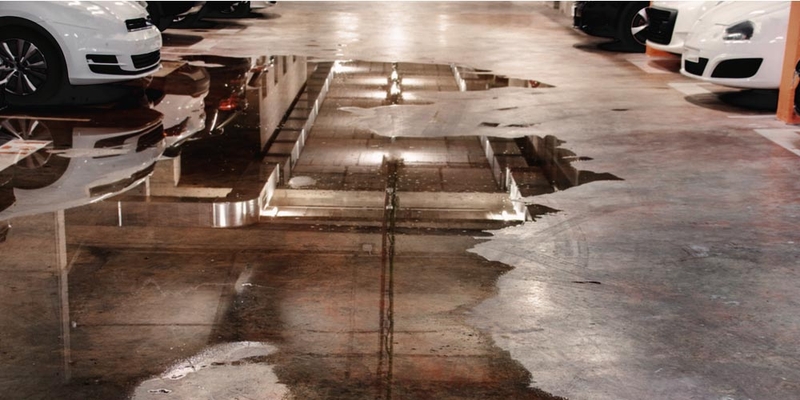
How to reduce risk of your car getting caught in an underground parking garage flood and details on your insurance coverage options.
Find more great home insurance rates
Abbotsford Airdrie Ajax Aurora Barrie Brampton Brantford Burlington Burnaby Caledon Calgary Cambridge East Gwillimbury Edmonton Etobicoke Fort McMurray Georgina Guelph Halton Hills Hamilton Kamloops Kingston Kitchener London Markham Milton Niagara Falls Mississauga Muskoka Newmarket Oakville Oshawa Ottawa Peterborough Pickering Prince George Red Deer Richmond Richmond Hill Sarnia Scarborough St. Catharines Sudbury Surrey Thunder Bay Toronto Vancouver Vaughan Victoria Waterloo Windsor Winnipeg Whistler Whitby Whitchurch-Stouffville
Home and auto insurance bundling Additional living expenses (ALE) Airbnb Broad form Comprehensive Condo Cottage Contents Locksmith Named perils Overland water Personal liability Replacement cost Sewer back-up Tenant Umbrella Vacant home Voluntary medical payments Voluntary property damage Ontario home insurance calculator Alberta home insurance calculator
Disclaimer
*More than 50% of Rates.ca users in Ontario who obtained a home insurance quote from January to December 2025 saw savings ranging from $150 to $650, with an average savings of $366.43. The average savings amount represents the difference between the users’ average lowest quoted premium and the average of the second and third lowest quoted premiums generated by Rates.ca.