Choose an Insurance Quote
Diesel: How a mainstream powertrain became a niche option in Canada
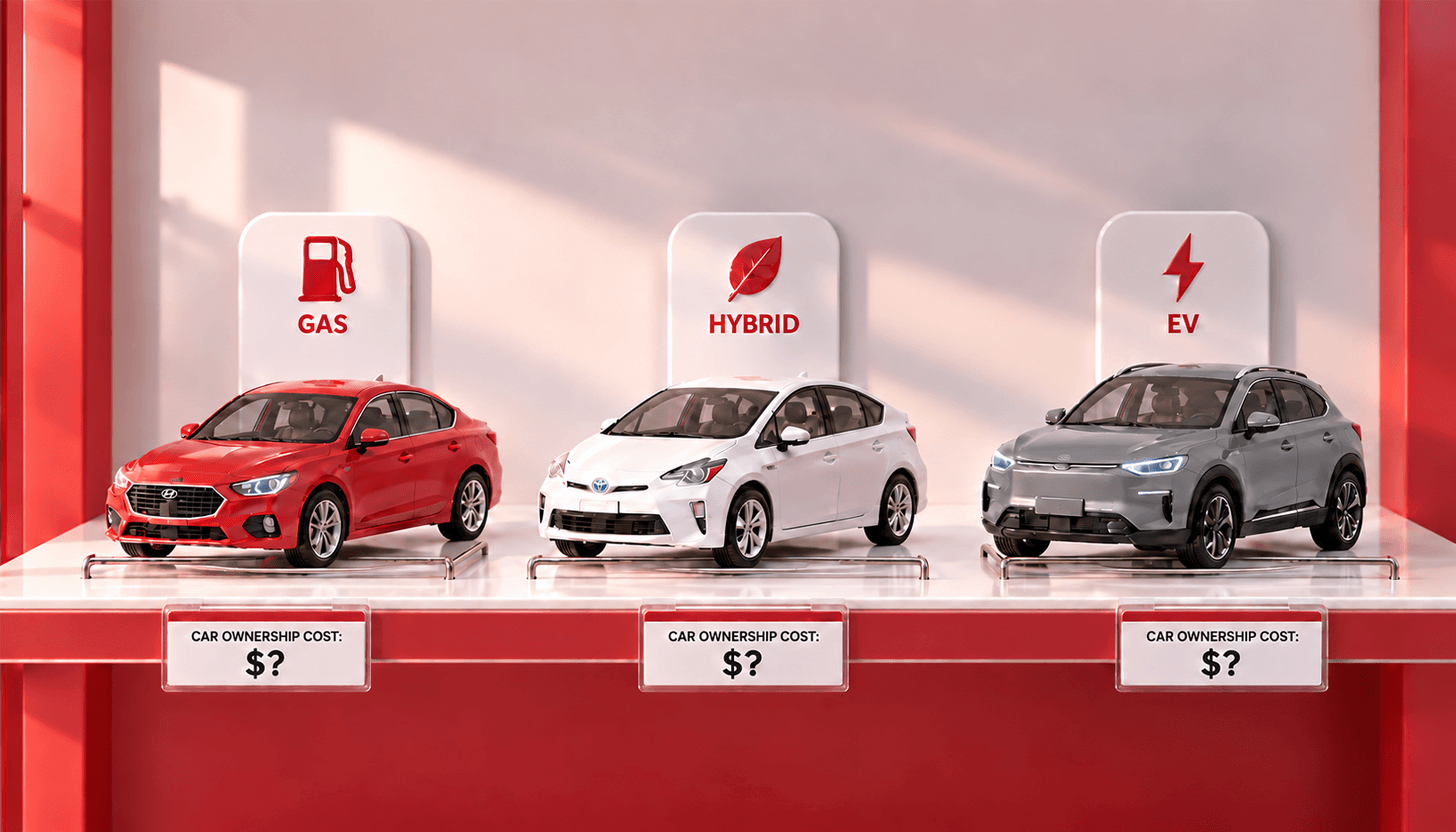


The cost of car ownership report compares vehicle choices facing Canadian buyers today: gasoline, hybrid, and electric. A decade ago, diesel would likely have been part of that conversation.
For years, diesel appealed to drivers willing to pay more upfront in exchange for better fuel economy and lower operating costs. Today, that option has largely disappeared from the passenger vehicle market.
As of 2026, no diesel-powered sedans are sold new in Canada, and diesel options have largely vanished from family-oriented SUVs and light-duty pickups. Ford discontinued the F-150's 3.0-litre Power Stroke diesel in 2021, while General Motors dropped diesel variants of the Chevrolet Equinox and GMC Terrain after only a brief run.
What remains is increasingly niche: heavy-duty pickup trucks, some full-size SUVs, and commercial vans. For the average family buyer, diesel is no longer an available option.
'Dieselgate' and the rising cost of compliance
One of the most significant turning points came in 2015 with the emissions scandal known as Dieselgate.
Volkswagen was found to have installed software designed to falsify emissions tests, ultimately pleading guilty to environmental charges in Canada and paying a record $196.5 million fine. The scandal damaged public confidence in diesel technology and undermined environmental claims that had helped drive its popularity.
At the same time, emissions standards in Canada and the U.S. became increasingly stringent. Canada aligned its vehicle-emissions regulations with evolving U.S. EPA standards, requiring automakers to further reduce smog-forming pollutants and particulate emissions. To comply, diesel vehicles increasingly relied on technologies such as diesel particulate filters, selective catalytic reduction systems, and diesel exhaust fluid, adding cost and complexity to modern diesel powertrains.
As diesel models became more complex and expensive, the traditional fuel-economy payoff became harder to justify, particularly in smaller cars and crossovers. Many automakers ultimately redirected investment toward hybrids and electric vehicles, where tightening emissions rules aligned more closely with long-term product plans.
Hybrids took over diesel's role
For years, diesel's appeal was simple: pay more upfront, then recover the difference through lower fuel consumption.
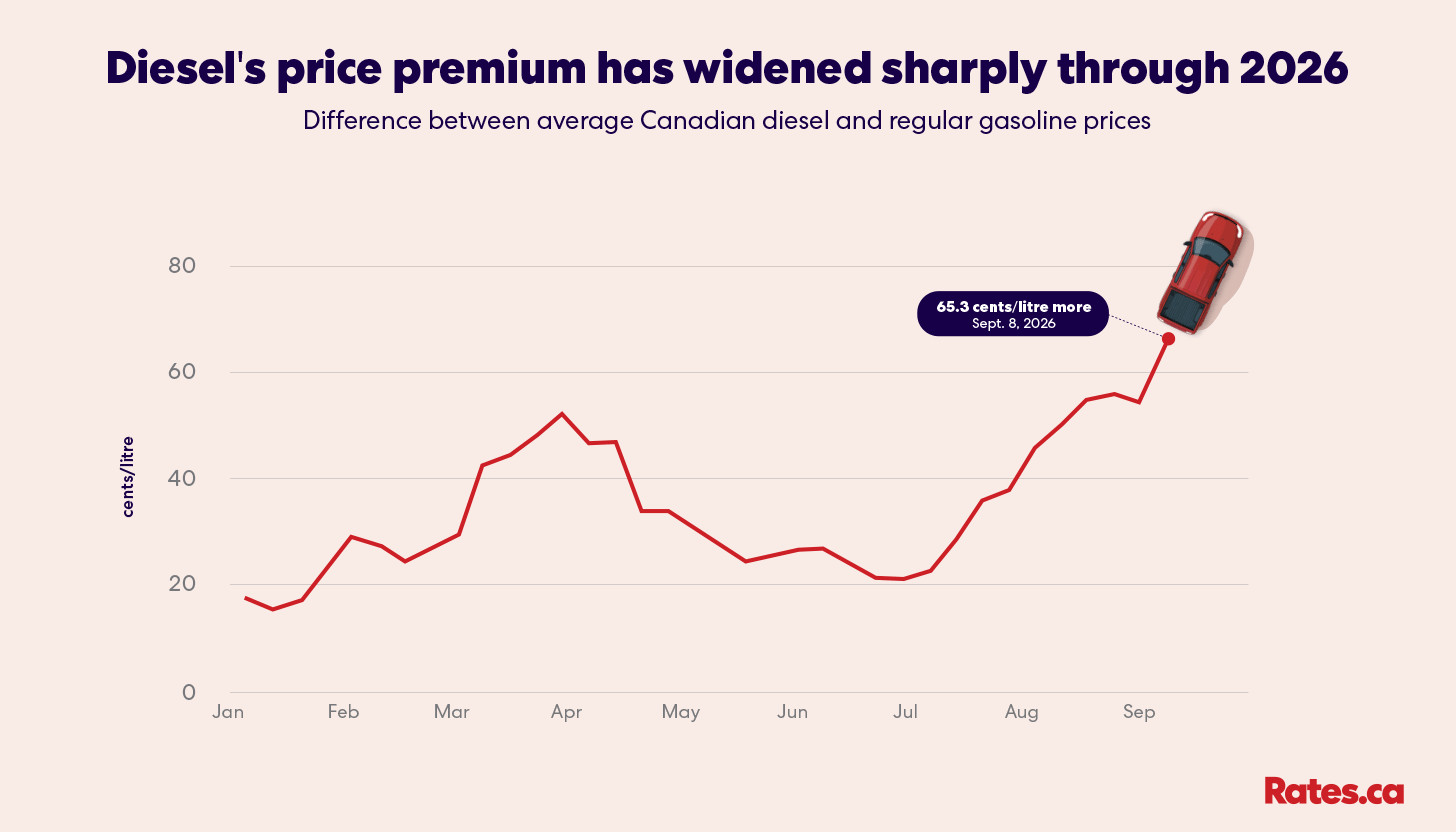
Source: Natural Resources Canada; AI-generated infographic
Natural Resources Canada data shows that in the same week one year earlier, diesel cost just half a cent more than regular gasoline in Canada. By early September 2026, that gap had widened to roughly 65 cents per litre, up from about 18 cents in January. Even where diesel models remain available, they now cost more to fuel than their gasoline counterparts.
Modern hybrids increasingly offer the same value proposition diesel once did: strong fuel economy without the added complexity of modern diesel emissions systems, all while running on regular gasoline.
That flexibility is a key selling point, according to Patrick De Haan, head of petroleum analysis at GasBuddy. "A plug-in hybrid gives you options," he says, noting that owners can charge at home, potentially using solar power, while still having the ability to refuel at a traditional gas station when travelling.
Diesel engines are still useful, but no longer mainstream
Diesel hasn't disappeared entirely, nor has it lost its strengths. High torque, long-distance durability, and towing capability continue to make it well suited to heavy-duty pickups, commercial fleets, and long-haul transportation. Statistics Canada data shows diesel remains a critical fuel source in Canada's commercial transportation sector.
For most passenger-vehicle buyers, however, the market has moved on. Automaker investment, consumer demand, tightening regulations, and improving hybrid and electric technology have all contributed to diesel becoming a specialized choice rather than a mainstream option for Canadian buyers.
Save on Ontario auto insurance
Auto insurance rates change often, so how do you know if you're still getting the best deal? By comparing car insurance quotes upon renewal and at other key milestones (such as when you buy a new vehicle, or more to a different neighbourhood) you can make sure your rates remain competitive. Save money by comparing Ontario car insurance quotes today.

Arshi Hossain
Arshi Hossain, Associate editor
Arshi Hossain is the associate editor at Rates.ca. She has 4+ years of experience in delivering strategy-backed digital content through various mediums. Her expertise lies in breaking down complex information, meeting people where they are, and in the moments that matter.
Prior to joining Rates.ca, she worked in the editorial and digital content space at Wealthsimple, supported digital strategies, and UX writing for payment products and solutions at Bank of Montreal. She has also worked with startups to support editorial, content writing, communications, copywriting, and marketing needs.
Featured Topics
Premium gas costs nearly 30¢ more per litre than regular, meaning drivers whose vehicles don't require it could save $400 to $700 a year at the pump.
CEO of Rates.ca, Igal Mayer explains how Covid-era price increases reshaped the auto market and what could bring costs down for consumers.
Canada's mortgage renewal wave has nearly half of homeowners spending 50%+ of monthly outgoings on housing; younger Canadians and newcomers most strained.

With only 13% of Canadians open to buying autonomous vehicles, experts expect adoption to begin through ride-hailing services before widespread ownership.

As extreme weather intensifies, resilient Canadian homes sell for more: upgrades can add up to 5.6% to resale prices, yet many listings don’t mention them.

After a sluggish 2025, EV interest in Canada is climbing again: searches are up 40%, and nearly one‑third of Canadians say they’re open to buying an electric vehicle.
In Toronto, auto insurance eats up 70% of total insurance costs, compared to 60% in Ottawa and 65% in Hamilton.

Ontario households spent $14K–$21K on auto and home insurance in four years, city by city. 75% of insured households saw premium hikes in the past two years.

Despite recent interest rate cuts, 35% of Canadians now see condos as a poor investment, but they remain a key entry point for young and first-time buyers.