Choose an Insurance Quote
Proposed changes to motor vehicle safety regulations means cars could be harder to steal in 2028

KEY FINDINGS
- To fight auto theft, Transport Canada has proposed new changes to the Motor Vehicle Safety Regulations that would require all new passenger cars to be equipped with immobilization systems.
- Currently, thieves are able to easily unlock and start most cars on the market by using a signal-boosting device near a key fob to ‘relay’ the signal between the fob and the car.
- Some insurers charge up to $1,500 to drivers of highly stolen vehicles who do not have aftermarket engine immobilizers installed on their cars. If passed, these safety regulations could remove the need for surcharges entirely.
- Changes would likely not take place until the 2028 model year, as it takes two years for compliance to take into effect and the proposal is still under review until March.
As auto insurance premiums rise and car theft remains a persistent and costly problem, recently proposed amendments to Canada’s vehicle-safety regulations could bring some financial relief and peace of mind to drivers across the country, and the insurers who have to cover them —especially when it comes to most-stolen vehicles and other high-priced cars, trucks and SUVs.
Announced in late December, Transport Canada’s proposed changes to the Motor Vehicle Safety Regulations (MVSR) would require all new passenger cars sold in the country to be equipped with immobilization systems that can resist increasingly advanced auto-theft techniques.
“Over the past 10 years, auto theft in Canada has increased dramatically,” the Insurance Bureau of Canada said in a January 2026 response to the proposal. “One of the causes of this decade-long increase is that vehicles in this country have become too easy to steal. Modernized anti-theft standards are essential for making vehicles more secure and discouraging car thieves.”
Not only could these proposals help keep cars safe in their driveways, once implemented, they could help save drivers thousands of dollars in car insurance premiums and surcharges.
Vehicle safety standards haven’t kept pace with auto theft tech
Although the MVSR has required all new cars sold in Canada to be equipped with an immobilizer that meets specified performance and testing standards, those standards haven’t kept up with innovations in auto theft.
So, as thousands of Canadians learn each year, regulation-compliant immobilizers aren’t always a match for today’s tech-enabled car thieves.
The basic function of an immobilizer is to prevent activation of a component needed to start or power a car, often the engine control unit.
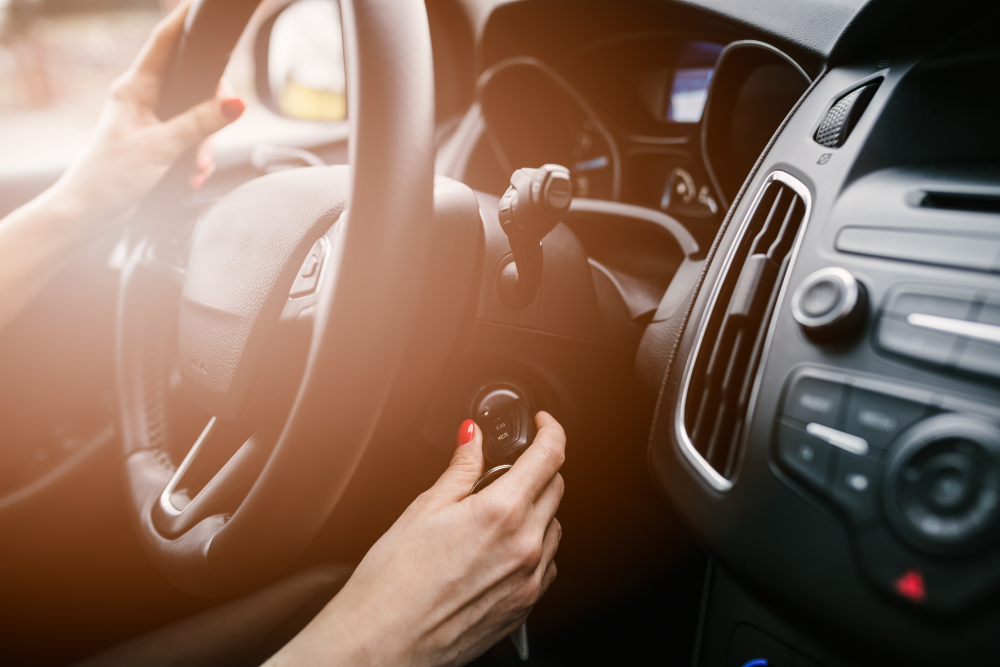
Typically, the driver doesn’t need to turn on or “arm” the immobilizer. Instead, it’s armed when the driver performs some routine action, and disarms when the opposite action is taken. In a car with push-button start, for instance, the immobilizer is armed or disarmed depending on whether the car’s electronic key fob is located within the cabin of the vehicle.
This setup worked well in 2007, when screwdrivers and wire cutters were the tools of the auto-theft trade.
But today’s criminals tend to favour more sophisticated On-Board Diagnostic (OBD) key programmers, Controller Area Network (CAN) bus injection devices and other “electronic attack tools” that allow them to exploit vulnerabilities in a car’s internal communication system.
For example, one popular method of thieves is the relay attack, which targets vehicles with push-button starters and passive keyless entry. Normally, a car with these features continually transmits a wireless request for a coded response from a key fob.
If the car’s legitimate fob is too far away or another fob responds with the wrong code, the car won’t unlock or start.
But thieves can use signal boosters to pick up and relay signals between the car and fob, effectively extending the distance at which the car and its key fob can perform their digital handshake (this is one of the reasons why insurers and auto experts recommend securing your keys in a faraday pouch or keeping them well away from your front door when they’re not in use — see other recommendations below).
If successful, the car can be unlocked within seconds, and the process is repeated to start the car. The target vehicle can be gone less than a minute after the thieves appear.
Safeguards against such techniques exist and are mandated by regulators in other countries, but not in Canada — yet. So, Transport Canada aims to replace some outdated standards in the MVSR with newer, internationally recognized standards that include resistance to electronic attack tools.
Related: Can a vehicle’s safety features get you cheaper car insurance?
Impact of proposed vehicle security regulations on drivers and insurers
Future owners of vehicles most targeted by thieves, which include both luxury makes and some popular mid-priced vehicles, have multiple reasons to rejoice these updated regulations. Not only does their risk of auto theft go down considerably, they could also stand to save a decent amount of money on insurance.
Currently, many major insurers place a premium surcharge on comprehensive coverage policies for the most stolen vehicles. Depending on the insurer, the high-theft surcharge ranges from $500 to $1,500 a year.
Some insurers waive or reduce those surcharges on vehicles equipped with immobilizers that meet certain specifications, such as the AutoWatch Ghost II. If similar technology becomes a standard feature on new cars, owners will avoid the hassle of aftermarket installation and the $1,000-plus price tag — although manufacturers are likely to build in the cost of upgraded immobilizer technology to the base price of every vehicle.
And insurers themselves will have less to worry about.
“Carriers who place specific surcharges on vehicles that are more prone to theft could remove them if new theft and claims experience shows that vehicles equipped with these immobilizers are no longer at higher risk for theft,” says Steve Cohen, VP Insurance & Chief Underwriting Officer at Rates.ca.
The same approach applies to comprehensive insurance, which covers losses due to theft. Cohen says some insurers will study the effect of upgraded immobilizers on theft among their respective policy holders, a process that could play out over three to five years.
Cohen adds, however, that rate reductions could come more quickly from insurers who set their rates with input from the Vehicle Information Centre of Canada (VICC). The organization analyzes loss data for every vehicle make, model and model year, and then assigns each one to a “vehicle rate group” of cars with similar loss profiles.
But Cohen says the VICC can look beyond historical data and consider anticipated changes to vehicle features.
“If the VICC gives credit for these new immobilizer regulations in advance then it may assign a lower rate group to newer vehicles and the reduction in premium would be seen immediately,” he says.
‘Immediately’, however, means no sooner than the 2028 model year, he cautions. That’s because compliance won’t be required until two years after the amended regulations — which are under public review till mid-March — are finalized and come into force.
How to protect your car from thieves today
In the meantime, owners of cars with keyless ignition systems can obtain a substantial degree of theft protection with simple, low-cost means.
For instance, steering-wheel and brake locks ($50-$100) are a visible deterrent to thieves and will foil or at least slow them down.
No one can steal a car they can’t physically access, so park your car in your home’s garage or another equally protective enclosure. You can also prevent remote access to your key fob’s wireless signal by storing it inside a metal box (like an old coffee tin with the lid on), a faraday pouch, or removing its battery when not in use. Keeping your fob deep inside your house can also work, but you’d better have a big house: some relay devices can pick up a key’s signal from up to 15 metres away.
Unfortunately, these measures won’t help much with any anti-theft surcharges you might be paying — but you can’t put a price on peace of mind.
Read next: Here are the changes coming to Ontario auto insurance in 2026 | Rates.ca
Don't waste time calling around for auto insurance
Use Rates.ca to shop around, and compare multiple quotes at the same time.

Ian Portsmouth
Ian Portsmouth, Freelance writer
Ian Portsmouth is an award-winning writer, editor and media executive. He is a former editor-in-chief of PROFIT and Engineering.com, and past publisher of Canadian Business, MoneySense and Canadian Underwriter. His editorial work has been recognized for excellence by the National Magazine Awards Foundation, Canadian Society of Magazine Editors, Canadian Business Press and American Society of Business Publication Editors.
Featured Topics
Here's what Ontario drivers need to know about consequences of driving uninsured or getting injured in a collision without insurance.
While dealers clear inventory in the fall, best car deals depend on vehicle demand, supply stock, and when the next model year arrives at dealerships.

Eastern Ontario dominates Ontario's cheapest car insurance markets, with annual premiums starting at $1,824 in 2026.

Colour of your car won't change your auto insurance rate but could impact vehicle repair costs and resale value.

How 'Dieselgate', stricter emissions rules, and changing economics reshaped Canada's passenger vehicle market away from diesel.
Premium gas costs nearly 30¢ more per litre than regular, meaning drivers whose vehicles don't require it could save $400 to $700 a year at the pump.
CEO of Rates.ca, Igal Mayer explains how Covid-era price increases reshaped the auto market and what could bring costs down for consumers.
Accident forgiveness is an extra layer of protection for drivers at fault in their first collision; and helps prevent an increase in premiums.
Adaptive driving equipment won't always raise your car insurance premium, but disclosure of changes that could impact a car's value is mandatory.