Choose an Insurance Quote
Do you need to insure a car, motorcycle, or RV in storage?
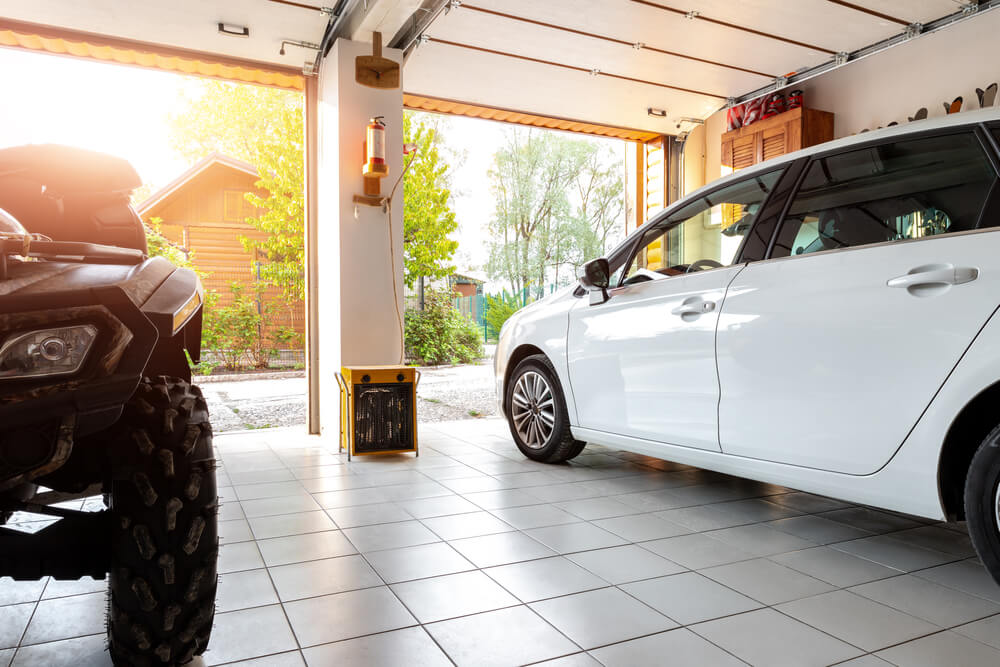


KEY FINDINGS
- Insurance is important for stored vehicles in Canada that still face risks of theft, fire, flooding, and vandalism.
- “Storage insurance” typically means switching to comprehensive-only coverage to protect against non-driving damage and lower premiums.
- Provinces have different insurance rules for stored vehicles; requirements vary for liability, plate surrender, and policy adjustments.
- Cancelling coverage for stored cars can raise future premiums due to a gap in insurance and legal penalties if you drive uninsured.
- Coverage for financed or leased vehicles is based on loan or lease agreements, or lenders' rules.
Updated on June 25, 2026 | Originally written: July 11, 2019
Yes—usually you still need insurance, even if your vehicle is sitting in storage.
The real question isn’t whether you need coverage while your car sits idle—it’s what kind of insurance is most appropriate, which protections you can safely drop, and what are provincial legal requirements for stored vehicles.
Many Canadians assume a parked vehicle doesn’t need insurance or isn’t exposed to risk. In reality, a stored car, motorcycle, or RV can still be damaged by hail, fire, theft, vandalism, or even a burst pipe in a storage facility. 'Storage insurance' typically involves a switch to comprehensive-only coverage, which protects against non-driving damage while lowering your premiums.
Stored vehicle insurance checklist: what to confirm first
Before you call your insurer, run through this checklist:
- Is the vehicle still registered? In most provinces, a registered vehicle legally requires at least some insurance coverage, even if it never moves.
- Is it stored on public or private property? A vehicle parked on a public road typically carries liability obligations, which aren’t required for a car locked in a private garage.
- Do you have a lender or lease agreement? The vehicle owner may have the final say on insurance coverage—and it's often stricter than provincial minimums.
Read more: What happens if my car floods in underground parking?
What is storage insurance?
Storage insurance generally means reducing your policy to comprehensive-only coverage. You can drop collision, liability, and accident benefits (optional from July 1 in Ontario), while retaining protection of a parked vehicle against non-driving risks.
- Comprehensive covers: Fire, theft, vandalism, hail, falling objects (think tree branches or ice), flooding, and windstorm damage.
- Comprehensive does not cover: Collision damage while parked (someone backing into your car, for instance), mechanical breakdown, or rodent damage—a surprisingly common storage-season claim that most policies explicitly exclude.
One thing worth knowing: Home insurance doesn’t include a vehicle in storage, unless you've added a specific endorsement to your home policy. Your auto coverage is what protects a parked vehicle.
Learn more: What is seasonal car insurance?
Do storage insurance rules differ by province?
Canadian provinces with public insurers work differently from systems with private markets. Key differences are:
Scroll horizontally to view full table on mobile →
| Province/region | Key rules | Storage insurance option | Plate surrender required? | Notes |
|---|---|---|---|---|
| Ontario | Only province with OPCF 16 endorsement | Comprehensive-only or OPCF 16 suspension | Yes (for OPCF 16) | OPCF 16 suspends liability and accident benefits but requires plate surrender. Most drivers choose comprehensive-only (~$100–300). Plate reinstatement may take 2–3 weeks. |
| British Columbia Insurance corporation of British Columbia (ICBC) | ICBC does not allow pausing Autoplan policies | Storage coverage (comprehensive-style) | No | Covers theft, fire, vandalism, and weather damage, but not liability. |
| Quebec Société de l’assurance automobile du Québec (SAAQ) | Hybrid system (SAAQ + private insurers) | Built into registration for some vehicles | Not typically | SAAQ covers personal injury. For motorcycles, snowmobiles, and ATVs, storage is included—notify SAAQ. Property damage is handled by private insurers. |
| Saskatchewan Saskatchewan Government Insurance (SGI) | Public insurer | Seasonal adjustments | Varies | Rules are specific—contact SGI directly for details. |
| Manitoba Manitoba Public Insurance (MPI) | Public insurer | Seasonal adjustments | Varies | Similar to Saskatchewan—check with MPI for exact rules. |
| Alberta | Private insurance market | Flexible, insurer-dependent | Typically no | No formal system—coverage depends on the insurer. |
| Atlantic Provinces | Private insurance market | Flexible, insurer-dependent | Typically no | Coverage varies across NB, NS, PEI, and NL based on insurer. |
Source: Individual insurers' websites.
Related: What is an auto insurance grace period?
What's the difference in storage insurance for cars, motorcycles, and RVs?
Cars (including classics and vintage vehicles)
For a standard car or a collector vehicle stored through winter, dropping to comprehensive-only is the most common and straightforward approach. The main risk is the ‘lapse problem’ discussed below. Classic car owners in particular should verify their agreed-value policy terms—some specialty policies have storage clauses already built in.
Motorcycles
Motorcycle insurance in Canada works differently from auto insurance. Most policies are structured on a seasonal rating model: premiums are higher during active riding months and lower when the bike is typically off the roads during winter. You're paying year-round, but the cost already accounts for off-season storage. Cancelling your policy during winter to save money doesn't make sense under this framework. You risk losing a storage-season rate benefit and risk a coverage gap.
Recreational vehicles (RV)
RV insurance is more complex because the vehicle category itself is broad. A self-propelled motorhome (Class A, B, or C) is treated like any motor vehicle and requires full auto insurance on the road.
A towed trailer has different liability requirements. The towing vehicle's policy often covers some liability for the trailer, but the trailer itself needs physical damage coverage separately. Tent trailers and pop-up campers sit at the lower end of the premium range, typically requiring comprehensive and liability coverage.
For all RV types, many insurers offer storage discounts during off-season, and some will bundle RV and auto policies for additional savings. If your RV is in a commercial storage facility, ask your insurer specifically whether that location type affects your coverage terms—it sometimes does.
Read more: Do you need gap insurance for your new vehicle?
Will cancelling stored car insurance cost more?
In the long run, yes. You can cancel insurance for four months to save on premiums. But when you reinstate the policy, your insurer records your gap in coverage history and reclassifies your risk profile higher. Your premiums could rise for the next one to three years.
Short-term savings can be eroded by long-term rate increases.
Beyond the financial impact, there are legal implications. Driving an uninsured vehicle in Ontario can result in fines up to $50,000, licence suspension, and vehicle impoundment.
Recommendation: Reduce coverage when your vehicle is unused, don't cancel it. Keep comprehensive at a minimum. Your insurance history stays continuous, your vehicle is protected, and reinstating to full coverage is a single call rather than a new application with a coverage gap on your record.
Can I reduce insurance on a financed or leased vehicle in storage?
If you're still making payments on a vehicle, you may not have the legal right to reduce your insurance below what your lender requires, regardless of what provincial rules allow.
Most financing and lease agreements include a clause requiring the borrower to maintain full insurance coverage—liability, collision, and comprehensive—for the entire term of the agreement. Dropping to comprehensive-only storage coverage could technically put you in breach of contract. In extreme circumstances, lenders can call the loan or repossess the vehicle if you breach terms of the agreement.
Before you make any changes to insurance on a financed or leased vehicle, read your financing agreement first. Call your lender and ask whether they allow a storage policy and reduced coverage. Always get a written confirmation of policy changes your lender permits.
Learn more: Does car insurance cost more if you lease your vehicle?
How do I put a vehicle into storage insurance, step by step?
- Read your financing agreement (if applicable) before anything else. Confirm whether you're allowed to reduce coverage.
- Check your policy renewal date. Some insurers charge mid-term adjustment fees. Making policy changes at renewal often costs less.
- Call your insurer or broker and ask specifically whether they offer storage or lay-up coverage options. If yours doesn't, this is worth shopping around for.
- Confirm what you’ve dropped and retained. Get a written confirmation of coverage adjustments and your updated premium.
- Pay attention to provincial requirements. If you're in Ontario and use OPCF 16, remember to surrender your plates. In Quebec, notify the SAAQ for seasonal vehicles.
- Plan ahead for your coverage reinstatement. Ontario recommends contacting your insurer two to three weeks before you plan to drive again and reinstate coverage you dropped during storage. Don't wait until the morning you want to take the car out.
- A stored vehicle isn’t risk free. It faces a different set of risks. The right insurance coverage can protect your vehicle for a fraction of what you'd pay for driving year-round.
Don't waste time calling around for auto insurance
Use Rates.ca to shop around, and compare multiple quotes at the same time.

Arshi Hossain
Arshi Hossain, Associate editor
Arshi Hossain is the associate editor at Rates.ca. She has 4+ years of experience in delivering strategy-backed digital content through various mediums. Her expertise lies in breaking down complex information, meeting people where they are, and in the moments that matter.
Prior to joining Rates.ca, she worked in the editorial and digital content space at Wealthsimple, supported digital strategies, and UX writing for payment products and solutions at Bank of Montreal. She has also worked with startups to support editorial, content writing, communications, copywriting, and marketing needs.
Featured Topics
Here's what Ontario drivers need to know about consequences of driving uninsured or getting injured in a collision without insurance.
While dealers clear inventory in the fall, best car deals depend on vehicle demand, supply stock, and when the next model year arrives at dealerships.
Eastern Ontario dominates Ontario's cheapest car insurance markets, with annual premiums starting at $1,824 in 2026.
Colour of your car won't change your auto insurance rate but could impact vehicle repair costs and resale value.

How 'Dieselgate', stricter emissions rules, and changing economics reshaped Canada's passenger vehicle market away from diesel.
Premium gas costs nearly 30¢ more per litre than regular, meaning drivers whose vehicles don't require it could save $400 to $700 a year at the pump.
CEO of Rates.ca, Igal Mayer explains how Covid-era price increases reshaped the auto market and what could bring costs down for consumers.
Accident forgiveness is an extra layer of protection for drivers at fault in their first collision; and helps prevent an increase in premiums.
Adaptive driving equipment won't always raise your car insurance premium, but disclosure of changes that could impact a car's value is mandatory.