Choose an Insurance Quote
What should you legally disclose to buyers when selling your home?



KEY FINDINGS
- Canadian home sellers must generally disclose known material latent defects.
- Patent defects are visible issues that buyers are expected to identify during an inspection.
- Latent defects are hidden problems that may require disclosure if they affect a home's safety, value, or habitability.
- Common examples include concealed mould, hidden water damage, structural damage, and foundation issues.
- Sellers who knowingly conceal material defects may face legal action after a sale closes.
- Death and other property stigmas usually do not require disclosure unless a buyer specifically requests information.
In Canada, sellers are usually required to disclose known material latent defects when selling their home. Hidden problems that make a property dangerous, uninhabitable, or significantly affect its value or intended use are considered necessary disclosures.
While real estate laws vary slightly between provinces, the core principle is similar across Canada: sellers cannot knowingly hide serious defects from buyers.
"The law is fairly uniform across Canada," says Mark Weisleder, lawyer, author, speaker, and senior partner at Real Estate Lawyers.ca LLP. "It is still very much 'buyer beware'."
What is the difference between a patent defect and a latent defect?
"A patent defect means a defect that is visible during a regular home inspection. It can include cracks in walls, windows, or floors," says Weisleder.
A latent defect is hidden and cannot be discovered through a reasonable inspection. Examples may include mould behind walls, concealed water damage, or structural issues that are not visible during an inspection.
One of the most important concepts in Canadian real estate law is understanding the difference between patent defects and latent defects.
Patent defects vs. Latent defects
| Patent defect | Latent defect | |
|---|---|---|
| Visibility | Visible during a reasonable inspection | Hidden and not discoverable during normal inspection |
| Who is responsible? | Buyer is generally responsible for identifying issues | Seller may have a duty to disclose if defect is material |
| Examples | Cracked walls, broken windows, damaged flooring | Hidden mould, unrepaired foundation failure, concealed water damage |
Source: RealEstateLawyers.ca, McMackin Law
This distinction reflects the legal principle of buyer beware (caveat emptor, meaning the buyer is responsible for identifying defects before purchase). Buyers are expected to conduct their own due diligence, including arranging a home inspection whenever possible.
What is a material latent defect?
"Material latent defect means it renders the home uninhabitable or dangerous for a buyer. This can include a foundation problem or a major flood that was not repaired," says Weisleder.
Not every hidden problem requires disclosure. A material latent defect is one that is serious enough that it could:
- Make the home unsafe
- Make it unfit for habitation
- Significantly affect its intended use
- Require expensive repairs that could influence a buyer's decision
According to Carolin MacDonald, compliance manager at Nova Scotia Real Estate Commission (NSREC), a material latent defect cannot be discovered through a reasonable inspection. To qualify, it must also make the property dangerous or unfit for habitation, require significant expense to remedy, or be something that can reasonably affect a buyer's decision.
In British Columbia, the BC Financial Services Authority (BCFSA)’s definition also extends to outstanding municipal remediation notices and unpermitted alterations.
Related: Can renovations offset falling home values in Canada?
What defects must sellers disclose?
According to experts like MacDonald, sellers must disclose known material latent defects. The key factor is that the seller must know about the issue. Common examples MacDonald suggests include:
| Defect | Requires disclosure? |
|---|---|
| Major foundation problems | Yes |
| Hidden water damage or chronic leaks | Yes |
| Concealed mould | Yes |
| Structural damage | Yes |
| High radon levels | Often, if known and material |
| Hidden asbestos or environmental hazards | Often, depending on severity |
| Major pest infestations | If hidden and material |
| Outstanding municipal work orders | Yes |
| Unpermitted renovations affecting safety or value | Often yes |
| Cosmetic wear and tear | No |
| Visible cracked drywall | Usually no (patent defect) |
"Sellers and their agents, if they know about it, must disclose any material latent defect that they are aware of," says Weisleder.
Sellers commonly provide information about a property's condition through a property disclosure statement, although requirements vary by province. According to BCFSA, real estate licensees also have their own obligation to disclose known material latent defects before a legal contract is signed.
NSREC’s MacDonald says under Nova Scotia's by-laws, the provincial Commission expects licensees to disclose known material latent defects as soon as they're aware of them.
"A licensee who is providing real estate services to a client who is disposing of real estate must provide written disclosure to all other parties to the trade, promptly and before any agreement for the acquisition or disposition of the real estate is entered into, any material latent defect in the real estate that is known to the licensee."
Learn more: What are real estate contingencies?
What if the defect was repaired?
A previous issue does not necessarily need to be disclosed if it has been fully repaired, and no ongoing problem remains.
"If the defect was properly repaired, such as a flood or foundation problem, and no problem persisted, then no disclosure is required," says legal expert Weisleder.
However, sellers should keep documentation showing repairs were completed professionally in case questions arise during the sale. Invoices, permits, and inspection reports can help demonstrate that the issue was properly addressed.
Related: Why title insurance matters
Are disclosure rules when selling a home different across Canada?
Although each province regulates real estate slightly differently, underlying legal principles are broadly similar. Weisleder says the law is "fairly uniform across Canada”.
Some provinces have additional regulatory requirements for real estate professionals. For example:
| Province | Additional disclosure requirements |
|---|---|
| British Columbia | Licensees must provide written disclosure of known material latent defects before a contract is signed. |
| Nova Scotia | Commission bylaws require licensees to promptly disclose known material latent defects in writing before an agreement is entered into. |
| Quebec | Civil Code provides strong protections for buyers regarding hidden or latent defects, although legal framework differs from that of common law provinces. |
MacDonald says that while she can't speak to other provinces, Nova Scotia's requirements are based on common law principles.
"Our understanding of consumer disclosure requirements is based on the common law, whereby sellers are required to disclose material latent defects to buyers, and where patent defects do not carry mandatory requirements."
Because disclosure obligations can depend on specific circumstances of a transaction, sellers who are unsure what they must disclose should seek legal advice.
Read more: Everything you need to know about home appraisals
Do sellers have to disclose if someone died in the home?
Deaths, suicides, murders, or other events that may create a psychological stigma usually do not have to be disclosed proactively in most Canadian jurisdictions.
"In general, no psychological stigma needs to be disclosed,” says Weisleder citing situations involving murder, suicide, natural death, shooting, or a crazy neighbour.
The BCFSA similarly states that sellers are not required to volunteer information about stigmas, such as deaths on a property, unless specifically asked.
MacDonald says Nova Scotia follows a similar approach.
"In Nova Scotia, we do not require licensees to disclose stigmas; however, if asked by the buyer, they are to answer truthfully."
What if the buyer explicitly asks about property stigmas?
While sellers of homes generally don't have to volunteer information about stigmas, they cannot misrepresent facts.
"If a buyer asks about any of these issues, the seller and the agent must answer truthfully," says Weisleder.
He notes this is one reason some purchase agreements contain representations stating there were no murders, suicides, or natural deaths on the property. If a seller signs such a clause, it must be accurate.
Can a buyer sue if a seller fails to disclose something?
If a seller knowingly conceals a material latent defect, a buyer may have legal remedies after closing.
"If the seller knows about a major hidden defect and does not disclose, they can be sued for the repair costs after closing. But a buyer must be able to prove a seller knew [of the defect]," says Weisleder.
According to the BCFSA, what a buyer can actually recover from suing the seller for undisclosed defects depends on "the facts, jurisdiction, and whether the non-disclosure was negligent, intentional, or fraudulent". Remedies as a result of a successful lawsuit against non-disclosure can range from compensation for repair costs and a reduction in the purchase price to damages. In rare cases, non-disclosure of material and known defects could result in rescission of the home sale entirely.
Does waiving a home inspection cost you legal protection as a buyer?
Skipping a home inspection can limit your legal options as a buyer if problems surface after closing on your home purchase. Buyers are still expected to exercise reasonable diligence, even where seller disclosure obligations exist.
"If you buy without a home inspection being done, you will likely have to accept any defect that a home inspector could have found," says Weisleder.
That's why home inspections remain one of the most important protections available to buyers, particularly in competitive housing markets.
What are tips sellers can use to reduce legal risk?
If you're preparing to sell your home:
- Disclose any known material latent defects honestly
- Keep records of major repairs and renovations
- Retain permits and inspection reports where applicable
- Answer buyer questions truthfully
- Consult your lawyer if you're unsure whether something should be disclosed
- Work closely with your real estate agent, who may have separate regulatory disclosure obligations
Ultimately, clear communication and proper disclosure can help protect both parties. As the BCFSA notes, "where a buyer has concerns about the accuracy or completeness of information provided by the seller, the buyer should consider obtaining independent legal advice to better understand their rights and options."
Read next: How much are real estate commission rates in Canada?
Frequently asked questions (FAQ)
Do I have to disclose mould when selling my house?
Yes, if the mould is hidden and is a known material latent defect that affects the home's safety or habitability, it should generally be disclosed.
Do I have to disclose a previous flood?
Depends; if prior flood damage was properly repaired and no ongoing problem remains, disclosure may not be required, according to Weisleder.
Do I have to disclose asbestos?
Yes, if asbestos is a known material latent defect that poses a significant health or safety concern to the new property owner, disclosure by a seller may be appropriate.
Do I have to disclose a death in the home?
No, sellers generally do not have to disclose a death that occurred in a home that some consider a stigma. However, if a potential buyer specifically asks about a prior death in the home, sellers and their agents should answer truthfully.
Can I be sued for not disclosing a defect?
Yes, a seller can be sued for non-disclosure of a known defect. Buyers may have legal remedies if they can prove the seller knowingly failed to disclose a material latent defect or deliberately concealed a known problem from a seller.
Ready to find a mortgage for your dream home?
See and compare the best mortgage rates in Canada.

Caitlin McCormack
Caitlin McCormack, Freelance writer
Caitlin McCormack is a writer based in Toronto. Her work has appeared in MSN, Food Network, HuffPost, What to Expect, Today's Parent, and Mashable, among others. When she isn't writing, she's busy chasing after her two sons, testing out new recipes, and working on her century-old fixer-upper.
Featured Topics
Mortgage insurance is mandatory in Canada if your down payment is under 20%. Here's what it costs, who qualifies, and how to lower your premium.

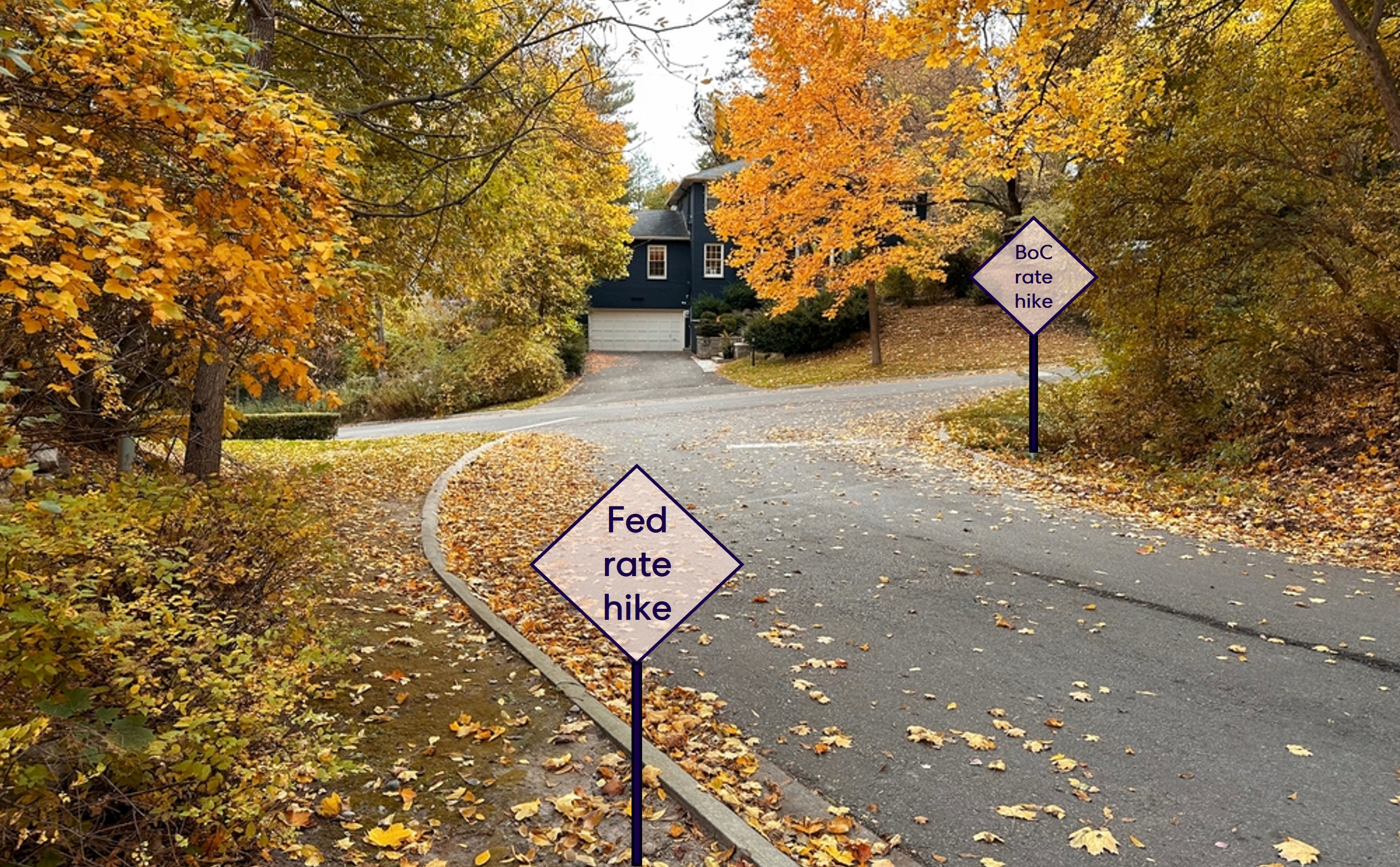
An analysis of U.S and Canada central bank hiking cycles over 30 years to help you plan and navigate a long-term mortgage strategy.
Personal debt shrinks the mortgage you may qualify for—every extra $100 in monthly payments can reduce total loan amount by $15,000–$20,000.

An overview of important considerations when applying for a mortgage as a single parent.

BoC overnight lending rates remain unchanged, but higher gas prices, new U.S. tariffs, and a slowing economy could shape what's next for Canadians.

Canada's mortgage renewal wave has nearly half of homeowners spending 50%+ of monthly outgoings on housing; younger Canadians and newcomers most strained.

Reverse mortgages can unlock home equity for older Canadians but be aware of risks and high borrowing costs.

Risk tolerance is a lens by which you assess financial trade-off between possible stability with lower returns vs. potential upside involving higher risk.

Buying a home in Canada? Learn the difference between a deposit and down payment, plus minimum payout rules when deal closes.