Choose an Insurance Quote
How much insurance costs in 2026 for the most stolen cars in Canada [2019–2024]


KEY FINDINGS
- The 2024 Lexus TX350 is Canada's most-stolen vehicle [2019–2024], with a theft frequency 83x the average—double the 2024 Toyota Grand Highlander (38x), according to insurance claims data. Roughly one in four was stolen in Ontario in 2024.
- Hybrids are stolen more than gas models; EVs the least. The 2024 Tundra Hybrid scores 42x vs. 23x for the similar gas model. EVs sit at just 1–2x the stolen average potentially due to a smaller stock of cars and weak overseas resale demand.
- Federal and provincial efforts unite to reduce auto theft. Port X-ray scanners recovered 1,205 stolen vehicles in the GTA, new Criminal Code penalties reach 14 years, and the June 2026 Bail and Sentencing Reform Act adds reverse-onus bail for organized auto theft.
- Auto theft fell 18% in 2024 and again in 2025, led by Ontario (-25.9%) and Quebec (-22.2%). Losses in 2025 still topped $900 million as thieves pivot to luxury vehicles.
- High-theft vehicles cost more to insure: $5,000–$6,600 a year in Toronto and may face surcharges or mandatory trackers. A Faraday pouch, steering wheel lock, and aftermarket GPS tracker remain best defences.
Theft of luxury SUVs has been rampant in Canada through organized crime networks, an Équité report shows. Federal and provincial efforts have made inroads at curbing the multibillion-dollar auto theft export pipeline. Anti-theft and prevention efforts in Ontario reduced vehicle theft by 36% between 2023 and 2025.
If you're shopping for a vehicle, renewing your insurance, or just trying to understand your theft risk, here’s a look at which vehicles were most coveted by thieves in Canada between 2019–2024, according to claims data from the Insurance Bureau of Canada (IBC). Équité is expected to release data on 2025's most stolen cars later in November.
What does IBC's theft frequency measure?
Per the IBC’s data, theft frequency scores reflect insurance claims of vehicles stolen between 2019–2024. The analysis covers vehicles from model years 1997/98 to 2025/26.
How to read tables below: Theft frequency measures the relative number of theft claims per insured vehicle. A score of 100 represents the average vehicle in the dataset. A score of 8,248 means theft claims occurred about 82 times more frequently than average.
Based on insurance claims data, the 2024 Lexus TX recorded the highest theft frequency between 2019–2024.
One caveat: “A relative score is a ratio, so a small insured base can inflate it,” says David Mayer, Rates.ca director of insurance and underwriting. When few vehicles are insured, a handful of thefts can send the score soaring. A rare luxury SUV can post a very high index on a few hundred thefts.
Conversely, the RAV4 with millions of cars on the road can log thousands of stolen claims but still carry a lower theft score. Theft frequency on the same car can also vary between model years: the Acura TLX AWD sits near 1x average for 2017 but about 19x for 2021. That doesn’t necessarily mean the 2021 Acura model suddenly became 19x more stolen.
Related: The 10 most stolen vehicles in Canada for 2025
Top five stolen sedans: Gasoline [2019–2024]
| Rank | Make/model | Model year | Theft frequency x avg | Estimated insurance premiums: recommended policy |
|---|---|---|---|---|
| 1 | ACURA TLX 4DR AWD | 2022 | 20x | $346 / month $4,149 / year |
| 2 | ACURA TLX 4DR AWD | 2021 | 19x | $274 / month $3,293 / year |
| 3 | ACURA TLX 4DR | 2019 | 17x | $255 / month $3,056 / year |
| 4 | ACURA TLX 4DR | 2020 | 16x | $257 / month $3,081 / year |
| 5 | HONDA CIVIC 4DR | 1999 | 12x | no quote available for models 2001 or older; please contact your broker |
Top five stolen sedans: Hybrid [2019–2024]
| Rank | Make/model | Model year | Theft frequency x avg | Estimated insurance premiums: recommended policy |
|---|---|---|---|---|
| 1 | HONDA ACCORD HEV 4DR | 2024 | 6x | $281 / month $3,371 / year |
| 2 | LEXUS ES 300h 4DR | 2020 | 5x | $274 / month $3,282 / year |
| 3 | TOYOTA CAMRY HEV 4DR | 2023 | 5x | $277 / month $3,324 / year |
| 4 | TOYOTA CAMRY HEV 4DR | 2024 | 4x | $312 / month $3,743 / year |
| 5 | HONDA ACCORD HEV 4DR | 2023 | 3x | $282 / month $3,382 / year |
Top five stolen SUVs: Gasoline [2019–2024]
| Rank | Make/model | Model year | Theft frequency x avg | Estimated insurance premiums: recommended policy |
|---|---|---|---|---|
| 1 | LEXUS TX350 4DR AWD | 2024 | 83x | $509 / month $6,109 / year |
| 2 | TOYOTA GRAND HIGHLANDER 4DR AWD | 2024 | 38x | $485 / month $5,815 / year |
| 3 | LEXUS RX350 4DR AWD | 2023 | 31x | $490 / month $5,882 / year |
| 4 | LEXUS RX350 4DR AWD | 2024 | 29x | $523 / month $6,277 / year |
| 5 | LAND ROVER DEFENDER 4DR AWD | 2022 | 20x | $475 / month $5,697 / year |
In IBC's How Cars Measure Up data, the 2024 Lexus TX350 scores 82.5x the average vehicle for theft frequency, well ahead of any other gasoline SUV.
Mayer points to research by Équité that shows the 2024 Lexus TX Series had the highest theft frequency in Ontario, “with roughly one in four stolen".
The 2024 Toyota Grand Highlander and the 2023 Land Rover Defender followed as the next most frequently stolen vehicles in the province. The same three vehicles top our list of most stolen gasoline SUVs.
Équité's 2025 report points to security design as a common thread. It says newer SUVs with keyless security weaknesses remain prime targets for organized criminal networks, especially in Ontario and Quebec. Its 2024 report noted that almost every vehicle on the national list was a 2019 or newer model with keyless-ignition weaknesses and without anti-theft devices that meet the ULC 338 standard.
Top five stolen SUVs: Hybrid [2019–2024]
| Rank | Make/model | Model year | Theft frequency x avg | Estimated insurance premiums: recommended policy |
|---|---|---|---|---|
| 1 | TOYOTA GRAND HIGHLANDER HEV 4DR AWD | 2024 | 46x | $486 / month $5,836 / year |
| 2 | LEXUS RX350h 4DR AWD | 2023 | 34x | $438 / month $5,261 / year |
| 3 | LEXUS RX500h 4DR AWD | 2023 | 34x | $483 / month $5,790 / year |
| 4 | LEXUS RX350h 4DR AWD | 2024 | 27x | $484 / month $5,808 / year |
| 5 | LEXUS RX450h+ 4DR AWD | 2024 | 27x | $553 / month $6,641 / year |
Top five stolen pickup trucks: Gasoline [2019–2024]
| Rank | Make/model | Model year | Theft frequency x avg | Estimated insurance premiums: recommended policy |
|---|---|---|---|---|
| 1 | TOYOTA TUNDRA 4WD | 2024 | 23x | $385 / month $4,618 / year |
| 2 | TOYOTA TUNDRA 4WD | 2023 | 19x | $371 / month $4,446 / year |
| 3 | FORD F350 SD 4WD | 2007 | 17x | $117 / month $1,405 / year |
| 4 | CHEVROLET SILVERADO 3500 4WD | 2002 | 13x | $108 / month $1,294 / year |
| 5 | GMC SIERRA 3500 4WD | 2002 | 13x | $121 / month $1,446 / year |
Top five stolen pickup trucks: Hybrid [2019–2024]
| Rank | Make/model | Model year | Theft frequency x avg | Estimated insurance premiums: recommended policy |
|---|---|---|---|---|
| 1 | TOYOTA TUNDRA HEV 4WD | 2024 | 42x | $403 / month $4,841 / year |
| 2 | TOYOTA TUNDRA HEV 4WD | 2023 | 37x | $378 / month $4,539 / year |
| 3 | TOYOTA TUNDRA HEV 4WD | 2022 | 22x | $348 / month $4,180 / year |
| 4 | FORD F150 HEV 4WD | 2023 | 3x | $221 / month $2,657 / year |
| 5 | FORD F150 HEV 4WD | 2024 | 3x | $316 / month $3,796 / year |
Top five stolen electric vehicles: EV [2019–2024]
| Rank | Make/model | Model year | Theft frequency x avg | Estimated insurance premiums: recommended policy |
|---|---|---|---|---|
| 1 | BMW iX 4DR AWD | 2023 | 2x | $285 / month $3,423 / year |
| 2 | FORD F150 LIGHTNING 4WD | 2023 | 1x | $294 / month $3,523 / year |
| 3 | FORD MUSTANG MACH-E 4DR AWD | 2023 | 1x | $318 / month $3,810 / year |
| 4 | PORSCHE TAYCAN 4DR AWD | 2020 | 1x | $463 / month $5,557 / year |
| 5 | FORD F150 LIGHTNING 4WD | 2022 | 1x | $251 / month $3,006 / year |
Source: Insurance Bureau Canada (IBC) How Cars Measure Up, 2026 dataset (2019–2024 accident year claims data), Rates.ca insurance quoter
Auto insurance premiums were calculated using the Rates.ca quoter and reflect a recommended personal-use policy including collision and comprehensive coverage for a 35-year-old male driver with a clean driving record, living in Toronto, who drives approximately 10,000 kilometres annually.
Some key findings from IBC's theft claims data between 2019–2024:
- Hybrids on average are stolen more than their gas twins: The 2024 Toyota Tundra HEV scores 42x the average vehicle versus 23x for the gas Tundra, and the Grand Highlander HEV scores 46x versus 38x for the gas version. Across all hybrid/gas pairs in IBC's dataset, theft scores are higher for hybrids in 43 of 75 matched pairs (57%).
- EVs sit at the bottom of every comparable segment: Every EV theft score sits slightly above average. Low theft scoring could be due to fewer EVs on the road, or genuinely better security tech (immobilizers, app-based tracking).
- Luxury SUVs dominate the top of the theft list: Lexus, Land Rover, and Acura account for most of the highest theft scores across segments—aligned with organized crime rings targeting vehicles that resell or export well.
Learn more: Installing an anti-theft device could save you money on insurance
How much has theft fallen since its record high?
Auto theft in Canada surged through 2021–2023: stolen vehicle counts climbed from 53,382 in 2021 to 70,082 in 2022, then hit a record 70,475 in 2023.
That run ended in 2024, when national auto theft fell 18.6% year-over-year to just over 57,000 private passenger vehicles—still a heavy toll, but the first real drop in three years. Those 2024 declines varied across regions: Quebec led with a 32.4% drop, Ontario fell 17.4%, Western Canada fell 12.7%, and Atlantic Canada held flat.
“The decline is real,” Mayer says, noting that levels are approaching pre-2021 norms. The trend lower continued into 2025. Équité’s 2025 auto theft trend report recorded a further 18% national drop from 2024. Ontario (-25.9%) and Quebec (-22.2%) posted steepest declines, the two provinces that drove the crisis at its peak.
While car theft is showing a declining trend, the issue is not resolved entirely. Auto theft losses topped $1 billion in insurance claims in 2024, and 2025 claims still ran an estimated $900 million.
Organized crime is adapting rather than backing off: Vehicle finance fraud at the ports of Montreal and Halifax rose 72% year-over-year, and thefts of high-value ($200K+) luxury vehicles jumped 47.5%—potentially suggesting as theft gets riskier, criminals are shifting toward fewer targets with higher payoffs.
Related: Proposed changes to motor vehicle safety regulations means cars could be harder to steal in 2028
What did Canada do to combat vehicle theft?
The 2024–2025 decline in auto theft was a result of federal and provincial targeted initiatives and enforcement. Here's the key timeline:
- February 2024: Ottawa held a national summit on auto theft, kicking off commitments to modernize vehicle safety standards, tighten port security, and review Criminal Code penalties.
- May 2024: Launch of the National Action Plan on Combatting Auto Theft: $28 million for CBSA container screening, expanded scanning at rail yards, RCMP training, and a GPS-tracking protocol for stolen vehicles.
- Budget 2024: New Criminal Code offences for auto theft tied to violence or organized crime (up to 14 years), plus new offences for theft devices and money laundering.
- Mid-2024: CBSA deployed a mobile X-ray scanner to the GTA and intercepted 1,205 stolen vehicles at ports and rail yards over the year.
- June 2026: The Bail and Sentencing Reform Act (Bill C-14) became law, adding reverse-onus bail for violent or organized-crime-linked vehicle theft.
Enforcement, border tech, and tougher laws have been working together to reduce auto theft in Canada, and there’s more work to do.
Related: How the trade war could drive up auto thefts and insurance costs
How much does theft frequency weigh on comprehensive premiums?
According to insurance expert, Mayer, insurers’ rating models are proprietary, so it is hard to guess a split between the impact of theft frequency on premiums vs. vehicle value and repair costs. Conceptually, theft cost is frequency times severity, so vehicle value is a significant variable alongside frequency.
He suggests a shopper should instead ask: Is this exact model, year, and trim on the insurer’s high-theft list? Those lists can differ by insurer. Does the insurer add a surcharge or a separate theft deductible, or require a tracker or anti-theft device? Some Ontario insurers do. Will they offer theft coverage at all? Insurers aren’t required to offer it.
Tips if you're buying or insuring a highly stolen vehicle
Shopping for a Lexus, Land Rover, Acura, or hybrid full-size SUV/truck? You may see theft risk show up in your comprehensive premium.
Already own one of these models? Here are a few concrete steps that can block relay-attack and key-cloning methods thieves are using:
- Block signal: Store your key fob in a Faraday pouch or box overnight to stop relay attacks that boost your fob's signal from inside your house.
- Add visible deterrent: A steering wheel lock is old-school, but still works, as it makes your car a slower, riskier target.
- Install GPS tracker: Aftermarket trackers (separate from the factory system, which thieves can disable) improve recovery odds if your car is taken.
- Ask about aftermarket immobilizers: Some installers offer kill-switch or secondary immobilizer systems that add a step thieves can't bypass with a cloned key.
- Watch where you park away from home: Équité Association’s fall fraud awareness campaign, Fortifying Your Fall Fraud Defences, includes guidance on preventing vehicle theft at shopping malls, hotels, and airports. These areas are places where cars sit unattended for hours and thieves know owners aren’t nearby.
Shopping for an EV or plug-in? IBC data shows that EVs currently carry the lowest theft frequency risk. “Insurers cite lower overseas resale demand for EVs and hybrids, thieves don't want to steal cars that aren't attractive in overseas resale markers,” Mayer says.
Read next: Does car colour affect your auto insurance premium?
Save on Ontario auto insurance
Auto insurance rates change often, so how do you know if you're still getting the best deal? By comparing car insurance quotes upon renewal and at other key milestones (such as when you buy a new vehicle, or more to a different neighbourhood) you can make sure your rates remain competitive. Save money by comparing Ontario car insurance quotes today.

Arshi Hossain
Arshi Hossain, Associate editor
Arshi Hossain is the associate editor at Rates.ca. She has 4+ years of experience in delivering strategy-backed digital content through various mediums. Her expertise lies in breaking down complex information, meeting people where they are, and in the moments that matter.
Prior to joining Rates.ca, she worked in the editorial and digital content space at Wealthsimple, supported digital strategies, and UX writing for payment products and solutions at Bank of Montreal. She has also worked with startups to support editorial, content writing, communications, copywriting, and marketing needs.
Featured Topics
Learn when to leverage major life changes to shop around for cheaper car insurance and save money.

Care-First 2027 ends Alberta’s auto insurance rate cap. Projects $300 in avg. savings, encourages comparing rates, shifts focus from courts to care.
Here's what Ontario drivers need to know about consequences of driving uninsured or getting injured in a collision without insurance.
While dealers clear inventory in the fall, best car deals depend on vehicle demand, supply stock, and when the next model year arrives at dealerships.
Eastern Ontario dominates Ontario's cheapest car insurance markets, with annual premiums starting at $1,824 in 2026.
Colour of your car won't change your auto insurance rate but could impact vehicle repair costs and resale value.

How 'Dieselgate', stricter emissions rules, and changing economics reshaped Canada's passenger vehicle market away from diesel.
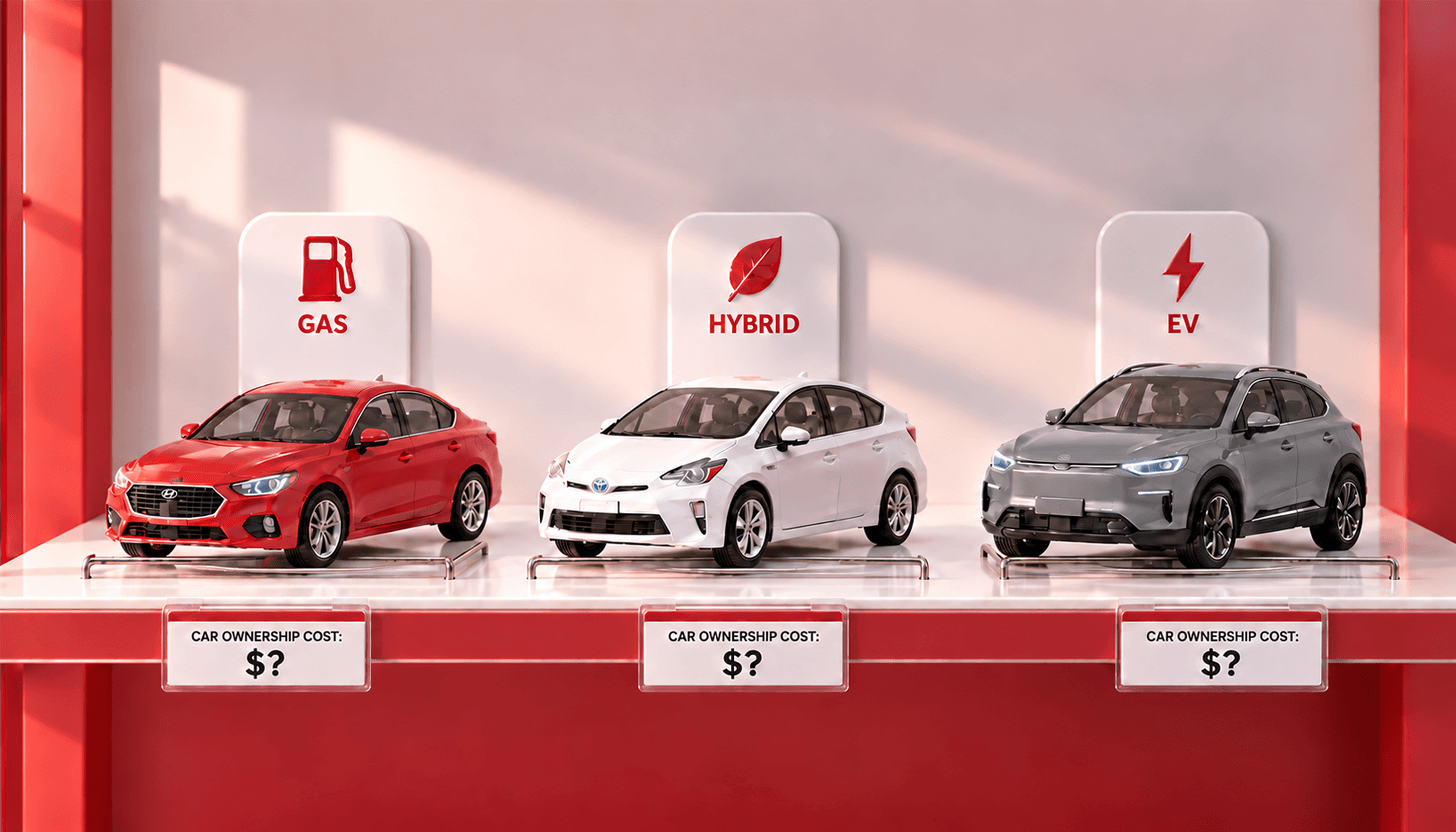
Premium gas costs nearly 30¢ more per litre than regular, meaning drivers whose vehicles don't require it could save $400 to $700 a year at the pump.
CEO of Rates.ca, Igal Mayer explains how Covid-era price increases reshaped the auto market and what could bring costs down for consumers.