Choose an Insurance Quote
The cost of impaired driving in Canada

Updated: March 2026
IMPAIRED DRIVING IN CANADA — QUICK FACTS
- Legal BAC limit: 0.08%
- Warn range penalties begin at: 0.05%
- First offence minimum fine: $1,000
- Criminal record: Yes
- Insurance impact: High-risk driver classification for up to 6 years
Impaired driving remains one of the most serious road‑safety issues in Canada. Every year, alcohol‑ and drug‑impaired drivers cause preventable deaths, life‑altering injuries, and lasting emotional and financial consequences for families.
Drivers caught behind the wheel while impaired also face some of the toughest penalties in the country.
This year, National Impaired Driving Prevention Week is running from March 15 to 21, making it an important time to look at the latest data on impaired driving in Canada, the legal limits for alcohol and drugs, and what happens if you’re charged with driving under the influence.
The reality of impaired driving in Canada
Despite increased awareness and stricter penalties, impaired driving remains a serious issue in Canada, with recent data showing a rise in fatalities and risky behaviour. According to the Traffic Injury Research Foundation (TIRF), deaths caused by drinking drivers increased by 14% from 2021 to 2022, jumping from 457 to 521.
In 2025, nearly 1 in 10 drivers (9.2%) admitted to driving while over the legal alcohol limit, up sharply from 5.9% in 2024. At the same time, public concern about impaired driving has dropped, with only 71.8% of Canadians seeing it as a major problem — the lowest level in 20 years.
While alcohol-related crashes are still far below 1990s levels, Steve Sullivan, CEO of MADD Canada, said in a TIRF statement that “the combined rise in impaired driving fatalities and self-reported drinking and driving is concerning and suggests more targeted prevention, enforcement and public awareness strategies remain essential.”
Learn more: Major or minor traffic conviction — What’s the difference?
Legal blood alcohol limits for drivers in Canada
Canada’s laws are designed to keep roads safe by enforcing strict regulations based on a driver’s experience level. Canada has a zero-tolerance policy for new drivers, while fully licensed drivers have a strict legal limit.
Understanding the legal limits for alcohol and drug consumption while driving is crucial, as even small amounts can impair judgment and reaction time.
- G1, G2, M1, and M2 drivers (Graduated Licensing System): Absolutely no alcohol or drugs in your system while driving. Even a trace amount can result in serious consequences.
- Fully licensed drivers (G, M, etc.): The legal blood alcohol concentration (BAC) limit is 0.08%. However, many provinces have “warn range” penalties that start at 0.05% BAC.
So, what does that mean in real terms? While BAC is affected by factors like weight, metabolism, and food intake, it can rise faster than you think. For example, a male who is 5'7" and weighs 160 lbs will generally fall under these categories:
- 1-2 drinks (beer, wine, or a single shot of liquor) could put you near or over the 0.05% BAC warn range.
- 3-4 drinks could put you at or over the 0.08% BAC limit, making it a criminal offence to drive.
Even if you think you “feel fine,” alcohol impairs judgment, reaction time, and coordination – all of which are key skills needed for safe driving.
It is also critical to understand the "2-hour" rule, which makes it a criminal offence to have a blood alcohol concentration at or above the legal limit within two hours of ceasing to operate a vehicle.
Read more: Requirements and restrictions for getting your G1 in Ontario
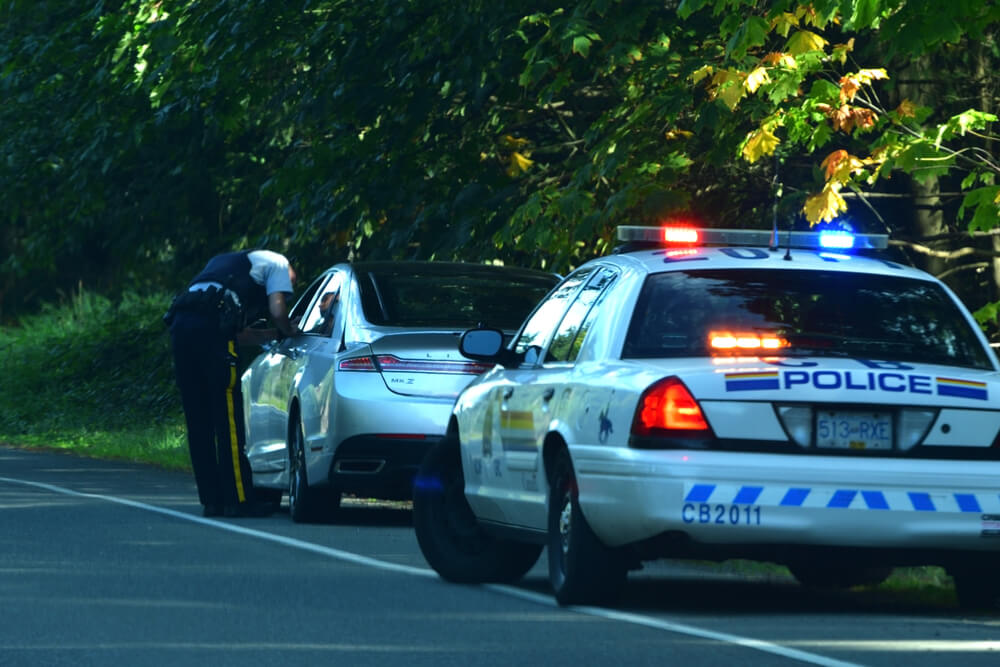
What happens if you’re pulled over for impaired driving?
Law enforcement officers across Canada are trained to detect impaired drivers and have strict procedures in place to ensure road safety. If you’re pulled over and suspected of driving under the influence, here’s what you can expect:
- Roadside screening: You may be asked to take a breathalyzer test or perform a standardized field sobriety test (e.g., walking in a straight line).
- Failure or refusal: If your BAC is over the legal limit, or you refuse testing, you will face immediate license suspensions and vehicle impoundment right at the roadside.
- Further testing: If necessary, you’ll be taken to a police station for additional breath or blood tests.
What are the long-term consequences of impaired driving?
The consequences of impaired driving extend far beyond the immediate dangers on the road. While the risk of causing a serious or fatal crash is the worst imaginable outcome, the legal and financial blowback can also derail a driver’s life.
The penalties for driving under the influence are severe and long-lasting. Here’s what you could be facing if convicted:
- Criminal record: A first-time conviction results in a permanent criminal record, which can affect job prospects, travel, and more.
- License suspension: You could lose your driving privileges for months, years, or even permanently.
- Fines and jail time: Minimum fines start at $1,000, and repeat offenses can lead to jail time.
- Ignition interlock program: You may have to install a breathalyzer in your vehicle before you’re allowed to drive again.
In Canada, an impaired driving offence stays on your driving record for at least three years from the date of conviction, and on your criminal record for decades. An impaired driving conviction can also impact your insurance premiums for six years, making coverage significantly more expensive.
How impaired driving affects your car insurance rates
If the legal penalties weren’t enough, the financial fallout is just as severe, especially when it comes to your insurance. Your insurance rates will skyrocket after an impaired driving conviction. In most cases:
- You’ll be labeled a high-risk driver, making it difficult (and expensive) to get coverage.
- Premiums can double or triple, costing you thousands more per year.
- Some insurers may refuse to cover you altogether, forcing you to seek specialized, high-risk insurance.
Drive sober, stay safe
The consequences of impaired driving are severe – not just legally and financially, but morally. A single decision can cost drivers their future, or worse, someone’s life.
The safest choice? Plan ahead. Use a designated driver, call a cab, take public transit, or use a ride-sharing service. There are always safer options than getting behind the wheel impaired.
Read next: How cannabis use behind the wheel can impact your car insurance rate
Don't waste time calling around for auto insurance
Use Rates.ca to shop around, and compare multiple quotes at the same time.

Caitlin McCormack
Caitlin McCormack, Freelance writer
Caitlin McCormack is a writer based in Toronto. Her work has appeared in MSN, Food Network, HuffPost, What to Expect, Today's Parent, and Mashable, among others. When she isn't writing, she's busy chasing after her two sons, testing out new recipes, and working on her century-old fixer-upper.
Featured Topics
While dealers clear inventory in the fall, best car deals depend on vehicle demand, supply stock, and when the next model year arrives at dealerships.

Eastern Ontario dominates Ontario's cheapest car insurance markets, with annual premiums starting at $1,824 in 2026.
Colour of your car won't change your auto insurance rate but could impact vehicle repair costs and resale value.

How 'Dieselgate', stricter emissions rules, and changing economics reshaped Canada's passenger vehicle market away from diesel.
Premium gas costs nearly 30¢ more per litre than regular, meaning drivers whose vehicles don't require it could save $400 to $700 a year at the pump.
CEO of Rates.ca, Igal Mayer explains how Covid-era price increases reshaped the auto market and what could bring costs down for consumers.
Accident forgiveness is an extra layer of protection for drivers at fault in their first collision; and helps prevent an increase in premiums.
Adaptive driving equipment won't always raise your car insurance premium, but disclosure of changes that could impact a car's value is mandatory.

Buying Canadian cars may be top of mind in ongoing tit-for-tat tariff spat with U.S., but price advantages aren’t connected to assembly location.