Choose an Insurance Quote
Bank of Canada holds rate at 2.75% for the third consecutive time
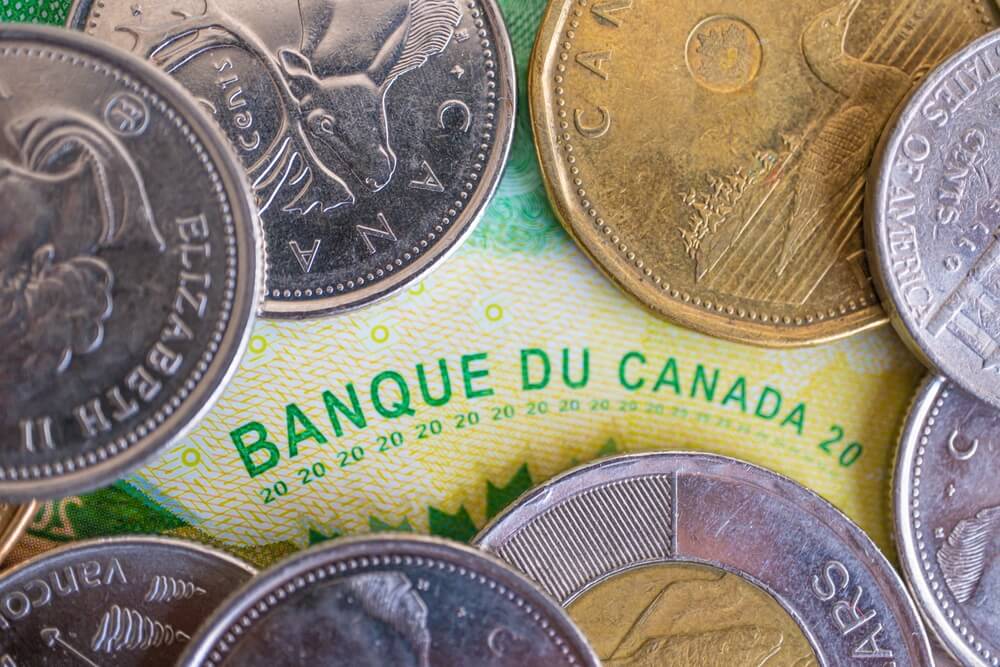

With inflation fluctuating and housing markets diverging across Canada, the Bank of Canada announced it will hold its key interest rate at 2.75% for the third time in a row.
"We decided to hold our policy interest rate unchanged as we gain more information about the path forward for US tariffs and their impacts," said Governor Tiff Macklem during the morning announcement on July 30.
"Since January, we've had a seismic shift in US trade policy and a sharp increase in uncertainty," he added. "Households and businesses in Canada and beyond are bracing for weaker growth and higher prices."
The rate has held steady since March, when the Bank cut it from 3.00%. That followed an earlier cut in January. Since then, the Bank has maintained the rate through its April, June, and now July decisions.
Here’s what the recent rate hold means, and what Canadians should keep in mind as they plan their next financial steps.
Inflation remains stubborn
One of the key reasons behind the Bank’s decision to hold rates is the persistence of inflation, which continues to challenge policymakers and households alike.
Canada’s inflation rate rose slightly in June, reaching 1.9%, up from 1.7% in May. While this marks a modest increase, some categories like gasoline and fresh produce saw slower price growth, pointing to slight easing in overall inflation.
Despite this, core inflation—which excludes food and energy—rose to 2.7%, up from 2.5% in May 2025, showing that prices for everyday essentials are still climbing steadily. The Bank of Canada focuses on core inflation because it reflects longer-term trends in costs like housing, transportation, and groceries.
"Some businesses have said suppliers are proactively raising prices in anticipation of future tariffs. Near-term inflation expectations have also risen because households and businesses expect tariffs will raise prices," said Macklem.
Helping to keep overall inflation in check is the recent removal of Canada’s consumer carbon price which, according to StatsCan, is expected to dampen inflation in the coming months.
As Dr. Roslyn Kunin, an independent consulting economist and principal of Roslyn Kunin and Associates, Inc., also notes, “Wages in Canada have been keeping up with inflation, making it less likely that the BoC will lower rates.”
Still, economists say the broader inflation picture remains challenging. In a recent report, RBC economists Claire Fan and Abbey Xu pointed out that people are still spending a lot, which is keeping prices high — even though retail sales dipped a bit in May.
Last month: Bank of Canada pauses rates for the second consecutive time
What’s driving inflation?
- Vehicle prices surged in June. Passenger vehicles rose 4.1% year-over-year, up from 3.2% in May. Used cars posted their first annual price increase in 18 months, while new car prices climbed 5.2% in May.
- Clothing and footwear prices also saw an increase of 2% in June compared to last year. Statistics Canada attributes this to tariff uncertainty, which has hit the clothing industry especially hard.
- Grocery prices increased 2.8% in June, a slowdown from 3.3% in May. The easing came largely from lower prices for fresh fruits and vegetables, marking their first annual decline since October 2021.
Labour market gains contrast with regional job losses
While inflation remains a key concern, the labour market is sending mixed signals, adding complexity to the Bank of Canada’s policy decisions.
Canada’s labour market added 83,000 jobs in June, pushing the national unemployment rate down to 6.9%. Most of the gains came from full-time positions, particularly in the services sector.
But there are regional differences. Ontario’s unemployment rate rose to 7.8%, with Windsor hit hard by job losses in automotive manufacturing. British Columbia also saw job declines, especially in goods-producing industries. These regional slowdowns contrast with national gains, creating an uneven employment landscape.
This complexity makes it harder for the Bank of Canada to decide its next move, Kunin says. Tariffs are adding to the uncertainty.
“Tariffs reduce exports and jobs, thus increasing unemployment. Other things being equal, this would cause the BoC to lower interest rates,” she adds. “But tariffs also increase prices, generating inflation, which should lead to higher interest rates. This makes monetary policy very hard to undertake and to forecast.”
Related: Ask the expert: How Trump’s tariffs will affect your mortgage
Housing market splits along regional lines
As the Bank of Canada holds its key interest rate steady, Canada’s housing market continues to show signs of fragmentation.
According to the Canadian Real Estate Association (CREA) report, home prices, as measured by the MLS® Home Price Index, fell 0.2% in June, marking the third consecutive monthly decline.
On a regional level, StatsCan shows that as of June the largest market decline was in cities like Greater Sudbury and Calgary, where buyers are able to negotiate lower prices. Nationally, prices are down 0.8% year-to-date, but the shifts vary widely:
- London: down 2.3%, also facing elevated unemployment
- Edmonton: down 1.9%, amid weaker resale activity
- Halifax: up 4.6%, driven by tight supply
- Québec: up 3.9%, with rising construction costs and falling inventory
These shifts are forcing buyers to adjust their strategies, says Clara Leung, a mortgage agent at Swivel Mortgage and realtor with Union Capital Realty.
In Toronto, many are opting for three-year fixed mortgage terms to stay flexible in case rates shift again.
“This term typically offers lower rates than longer options and provides flexibility if rates shift in the next few years—a smart choice amid economic uncertainty,” Leung says.
First-time buyers, on the other hand, are still leaning toward five-year fixed terms for stability.
Leung also notes a rise in alternative lending in parts of the GTA, especially among self-employed buyers or those with non-traditional income who need more tailored financing.
“Now more than ever, having access to a wide range of lenders — including those beyond the major banks — can open up more competitive and flexible options tailored to your unique situation,” Leung says.
Read next: How much more money do you need to make to buy a home in Canada?
Mortgage stress builds as renewals loom
While home prices are softening in some regions, mortgage stress is rising, —especially for those renewing fixed-rate mortgages in the coming year.
“Most homeowners renewing their mortgages in 2025 or 2026 are facing a noticeable jump in payments — especially if they locked in those super low rates back in 2020 and 2021,” says Leung. “More people are being smart and starting to explore their options four to six months before their renewal date.”
According to the Bank of Canada’s July 2025 analytical note, about 60% of Canadians renewing their mortgages in 2025 and 2026 will likely see their monthly payments go up. Most of these borrowers have five-year, fixed-rate mortgages.
For example, someone renewing a fixed-rate mortgage could see their payments rise by 15% to 20% compared to what they were paying in December 2024, according to the BoC analytical note. On the other hand, those with variable-rate mortgages that adjust with interest rates might actually see their payments drop by 5% to 7%.
“Some homeowners, especially those who purchased during peak pricing periods, are facing renewal risk if their equity position has shifted or if their financial profile no longer meets traditional lending criteria,” Leung notes. “This makes it essential to review options well in advance of a renewal date — even 6 to 12 months ahead.”
To manage the pressure, she recommends the following strategies:
- Shop early and compare your options: Start chatting with brokers or lenders about four to six months before your renewal date. This gives you time to explore offers, negotiate, and avoid last-minute stress. Some lenders also offer early renewal options or “rate holds” to lock in a rate ahead of time.
- Consider extending your amortization: Stretching out your mortgage term can lower monthly payments, though it means paying more interest over time.
- Think about refinancing to roll in other debts: If you’re carrying high-interest debt like credit cards, consolidating it into your mortgage could reduce your overall monthly payments and simplify your finances.
- Make lump-sum or extra payments before renewal: Paying down your principal ahead of time can help soften the impact of higher rates when your new term begins.
- Start budgeting now: Adjusting your budget early can help you prepare for higher payments and avoid being caught off guard.
“Higher qualifying rates are shrinking borrowing power, which affects both new buyers and those renewing,” Leung says. “The key is early planning, realistic budgeting, and working with professionals who can help you understand your full range of options.”
Read more: Should you take a mortgage vacation? What to know about mortgage deferrals

Aya AlHakim
Aya AlHakim, Data reporter
Aya Al-Hakim is a data reporter with Rates.ca. Previously, she worked as an online journalist, reporting on a wide range of topics including business, politics, and health. Her work has been featured in Global News, CBC, Yahoo Lifestyle Canada and Canadian Business.
Featured Topics
Homebuyers often assume “bigger is better” for a down payment. But buyers should balance between having savings left vs. high monthly payments.

Mortgage insurance is mandatory in Canada if your down payment is under 20%. Here's what it costs, who qualifies, and how to lower your premium.

An analysis of U.S and Canada central bank hiking cycles over 30 years to help you plan and navigate a long-term mortgage strategy.
Personal debt shrinks the mortgage you may qualify for—every extra $100 in monthly payments can reduce total loan amount by $15,000–$20,000.

An overview of important considerations when applying for a mortgage as a single parent.

BoC overnight lending rates remain unchanged, but higher gas prices, new U.S. tariffs, and a slowing economy could shape what's next for Canadians.
Canada's mortgage renewal wave has nearly half of homeowners spending 50%+ of monthly outgoings on housing; younger Canadians and newcomers most strained.

Reverse mortgages can unlock home equity for older Canadians but be aware of risks and high borrowing costs.

Home sellers in Canada must disclose latent defects, hidden property issues, and potential legal risks.