Choose an Insurance Quote
Ask the mortgage expert: Is now a good time to buy a cottage in Canada? (2026)
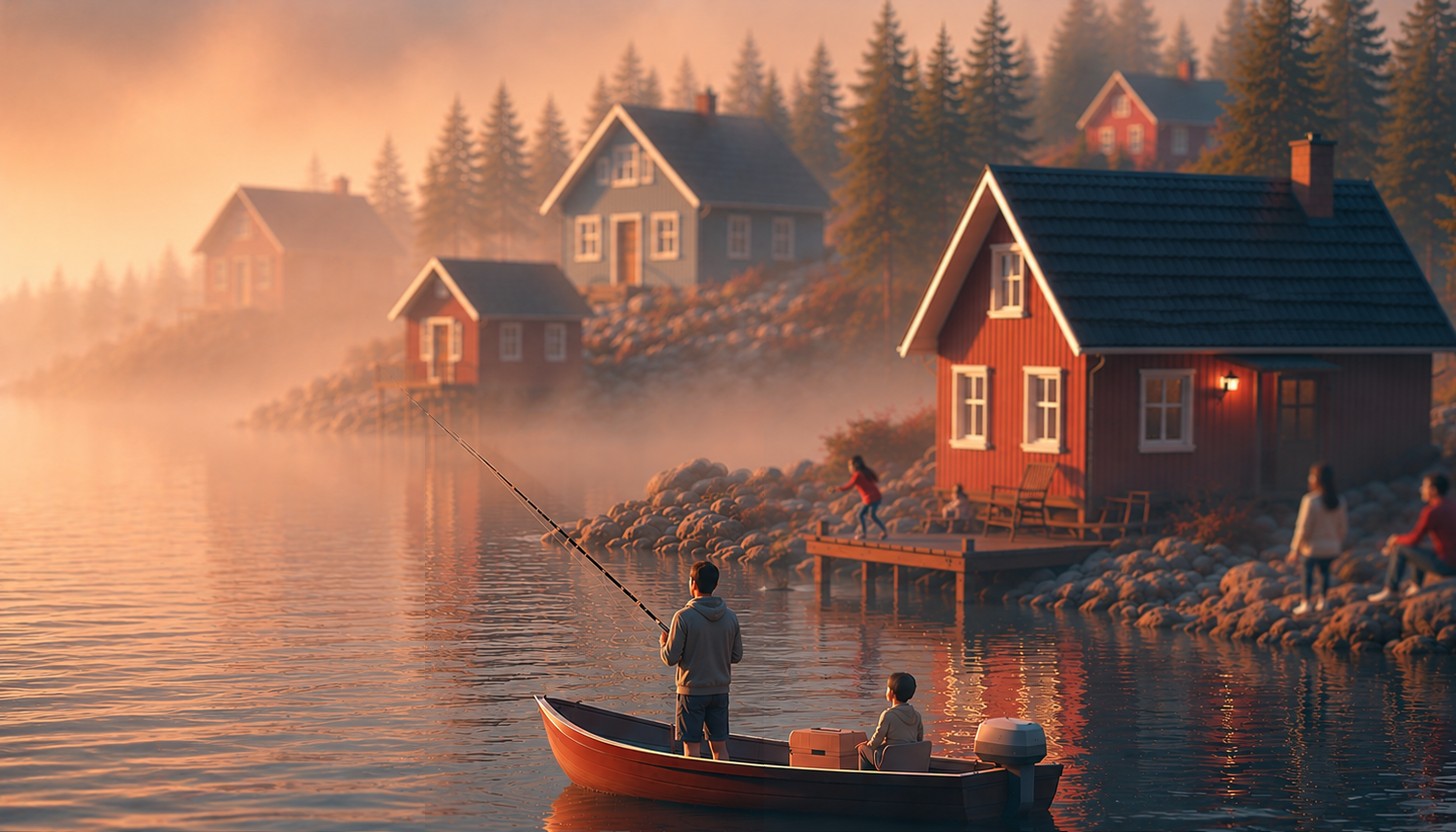


Ask the Expert is a monthly column where Steve Garganis, lead mortgage planner at Mortgage Architects and founder of CanadaMortgageNews.ca dives into what’s going on with mortgage rates and the Canadian housing market. Have a question for Steve on home buying and your mortgage? Reach out to us at media@rates.ca.
Following the herd rarely gets you the best deal is one thing I have learned through almost four decades in the mortgage and real estate industry. When everyone is rushing into the market, bidding blind, and waiving conditions, you end up paying a massive premium. But when everyone is sitting on the sidelines—waiting for the "perfect" moment or letting economic headlines dictate life’s choices—that is precisely when smart money makes its move.
Right now, in the summer of 2026, Canada's cottage country landscape offers a unique real estate opportunity not seen in recent memory. In a nutshell: I think this is a buyer's market.
If you have considered owning a piece of cottage country—whether in Ontario’s Muskoka, British Columbia’s Okanagan Valley, or Quebec’s Laurentians—this could be a good time to jump in. Here are reasons to buy a recreational property, backed by data, economics, and undeniable lifestyle benefits.
Why is Canada's cottage market a buyer's market in 2026?
Over the last 18 to 24 months, there has been a significant shift in the balance of power between buyers and sellers in cottage country coast-to-coast. The absolute frenzy of Covid-19 years is entirely in the rearview mirror. Two major factors give buyers an edge:
1. Cottage prices have dropped from their 2021 peak
After pricing peaks in 2021 and early 2022, the market has undergone a correction. Across prime cottage regions in Ontario, B.C., and Quebec, median sale prices for cottage properties have softened. Sellers are frequently transacting today at a discount to their list price. Buyers are no longer competing in vicious, blind bidding wars. They are taking their time, negotiating hard, keeping financing and inspection conditions, and getting deals done on their own terms.
2. Cottage inventory has surged, giving buyers more choice
During the boom, months of inventory dropped to historic, unhealthy lows. Today, it’s the opposite. In core recreational markets, inventory levels have surged. The Canadian Real Estate Association (CREA) and provincial boards are reporting stable and rising active listings in rural and recreational sectors. When supply outweighs demand to this degree, you have the ultimate luxury as a buyer: choice. You can choose from multiple options and pick a property that perfectly suits your family's needs.
Is cottage real estate a good long-term investment?
Scarcity drives long-term value of real estate. You can build a new subdivision on the outskirts of almost any city, but you cannot manufacture new pristine wilderness and cottage land in the Canadian Shield, B.C.’s Interior, or Canada’s Eastern Townships.
Prime cottage property is not limitless. Because supply is permanently capped, recreational real estate has consistently proven to be a highly resilient, long-term investment. While market cycles will always cause short-term fluctuations—like the softening we are seeing right now—the long-term trajectory for a scarce, highly desirable asset is always upward. Buying a cottage property isn't just about securing a summer retreat; it is about anchoring your wealth in a hard asset that will appreciate significantly over your lifetime.
Is it cheaper to build or buy a cottage in 2026?
To predict future value, look at the sheer cost of construction. Over the past two decades, the cost to build or renovate in cottage country has skyrocketed.
Twenty years ago, a buyer could comfortably build a beautiful custom cottage for roughly $150 to $200 per square foot. Today, the construction landscape has fundamentally changed due to inflation, material costs, and severe labor shortages in remote areas.
In 2026, you could spend $400 per square foot just for moderate renovations. If you want a completely custom new build in prime cottage country, you are staring down costs upwards of $600+ per square foot once you factor in site prep, blasting rock, permits, and quality finishes.
This spike in replacement cost creates a solid floor for existing property values. When you buy an existing cottage today—even one that needs cosmetic updating—you are acquiring the structure at a fraction of what it would cost to replicate it from the ground up in today’s prices.
How renting your cottage can offset carrying costs
A common hesitation of prospective cottage buyers is the carrying cost of a second property. Between a mortgage, property taxes, insurance, and upkeep, owning a cottage is a serious financial commitment. However, we live in the era of a sharing economy. Renting your cottage to help with expenses is easier and wiser than ever before.
If you’ve rented a cottage or tried to rent a cottage at any time over the last 5 or 10 years, you’ll know that rental costs have gone way up and stayed up. Vacation rental prices have not fallen even though cottage property sale prices have dipped. A typical cottage rental will cost you $3000 to $6000+ a week during peak summer months.
You don't need to give up your entire summer to make the math work. By renting your property for just a few prime weeks in July and August, or catering to the growing market of fall and winter weekenders (especially near ski hills in Quebec and B.C.), you can generate substantial rental income. With the right management strategy, this rental revenue can easily cover your annual property taxes, your maintenance costs, and make a significant dent in your mortgage payments. It transforms a luxury expense into a self-sustaining asset.
What are lifestyle benefits of owning a cottage?
We can analyze the data, crunch mortgage numbers, and talk about replacement costs, but the true purpose of a cottage is emotional. A cottage purchase is much more than a calculated investment.
Using a cottage on weekends or escaping the city for a few uninterrupted weeks provides something a financial statement simply cannot measure: lifelong memories. A family hideaway is a place to disconnect from digital noise, teach your kids how to fish, and watch the sun set over the trees. Those experiences are invaluable. You are investing in your family’s well-being and creating a central gathering place that will be cherished for generations.
Historical trends of Canada's cottage prices
To put today's opportunity into perspective, we review a 20-year snapshot of prime recreational markets across Ontario (Muskoka/Lakelands), B.C (Okanagan/Kootenay), and Quebec (Laurentians/Estrie).
This data highlights two crucial realities: the incredible long-term appreciation of cottage assets, and the fact that 2026 offers a distinct pricing dip compared to peaks of 2021. A combination of these two components creates a perfect entry point.
Notice that prices this year are lower than they were five years ago—a rare occurrence.
Resale prices across three cottage markets in Canada
| Year | Ontario (Muskoka) | B.C. (Okanagan) | Quebec (Laurentians) |
|---|---|---|---|
| 2006 | $232,000 | $263,000 | $167,000 |
| 2011 | $258,000 | $309,000 | $208,000 |
| 2016 | $324,000 | $390,000 | $236,000 |
| 2021 | $696,000 | $862,000 | $487,000 |
| 2026 | $664,000 | $810,000 | $461,000 |
Source: Canadian Real Estate Association (CREA), Lakelands Association, British Columbia Real Estate Association (BCREA), Quebec Professional Association of Real Estate Brokers (QPAREB / APCIQ)
Takeaway: Softening in prices between 2021 and 2026 represents the current buyer's market window.
Average new build costs across three cottage markets in Canada
| Year | Est. Active Listings (Spring) | Est. Annual Sales | Avg. Vacant Lot Price (General) | Avg. Cost to Build (per sq. ft.) |
|---|---|---|---|---|
| 2006 | 4,210 | 1,860 | $56,000 | $150–200 |
| 2011 | 4,820 | 1,585 | $71,000 | $180–220 |
| 2016 | 4,523 | 2,094 | $112,000 | $220–250 |
| 2021 | 1,806 | 2,795 | $285,000 | $350–400 |
| 2026 | 5,086 | 1,433 | $307,000 | $450–800 |
Source: Average cottage values from Ontario, B.C. and Quebec; Altus Group
Takeaway: Cost of land and construction has steadily marched upward, cementing underlying value of resale properties on the market today.
Should you buy a cottage in 2026?
Across several regions, Canada's cottage market presents a buying opportunity absent over the last two decades. We are currently in a window where irrational hype has vanished, but the inherent value of owning a cottage property remains absolute. Prices have softened, inventory is robust, sellers are willing to negotiate, and you have the luxury of time and choice.
If you have the means and the desire, it is best not to try to perfectly time an absolute bottom of the market—nobody has a crystal ball. Instead, lock in your piece of cottage country, rent it out to cover your costs if you need to, and start building lifelong memories. Given historical trends, in ten or twenty years from now, you likely won't regret that you bought recreational real estate in Canada.
Compare Mortgage Rates
Engaging a mortgage broker before renewing can help you make a better decision. Mortgage brokers are an excellent source of information for deals specific to your area, contract terms, and their services require no out-of-pocket fees if you are well qualified.
Here at Rates.ca, we compare rates from the best Canadian mortgage brokers, major banks and dozens of smaller competitors.

Steve Garganis
Steve Garganis, Lead mortgage planner at Mortgage Architects
Steve Garganis is a licensed mortgage broker, leader mortgage planner at Mortgage Architects and founder and editor of CanadaMortgageNews.ca.
In 1992, Steve was one of the first Mobile Mortgage Specialists at TD Bank and has since held senior management positions in two major banks.
In 2004, he decided to focus on his passion for mortgages became a mortgage broker.
In 2009, after noticing a lack of accurate, fact-checked and helpful mortgage content available online at the time, he founded CanadaMortgageNews.ca, where he has written over 600 articles and shares useful facts, opinions and recommendations for the owners, buyers, and sellers.
Featured Topics
Mortgage insurance is mandatory in Canada if your down payment is under 20%. Here's what it costs, who qualifies, and how to lower your premium.

An analysis of U.S and Canada central bank hiking cycles over 30 years to help you plan and navigate a long-term mortgage strategy.
Personal debt shrinks the mortgage you may qualify for—every extra $100 in monthly payments can reduce total loan amount by $15,000–$20,000.

An overview of important considerations when applying for a mortgage as a single parent.

BoC overnight lending rates remain unchanged, but higher gas prices, new U.S. tariffs, and a slowing economy could shape what's next for Canadians.

Canada's mortgage renewal wave has nearly half of homeowners spending 50%+ of monthly outgoings on housing; younger Canadians and newcomers most strained.
Reverse mortgages can unlock home equity for older Canadians but be aware of risks and high borrowing costs.

Home sellers in Canada must disclose latent defects, hidden property issues, and potential legal risks.

Risk tolerance is a lens by which you assess financial trade-off between possible stability with lower returns vs. potential upside involving higher risk.