Choose an Insurance Quote
What type of mortgage and term should you get?


KEY TAKEAWAYS
- Fixed-rate mortgages provide stability with predictable payments, while variable-rate mortgages offer flexibility and potential savings if rates fall.
- The Bank of Canada’s rate cuts in 2025 have made variable-rate mortgages more appealing, but timing rate changes remains uncertain.
- Shorter-term options, like one-year fixed mortgages, can offer stability now and flexibility to renew at lower rates later.
This article has been updated from a previous version.
When you’re buying a home, one of the biggest decisions you’ll make is choosing the right mortgage type and term. It’s not just about getting approved; it’s about finding a structure that fits your budget and long-term plans.
In Canada, most borrowers start by comparing two main options: fixed-rate mortgages, which offer stability with predictable payments, and variable-rate mortgages, which can change with the Bank of Canada’s prime rate.
Your choice will depend on how much risk you’re comfortable with and where you think interest rates are headed. From there, selecting the right term—whether short, long, or somewhere in between—can help you balance flexibility and security.
Understanding fixed vs. variable rate mortgages
Your mortgage choice largely comes down to two main types: fixed-rate and variable-rate. Each has its own set of benefits and risks.
What is a fixed-rate mortgage?
A fixed-rate mortgage offers an interest rate that is locked in for the entire length of your term. This means your monthly payment amount will not change, providing predictability and stability for your budget. You’ll know exactly how much you need to pay each month until your term is up for renewal.
Fixed rates are influenced by the government bond market. When bond yields go up, fixed mortgage rates tend to follow. This offers a sense of security, as your payments are protected from any market rate increases during your term. The trade-off is that historically, fixed rates are often set slightly higher than the initial variable rates offered by lenders.
Read more: Mortgage amortization: Should you go long or short?
What is a variable-rate mortgage?
A variable-rate mortgage has an interest rate that can change over your term. It moves in line with your lender's prime rate, which is influenced by the Bank of Canada's (BoC) policy interest rate.
There are two main kinds of variable-rate mortgages:
- Adjustable-rate (floating payment): Your monthly mortgage payments will increase or decrease as the prime rate changes. If rates go up, so does your payment. If they go down, you pay less.
- Variable-rate with fixed payments: Your monthly payment stays the same, but what happens behind the scenes is different. When interest rates rise, more of your payment goes toward interest and less toward the principal. This can extend your amortization period—the total time it takes to pay off your mortgage.
The Bank of Canada has been cutting rates throughout 2025 after a series of hikes in previous years. As of late October, the overnight rate sits at 2.25%, down from its peak of 5%, and the prime rate is 4.45%.
These reductions are easing pressure on homeowners with variable-rate mortgages, who are starting to see lower payments. If rates continue to decline in 2026, variable mortgages could become even more attractive.
Related: $23,579: This is how much more a variable-rate could have cost homeowners over fixed-rate
Should you opt for a variable rate mortgage?
If you're thinking about a variable-rate mortgage today, you're likely betting on future rate cuts. The idea is to avoid locking into a high fixed rate and instead take advantage of rates as they potentially fall.
The risk, of course, is timing. If rates stay high for longer than expected, or if they don't fall as quickly as predicted, you could face higher payments for a while.
However, the risk is that if the rates stay steady or take a while to fall, you may be stuck with a higher monthly payment than you anticipated.
“The danger element has been reduced because it's unlikely for there to be an increase, but the timing of the decreases is unknown. You're just guessing,” explains Ron Butler, a mortgage expert and founder of Toronto-based Butler Mortgage. “And when it starts to go down, it does not traditionally/historically ever go down quickly.”
The main benefit of a variable-rate mortgage is its flexibility. The penalty for breaking a variable-rate mortgage is typically just three months' interest, which is often much lower than the penalties for fixed-rate mortgages. You can also usually convert to a fixed-rate mortgage at any time without a penalty.
Read more: How interest rate changes affect your variable rate mortgage
How to choose the right mortgage term
Mortgage terms in Canada range from a few months to 10 years. Choosing the right one depends on your financial situation, risk tolerance, and where rates are headed.
With the Bank of Canada’s overnight rate now at 2.25% and fixed mortgage rates trending lower, many borrowers are considering shorter terms or variable-rate mortgages. A shorter-term variable mortgage can help you benefit from falling rates and renew at a lower rate later. Penalties for breaking a variable mortgage are usually low, and you can convert to a fixed rate if needed.
Another option is a one-year fixed term, which locks in stability now while giving you flexibility to renew at a lower rate next year.
“If a customer decided to take a one-year fixed today a year from now the balance of probability is that they would be able to get a lower five-year fixed or a lower three-year fixed than where the variable rate would be," Butler predicts. “You can make a compelling case that a borrower today should take a one-year fixed rate mortgage.”
As you can see, there are a lot of factors to consider before you decide on the type of mortgage and length of term. Whatever you choose, stay informed, crunch the numbers and compare mortgage rates to make sure you can cover the monthly payments and meet the conditions for the mortgage stress test.
A shorter-term variable mortgage may allow you to capture a falling interest rate and sign up for a lower-rate mortgage when it comes time to renew. The penalty for getting out of a variable rate mortgage is often low, and you can easily convert to a fixed rate mortgage.
Another option is to choose a one-year fixed term mortgage and then convert it to a longer term later.
“If a customer decided to take a one-year fixed today a year from now the balance of probability is that they would be able to get a lower five-year fixed or a lower three-year fixed than where the variable rate would be," Butler predicts. “You can make a compelling case that a borrower today should take a one-year fixed rate mortgage.”
As you can see, there are a lot of factors to consider before you decide on the type of mortgage and length of term. Whatever you choose, stay informed, crunch the numbers and compare mortgage rates to ensure you can cover the monthly payments and meet the conditions for the mortgage stress test.
Compare Mortgage Rates
Engaging a mortgage broker before renewing can help you make a better decision. Mortgage brokers are an excellent source of information for deals specific to your area, contract terms, and their services require no out-of-pocket fees if you are well qualified.
Here at Rates.ca, we compare rates from the best Canadian mortgage brokers, major banks and dozens of smaller competitors.

Karen Stevens
Karen Stevens, Freelance writer
Karen Stevens is a personal finance and business writer with experience across industries from travel to tech. She believes personal finance should be accessible to everyone and is always on the hunt for that next money-saving hack.
Featured Topics
Mortgage insurance is mandatory in Canada if your down payment is under 20%. Here's what it costs, who qualifies, and how to lower your premium.

An analysis of U.S and Canada central bank hiking cycles over 30 years to help you plan and navigate a long-term mortgage strategy.
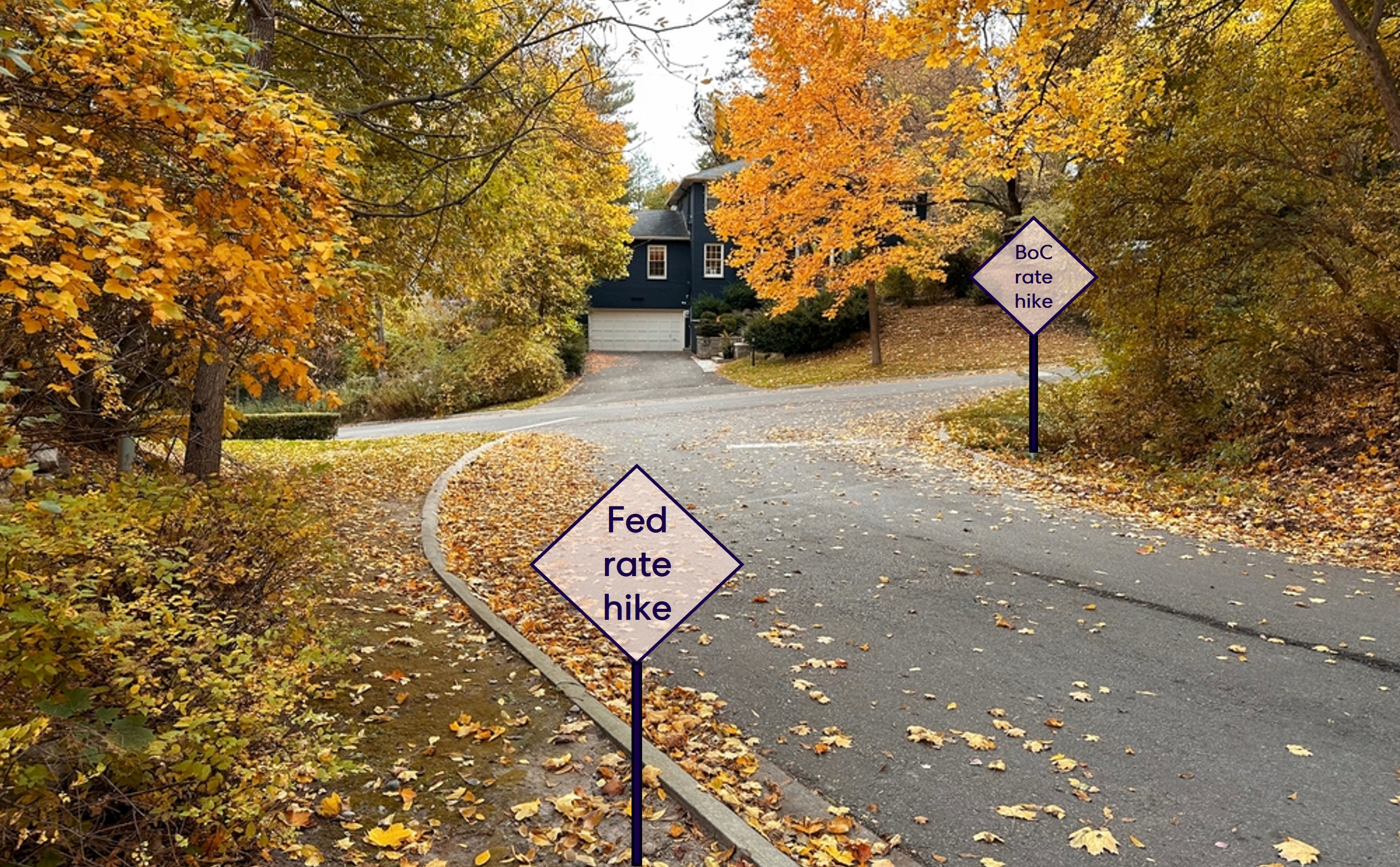
Personal debt shrinks the mortgage you may qualify for—every extra $100 in monthly payments can reduce total loan amount by $15,000–$20,000.

An overview of important considerations when applying for a mortgage as a single parent.

BoC overnight lending rates remain unchanged, but higher gas prices, new U.S. tariffs, and a slowing economy could shape what's next for Canadians.
Canada's mortgage renewal wave has nearly half of homeowners spending 50%+ of monthly outgoings on housing; younger Canadians and newcomers most strained.

Reverse mortgages can unlock home equity for older Canadians but be aware of risks and high borrowing costs.

Home sellers in Canada must disclose latent defects, hidden property issues, and potential legal risks.

Risk tolerance is a lens by which you assess financial trade-off between possible stability with lower returns vs. potential upside involving higher risk.