Choose an Insurance Quote
Should you withdraw from your RRSP?


Whether you're transitioning into retirement, facing an unexpected financial crunch, or thinking about rebalancing your investments, withdrawing from your Registered Retirement Savings Plan (RRSP) might seem like a simple solution.
However, before you make a move, it’s important to understand how RRSP withdrawals work, how they're taxed, and what long-term impact they could have on your retirement savings. RRSPs offer powerful tax advantages, and early withdrawals can come with costly consequences—both now and in the future.
Here’s what you need to know.
What is an RRSP?
RRSPs are a cornerstone of many Canadians’ retirement plans. When you contribute to an RRSP, the money goes in tax-free (meaning it reduces your taxable income for the year), and the investments inside the account grow tax-deferred until you withdraw them.
The word to be aware of here is Deferred. Eventually, you will pay tax on that money – it just depends on when and how you take it out.
Learn more: RRSPs: Your Essential Questions Answered
Why would you withdraw early?
Ideally, you wait until retirement to draw from your RRSP, when your income (and tax rate) is lower. But sometimes life has other plans.
Nick Hearne, certified financial planner at RGF Integrated Wealth Management explains that early RRSP withdrawals are often reactionary, rather than part of a long-term strategy.
“It’s usually tied to unexpected expenses or cash flow issues, like a job loss or a big jump in mortgage payments,” he says.
However, aside from unexpected life circumstances, there are government programs that allow for early, tax-free RRSP withdrawals in specific situations:
- Home Buyers’ Plan (HBP): Eligible first-time homebuyers can withdraw up to $60,000 per person from their RRSP to put toward a down payment. These withdrawals are not taxed at the time, provided they meet eligibility requirements. Repayment typically begins the second year after withdrawal and must be completed within 15 years. If you don’t repay the required amount in a given year, it’s added to your taxable income.
- Lifelong Learning Plan (LLP): You can use RRSP funds to finance full-time education or training. Like the HBP, this program requires repayment over time to avoid tax penalties.
Both can be incredibly helpful for their purposes, but Hearne warns they’re often mistaken as “free money” — and that’s far from the case.
“People often think of these programs as easy access to cash, but really, they’re loans from your future self,” he says. “You’re required to repay them over time, and that repayment adds to your financial obligations when you’re already managing a mortgage or tuition.”
Note that you can also transfer your RRSP, which is not the same thing as withdrawing. Transferring your RRSP involves moving the existing funds and investments from one RRSP provider to another while continuing the tax benefits of the plan.
Should you withdraw during a market downturn?
A market downturn refers to a period when the value of investments, such as stocks, mutual funds, or ETFs, declines significantly, often due to economic uncertainty, rising interest rates, or global events. For Canadians with RRSPs invested in the market, this can mean a temporary drop in portfolio value.
Withdrawing from your RRSP during a market downturn can have long-term consequences. If your investments have lost value, cashing out means you’re locking in those losses—potentially missing out on future recovery and compounding growth.
RRSPs are designed for long-term savings, and short-term market volatility shouldn’t drive withdrawal decisions. If you need funds urgently, consider whether other sources—like a TFSA or non-registered account—might be more tax-efficient and less damaging to your retirement plan.
Read more: Bank of Canada holds rate at 2.75% for the third consecutive time
How RRSP withdrawals are taxed
Any money you take out from your RRSP is counted as taxable income in the year you withdraw it. That means it gets added to your existing income and could bump you into a higher tax bracket.
There’s also a withholding tax taken at withdrawal:
- 10% on withdrawals up to $5,000 (5% in Quebec)
- 20% on $5,001–$15,000 (10% in Quebec)
- 30% on amounts over $15,000 (15% in Quebec)
However, those figures can escalate when tax season comes around if it lands you in a higher tax bracket.
“It’s just a prepayment,” Hearne explains. “When you file your taxes, you could end up owing more, especially if you're still working and earning income.”
This can be an unpleasant surprise for many.
“They assume the tax is already taken care of,” he says, “but come tax time, they find out they owe much more than expected.”
Read more: RRSPs: Advantages beyond retirement savings
You lose what you stand to gain in the future
One of the biggest advantages of an RRSP is that it lets your money grow tax-deferred – meaning every year you leave it alone, you benefit from compounding returns. That growth can be significant over time.
Hearne puts it this way: “If you’re a couple decades away from retirement and you take out $20,000 now, you could be giving up $100,000 or more in future retirement savings.”
Even retirees should be strategic, not passive
If you're nearing or in retirement, withdrawals are expected, but they still need to be planned, says Hearne.
“The most common mistake I see is that retirees continue to defer withdrawals for too long,” he says. “If they pass away with a large RRSP balance, their estate could be taxed at the highest marginal rate, which is over 50% in some provinces.”
Instead, retirees should consider gradually drawing down their RRSPs earlier in retirement, when their income is lower and they can manage the tax impact more effectively.
Bonus tip: After age 65, converting your RRSP to a RRIF (Registered Retirement Income Fund) opens up pension income splitting and a $2,000 pension income tax credit, which could lower your tax bill even further, especially for couples.
Ask these questions before you withdraw
If you’re seriously considering withdrawing from your RRSP, Hearne suggests asking:
- Is there another way to meet this need without touching my RRSP?
- How will this affect my taxes, not just now, but in the future?
- Can I repay this money (if using HBP or LLP) comfortably alongside other expenses?
- What am I giving up in long-term growth by withdrawing now?
And perhaps most importantly: Have I talked to a professional about my options?
“Even one conversation with a financial planner can help you avoid a costly mistake,” says Hearne.
Read next: Does having a self-directed RRSP mortgage make sense?
RRSP withdrawal alternatives to explore
Tapping into your retirement fund should be your last resort, not your first. Here are some other funding sources to consider:
- TFSA (Tax-Free Savings Account): Withdrawals are completely tax-free and don’t affect your contribution room permanently.
- Non-registered investments: You may pay capital gains tax, but it’s typically much less than tax on RRSP income.
- Personal line of credit: While lines of credit are a form of debt, for short-term cash flow issues, this can be a reasonable option – especially if the interest rate is low.
- Emergency fund: If you don’t already have one, now’s the time to build it. “It doesn’t have to be big,” says Hearne, “but even a small buffer can help you avoid tapping into your RRSP.”
RRSP withdrawals are easy to make, but hard to undo. They can come with more tax and less long-term benefit than you might expect.
If you’re in a situation where a withdrawal is unavoidable, do your research and talk to a professional. You should also understand the full implications, not just for this calendar year, but for your future.
“Life is unpredictable but your planning doesn’t have to be,” says Hearne. “Even if things go sideways, having a strategy in place means you’re reacting with confidence, not regret.”
Read next: Closing your bank account in Canada: Policies and fees you should know with the big 5 banks

Caitlin McCormack
Caitlin McCormack, Freelance writer
Caitlin McCormack is a writer based in Toronto. Her work has appeared in MSN, Food Network, HuffPost, What to Expect, Today's Parent, and Mashable, among others. When she isn't writing, she's busy chasing after her two sons, testing out new recipes, and working on her century-old fixer-upper.
Featured Topics
Mortgage insurance is mandatory in Canada if your down payment is under 20%. Here's what it costs, who qualifies, and how to lower your premium.

While dealers clear inventory in the fall, best car deals depend on vehicle demand, supply stock, and when the next model year arrives at dealerships.

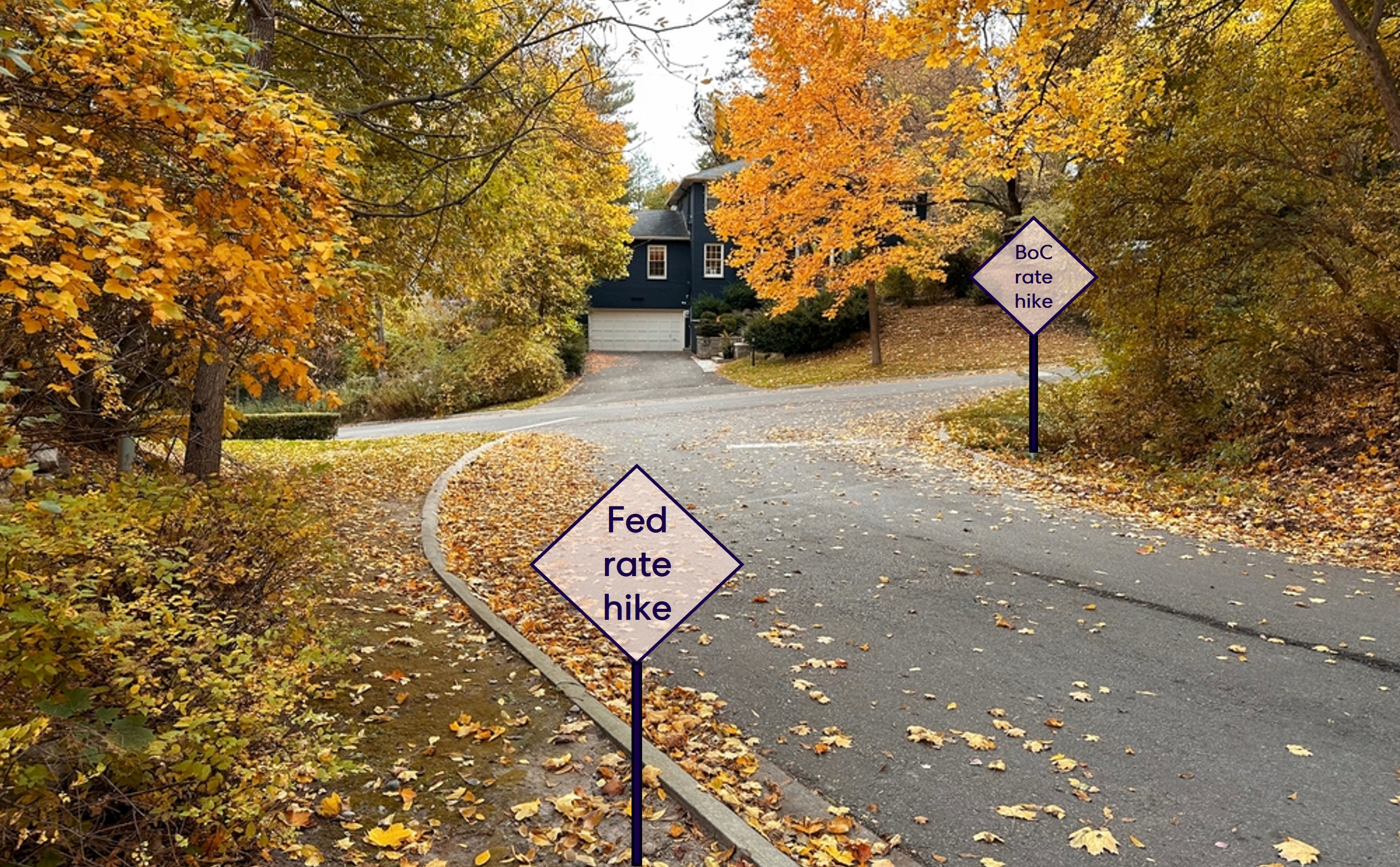
An analysis of U.S and Canada central bank hiking cycles over 30 years to help you plan and navigate a long-term mortgage strategy.
Personal debt shrinks the mortgage you may qualify for—every extra $100 in monthly payments can reduce total loan amount by $15,000–$20,000.

An overview of important considerations when applying for a mortgage as a single parent.

Learn how car financing works in Canada, what lenders consider, how credit scores affect rates, and how auto loan fraud may influence borrowing costs.

Risk tolerance is a lens by which you assess financial trade-off between possible stability with lower returns vs. potential upside involving higher risk.

RRSP transfers can be done tax-free and hassle-free. Here’s what to know about fees, timelines, and your best options.

Missing some tax paperwork? Learn what you need to do to file your taxes without a T4 and avoid missing the deadline.