Choose an Insurance Quote
How much is HST in Ontario?


Key takeaways:
- HST, or Harmonized Sales Tax, is the combination of Federal Goods and Service Tax with Provincial Tax. It amounts to 13% of the sticker price.
- Ontarians pay HST on most goods and services sold in Canada.
- Items not subject to HST include: medical and dental services, basic groceries, and tuition and childcare.
Sales tax is something every Ontarian encounters, whether you’re grabbing a coffee, filling up at the pump, or buying a new couch.
In Ontario and a handful of other provinces, that tax is called the Harmonized Sales Tax (HST) and makes up an additional 13% of your bill. It’s built into almost every purchase and adds up to billions of dollars each year in government revenue.
The purpose of HST is to make tax collection smoother and simpler. Instead of dealing with two separate taxes, Canadian businesses and shoppers just see one single rate of 13%. This means less math, and fewer forms to complete.
Here’s what you need to know about HST in Ontario, including how it compares to other provinces, what items it applies to, and why it matters for both shoppers and businesses.
What is HST (Harmonized Sales Tax) in Ontario?
Introduced on July 1, 2010, HST is a single combined tax that includes both the federal Goods and Services Tax (GST) with the provincial sales tax (PST) into one neat 13% charge. That means if you buy something worth $100, you’ll pay $13 in HST, for a total of $113 at the checkout.
It is applicable to most goods and services sold or provided in Canada.
What’s the difference between HST, PST, and GST?
Canada has three main types of sales tax, and understanding how HST, PST, and GST differ can help explain why the amount you pay varies by province.
- GST (Goods and Services Tax): A 5% federal tax applied across Canada.
- PST (Provincial Sales Tax): A tax set by provinces not using HST (BC, Manitoba, Saskatchewan, Quebec).
- HST (Harmonized Sales Tax): A combined tax, GST + PST.
So, in Ontario, you pay HST (13%), while in BC you pay GST (5%) plus PST (7%) for a total of 12%.
How much do you pay in sales tax across Canada?
Here’s how HST stacks up across Canada:
| Province | Tax System | Total Rate |
| Ontario | HST | 13% |
| Nova Scotia | HST | 14% |
| New Brunswick | HST | 15% |
| Newfoundland & Labrador | HST | 15% |
| Prince Edward Island | HST | 15% |
| Quebec | GST + QST (9.975%) | 14.975% |
| British Columbia | GST + PST (7%) | 12% |
| Alberta and Territories | GST only | 5% |
What items are subject to HST in Ontario?
Here are 15 common items or services that are generally subject to HST:
- Clothing (unless it’s basic children’s items)
- Restaurant meals and takeout
- Furniture and home goods
- Electronics
- Gasoline (the tax applies at the pump)
- Hotel stays
- Haircuts and salon services
- Repairs and renovations on properties
- Legal and accounting services
- Real estate commissions
- School supplies
- Books (though some may be zero-rated)
- Movie tickets and entertainment
- Home and auto insurance premiums, and other forms of insurance.
- Newly constructed homes (HST is separate from Land Transfer Tax and Property Tax).
Related: The hidden costs of buying a home
What is not subject to HST?
Some things are zero-rated or exempt, meaning you don’t pay HST. They include:
- Basic groceries (like bread, milk, fruits)
- Medical and dental services
- Prescription medications
- Most health-care-related goods and services
- Educational services (like public school tuition)
- Childcare
- Exports (goods sold outside Canada)
Homes and property for resale.
The HST holiday of 2024 – a country briefly without sales tax
In an effort to stimulate the economy and provide some relief to families over the holidays, the Federal government introduced a GST/HST holiday from December 14, 2024, to February 15, 2025. Shoppers got a temporary break from being charged HST on certain items, like restaurant meals, children’s clothing, newspapers, books, and gift baskets across Canada.
How successful was the HST holiday? While shoppers saved a few bucks at the register, it posed a logistical headache for many retailers who spent more work hours and money towards IT to sort and process taxed items and tax-free items.
The Canadian Federation of Independent Business found that only 5% of businesses saw an increase in sales – 70% reported seeing no change at all. In the hospitality industry, which benefitted most from the tax holiday, 15% of businesses reported stronger sales.
What you need to know about HST
HST touches nearly every transaction in Ontario, from everyday purchases to big-ticket items like cars and homes.
Since being introduced in 2010, it has simplified the tax system by rolling federal and provincial sales taxes into a single rate. While some essentials, such as groceries and health services, are exempt, most goods and services are subject to the 13% charge.
For shoppers, knowing what’s taxed (and what isn’t) can help you budget smarter. For businesses, it streamlines how taxes are collected and remitted. And for governments, HST remains a major source of revenue to fund schools, healthcare, and infrastructure.

Caitlin McCormack
Caitlin McCormack, Freelance writer
Caitlin McCormack is a writer based in Toronto. Her work has appeared in MSN, Food Network, HuffPost, What to Expect, Today's Parent, and Mashable, among others. When she isn't writing, she's busy chasing after her two sons, testing out new recipes, and working on her century-old fixer-upper.
Featured Topics
Mortgage insurance is mandatory in Canada if your down payment is under 20%. Here's what it costs, who qualifies, and how to lower your premium.

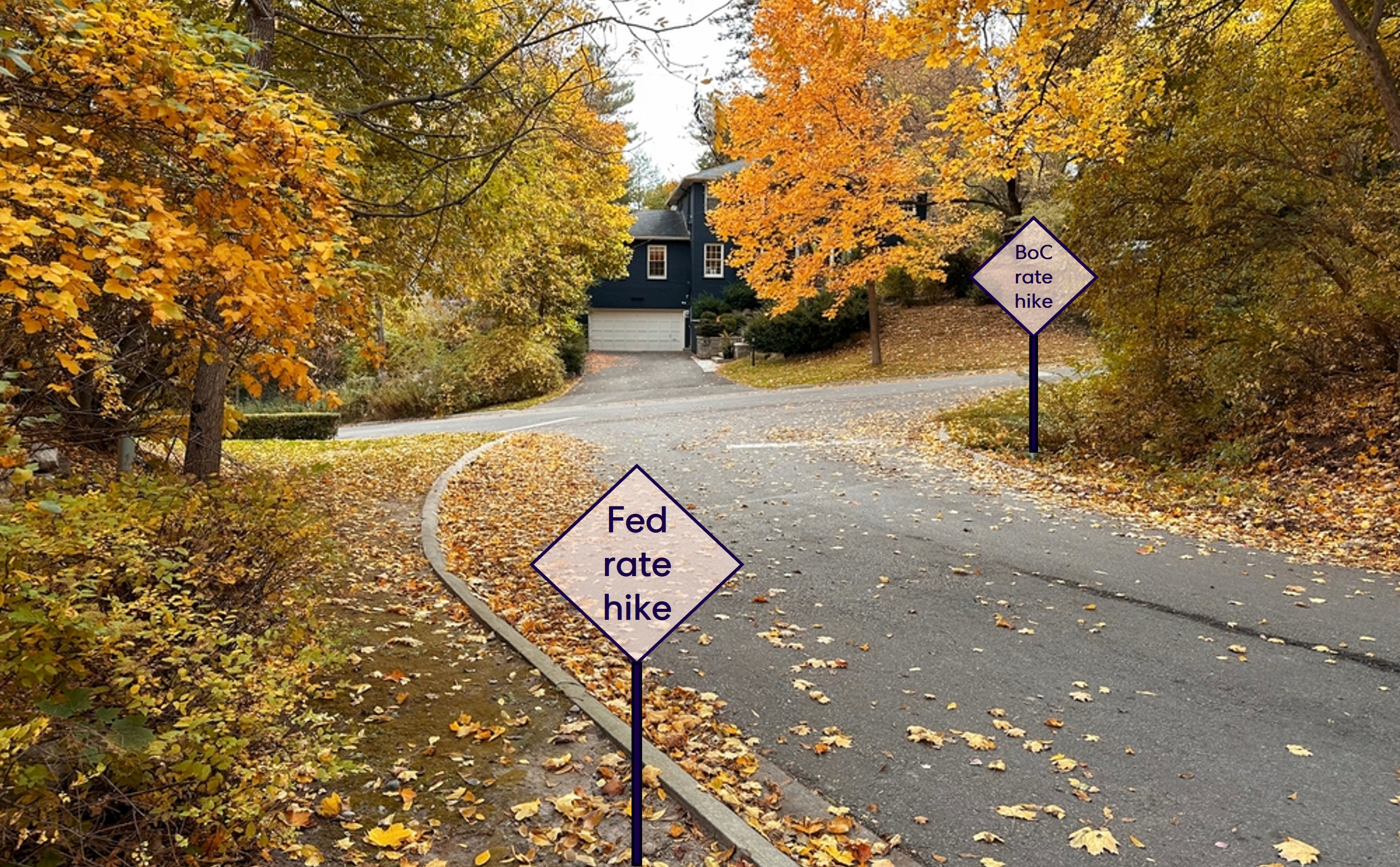
An analysis of U.S and Canada central bank hiking cycles over 30 years to help you plan and navigate a long-term mortgage strategy.
Personal debt shrinks the mortgage you may qualify for—every extra $100 in monthly payments can reduce total loan amount by $15,000–$20,000.

An overview of important considerations when applying for a mortgage as a single parent.

BoC overnight lending rates remain unchanged, but higher gas prices, new U.S. tariffs, and a slowing economy could shape what's next for Canadians.
Canada's mortgage renewal wave has nearly half of homeowners spending 50%+ of monthly outgoings on housing; younger Canadians and newcomers most strained.

Reverse mortgages can unlock home equity for older Canadians but be aware of risks and high borrowing costs.

Home sellers in Canada must disclose latent defects, hidden property issues, and potential legal risks.

Risk tolerance is a lens by which you assess financial trade-off between possible stability with lower returns vs. potential upside involving higher risk.