Choose an Insurance Quote
Consolidate Your Debts


If you have difficulty keeping all your debts organized and don't see a light at the end of the tunnel, consolidation is an interesting option. The main advantage is that, on top of appeasing your creditors, you can merge all your scattered payments into one, and the interest rate will generally be lower than what you're paying now.
Debt consolidation is another way to reduce your debt load. Debt consolidation means taking out a lower-interest loan to pay for higher-interest debts. It's called consolidation because you take several high-interest debts and consolidate them under one lower-interest payment. It's not an ideal way of reducing debt, because you're technically incurring more debt to pay off the debt you already have.
Typical forms of debt consolidation are a home equity loan or a second mortgage. Second mortgages are like home equity loans in that they use the home as collateral and carry relatively low-interest rates (although certainly higher than the original mortgage). An example of debt consolidation would be to take out a home equity loan to pay off credit card debt.
Credit counsellors are trained professionals that can help a chronic debtor come up with a manageable budget, develop a "debt management plan" and even negotiate with creditors for lower interest rates or better loan terms. However, not all credit counselling services are legitimate. Some of them charge hidden fees, called "voluntary contributions," that can quickly get expensive. Others are able to win lower interest rates only after purposefully defaulting on all of your loans and ruining your credit score.
If you find yourself up to your neck in debt with no possible way out, there are two final options: debt settlement and bankruptcy. Debt settlement is an arrangement between a debtor and a borrower to pay one lump sum to satisfy the debt rather than monthly payments that incur interest. This lump sum is typically less than the total debt that is owed. It's important that debtors know their rights when negotiating with creditors. In the United States, these rights are established by the Fair Debt Collection Practices Act.
The only advantage of debt settlement for the creditor is that he will at least receive some money. If the debtor is allowed to declare bankruptcy, the creditor may receive very little or nothing. Declaring bankruptcy is a legal process in which the debtor's assets are turned over to a trustee who then liquidates the assets to pay off the various creditors.
In the United States, the most common type of personal bankruptcy is called Chapter 13, in which the debtor retains some assets -- like a home or car -- and is required to adhere to a court-ordered debt repayment plan in which a percentage of his regular income is used to pay off creditors. After the debt repayment is completed, the debtor receives an official discharge clearing him of any further obligations to his creditors.
Now let's look at consumer debt and its effect on the overall economy.

Rates.ca follows a strict editorial review process to ensure accuracy. Read it here

Rates.ca
Rates.ca,
The Rates.ca editorial team are experienced writers focused on sharing stories and bringing you the latest news in insurance and personal finance. Our goal is to provide Canadians with the information and resources they need to make better insurance and financial decisions.
Featured Topics
Lending yourself a mortgage from your RRSP can seem appealing. Fees, insurance, and funds locked-in can make it worthwhile for few Canadians.
As construction costs skyrocket, here are actionable strategies that can ensure new homebuyers aren't leaving money on the table.

Mortgage insurance is mandatory in Canada if your down payment is under 20%. Here's what it costs, who qualifies, and how to lower your premium.

While dealers clear inventory in the fall, best car deals depend on vehicle demand, supply stock, and when the next model year arrives at dealerships.

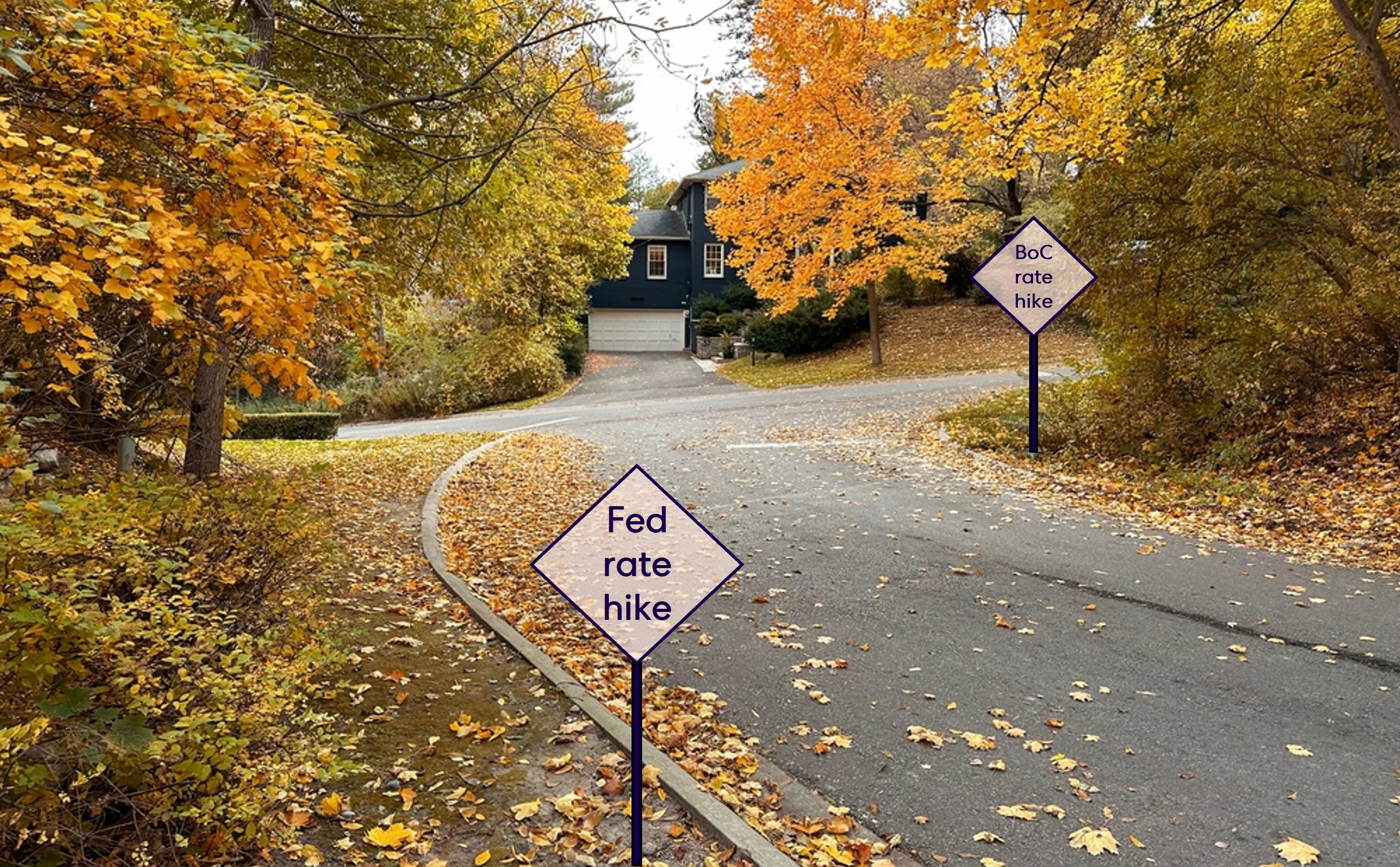
An analysis of U.S and Canada central bank hiking cycles over 30 years to help you plan and navigate a long-term mortgage strategy.
Personal debt shrinks the mortgage you may qualify for—every extra $100 in monthly payments can reduce total loan amount by $15,000–$20,000.

An overview of important considerations when applying for a mortgage as a single parent.

Learn how car financing works in Canada, what lenders consider, how credit scores affect rates, and how auto loan fraud may influence borrowing costs.

Risk tolerance is a lens by which you assess financial trade-off between possible stability with lower returns vs. potential upside involving higher risk.