Choose an Insurance Quote
Are car models made in Canada cheaper and better to insure?
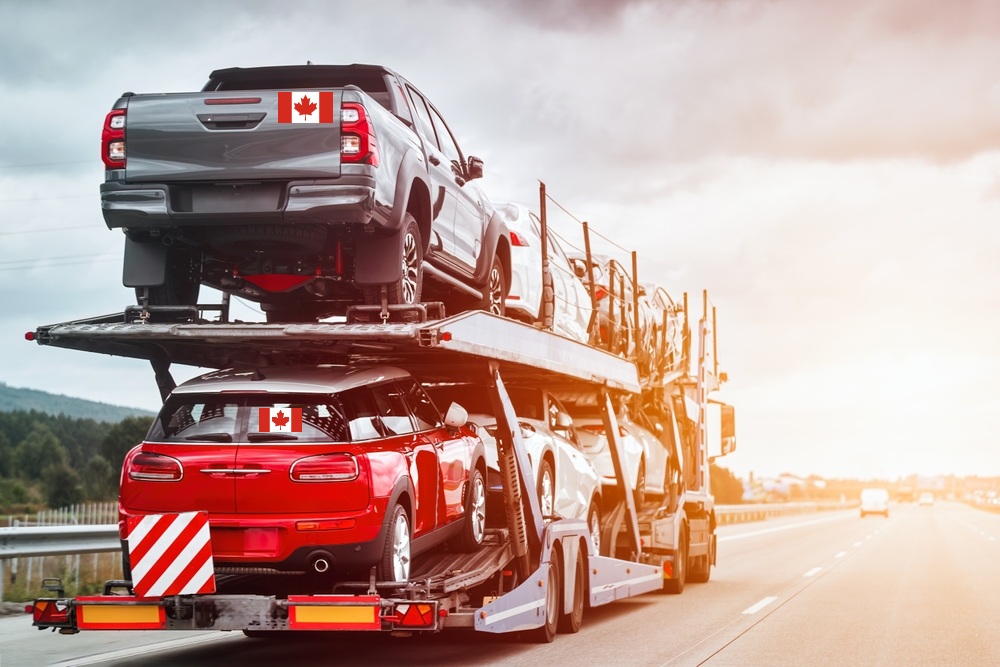


Experts say that looking to 'Buy Canadian' won’t affect your car purchase costs or insurance rates too much. As the trade war with the U.S. heats up, there are still cars that are currently made in Canada for those looking for homegrown models. But manufacturers optimize for best return on investment. More than 90% of Canadian-made vehicles and 60% of locally produced auto parts are exported to the U.S., making the automotive sector highly exposed to the ongoing trade war.
KEY FINDINGS
- Cars made in Canada aren’t necessarily cheaper. Automakers price vehicles based on the market, not where they're built.
- Canadian-made cars may not be available in Canada. Models in demand are preferentially exported to fetch higher prices.
- Availability of parts is separate from where a car is manufactured. Part sourcing is driven by a manufacturer's policy to prioritize supply for new deliveries over repairs.
- Popular Canadian-made models are easier and faster to repair. Repair shops are optimized for common vehicles, not because of assembly origin.
- Insurers don't have a 'made in Canada' checkbox. Insurance rates are based on availability of parts, safety ratings, and low theft exposure.
Which cars are made in Canada?
In 2025, Canada produced over 1.2 million passenger vehicles. Cars built in Canada are listed in the table below:
Company | Car model |
|---|---|
Honda (Alliston, Ont.) |
|
Toyota (Cambridge & Woodstock, Ont.) |
|
General Motors (Oshawa, Ont.) |
|
Stellantis (Windsor, Ont.) |
|
Source: Government of Canada
Does being made in Canada impact price or availability?
Canada has been blessed with the production of some very popular and well-built car models, such as the Honda CR-V or the Toyota RAV4. But cars built in Canada aren’t any cheaper than elsewhere.
George Iny, the director of the Automobile Protection Association, told Rates.ca that being Canadian made has no impact on a car’s price. Canadians may actually pay more for some models compared to consumers in other countries.
How do companies price cars?
Iny says that car companies price their cars based on the market, not where they are made. Canada has the following tariffs for U.S. vehicles:
- 25% tariff on 85% value of U.S. car imports that are not CUSMA-compliant
- 25% tariff on non-Canadian and non-Mexican content of CUSMA-compliant U.S. vehicles.
Iny says that a carmaker in the U.S. doesn’t just raise the price of their vehicle by the value of Canada’s tariff. Manufacturers may increase sticker prices partially but also throttle supply chains so the car isn’t available. Suppliers could also source stock from a plant in a different country, such as Mexico or Korea.
According to the U.S. government, imports of U.S. vehicles to Canada dropped 22% from April 2025 to March 2026 year-over-year, from about $25.9 billion to $20.3 billion.
“The overall impact of tariffs is inflationary,” Iny says. “It does distort where vehicles are made to some degree.”
Are Canadian-made cars not available locally?
Companies that are making vehicles in Canada also do not necessarily put a preference on the Canadian market for those vehicles. Iny says that Toyota actually sells a lot of its RAV4 cars built in Canada into the U.S. market because they can make more money there, despite existing U.S. tariffs.
Even if a car is Canadian made, it might not mean you will get a better price on it or your order is filled faster. Iny says it is possible to buy a RAV4 in the U.S. with better promotions and little delay. You could be waiting nine months to a year to get a similar car in Canada given the number of vehicles the company allocates locally.
“Just because you make it here doesn’t mean it sells here,” notes Iny. “Most of them [Canada-made cars] are exported.
Read more: Which vehicles are cheapest to insure by fuel type in Canada in 2026?
Are repairs faster or easier for Canadian-made cars?
Along with a car’s price and availability, being Canadian made doesn’t necessarily mean a car’s parts are more accessible, according to Iny. Availability of parts is separate from where a car is manufactured. Part sourcing is based on a manufacturer’s policy—whether to make parts available or tolerate a shortage.
Companies may tolerate parts being unavailable
For example, Iny explains that cars made in Canada, such as the Toyota RAV4 or the Honda CR-V, routinely run out of replacement parts even though the vehicles are made here, causing delays for customers.
“It's sometimes a corporate decision. The parts may be available at an assembly plant to put in a new car, but they don't supply them into the aftermarket for some reason.” Iny says. “It came down to a calculation and they decided that they'd rather sell you a whole car than sell an existing customer a part. Let them wait.”
Popular models can be repaired faster
If parts can be obtained, then the actual repair of models such as the CR-V and RAV4 can go quicker and smoother because of their popularity in Canada, which creates familiarity at shops. But it is a correlation, not a causation, of them being built in Canada.
“Because those cars are popular, they sell well, they are easier to repair,” says Iny. “Canada has nothing to do with it.”
Does being made in Canada impact insurance?
Being made in Canada also doesn’t impact insurance – at least directly. According to David Mayer, Rates.ca’s director of insurance markets, Canadian insurers don’t have a 'made in Canada' checkbox, and premiums are rated on the vehicle itself, not assembly origin.
“A Honda CR-V built in Alliston, Ontario, is rated identical to one manufactured in the U.S.,” he says.
Learn more: Compare car insurance quotes - fast, easy, and free
Insurance advantages for Canadian-made cars
Below are factors insurance companies care about and how being made in Canada can impact those factors, according to Mayer.
Insurance factor | Insurance impact |
|---|---|
Cost and availability of parts |
|
Repair time |
|
CLEAR rating system |
|
Amount of theft |
|
As the latest Canada-U.S. tariff spat plays out, insurance companies would need to wait for incoming CLEAR data to assess whether, and by how much, claim costs could rise over time due to higher import fees for parts and cars. Updated claim data from potential tariff pressures would factor into higher premiums.
Overall, Mayer concludes that Canadians shouldn’t only consider if a car is Canadian made in their purchase decision to get lower insurance rates. Buyers should also think about availability of car parts, a solid CLEAR history, and low theft exposure.
“Canadian-built high-volume [car] models often tick those boxes—but the benefit comes from those attributes, not the factory's location,” says Mayer.
Read more: What are the top five factors that influence your auto insurance rate?
Frequently asked questions (FAQ)
Are Canadian-made cars cheaper to buy?
No. Automakers price vehicles based on the market, not where they're manufactured. Canadians could pay more for some models that are preferentially exported to markets where they can be sold at higher prices.
If a car is made in Canada, will I receive it faster?
Not necessarily. Companies may not prioritize the Canadian market for domestically built vehicles, but ship to high-demand locations that raise a car's sticker price.
Are parts easier to source for Canadian-made cars?
Availability of parts is based on manufacturers’ policy. Automakers can choose to tolerate part shortages and existing customer delays for on-time delivery of a new car.
Do Canadian-made cars cost less to insure?
Not directly. Insurers don't factor in assembly origin, but evaluate CLEAR system data, tariff-insulated parts, and faster repairs to set premiums.
Which Canadian-made cars can impact my insurance rates?
Buying a popular domestic model that is frequently targeted by theft can drive up premiums.
Don't waste time calling around for auto insurance
Use Rates.ca to shop around, and compare multiple quotes at the same time.

Eric Stober
Eric Stober,
Eric Stober is a Toronto-based freelance writer with over 10 years experience at publications big and small, including Global News, Toronto Life, Yahoo Canada and Real Estate Magazine.
Featured Topics
While dealers clear inventory in the fall, best car deals depend on vehicle demand, supply stock, and when the next model year arrives at dealerships.

Eastern Ontario dominates Ontario's cheapest car insurance markets, with annual premiums starting at $1,824 in 2026.

Colour of your car won't change your auto insurance rate but could impact vehicle repair costs and resale value.

How 'Dieselgate', stricter emissions rules, and changing economics reshaped Canada's passenger vehicle market away from diesel.
Premium gas costs nearly 30¢ more per litre than regular, meaning drivers whose vehicles don't require it could save $400 to $700 a year at the pump.
CEO of Rates.ca, Igal Mayer explains how Covid-era price increases reshaped the auto market and what could bring costs down for consumers.
Accident forgiveness is an extra layer of protection for drivers at fault in their first collision; and helps prevent an increase in premiums.

Adaptive driving equipment won't always raise your car insurance premium, but disclosure of changes that could impact a car's value is mandatory.

Dramatic change ahead for Alberta drivers from new insurance rules governing payouts to people injured in automobile accidents.