Choose an Insurance Quote
A 2025 F-150 costs twice as much as a used one — but why is a new RAV4 only 15% more than a used model?


QUICK TAKEAWAYS
- In the first year, owning a 2025 Ford F-150 costs about $29,111—more than double the $13,498 for the 2018 model.
- The 2025 Toyota RAV4 shows a smaller jump: about a 15% increase compared to the 2018 version, with costs of $12,636 versus $10,966.
- Depreciation is a key factor in ownership costs, with newer models losing value much faster.
- Used cars can save money upfront but may come with higher maintenance costs over time.
Used cars often look cheaper at first glance, but the choice isn’t always simple. While they can save money, reliability, recalls, and personal preferences, like wanting the latest features or that ‘new car’ feeling, can tip the scales. In the end, it’s not just about numbers; it’s about what feels right.
Even when price is the focus, the difference between new and used car models can vary — dramatic for some, surprisingly small for others.
For example, the Ford F-150 shows a big difference: the first-year ownership costs for a 2025 model are around $29,111, while owning a 2018 model will run you just shy of $13,500 – a cost increase of 116%.
In contrast, the Toyota RAV4 sees only a modest rise of 15%: $12,636 for a 2025 model versus $10,966 for the 2018 version.
Lurking behind these numbers are the cost of insurance, maintenance, and other expenses beyond the sticker price, otherwise known as the Total Cost of Ownership (TCO).
Related: Can a vehicle’s safety features get you cheaper car insurance?
Breaking down the costs: Ford F-150 vs. Toyota RAV4
Canada’s two most popular vehicles—the Ford F-Series, led by the F-150, and the Toyota RAV4—couldn’t be more different. One is built for heavy hauling, the other for everyday practicality. Yet both dominate Canada’s sales charts year after year, according to a variety of sources, making them a good case study for ownership costs.
Ford F-150: Used will run you longer for less
The difference in ownership costs for a used and new model of this beloved pick-up truck is striking. Owning a 2025 Ford F-150 for a year costs $29,111 — more than double the $13,498 for a 2018 model.
Insurance for the newer model runs about $3,684 annually, compared to $2,864 for the older truck. Interest payments—the amount you pay the lender for financing the vehicle—are also higher: roughly $4,730 versus $3,529. Fuel, maintenance, and administrative fees add up too.
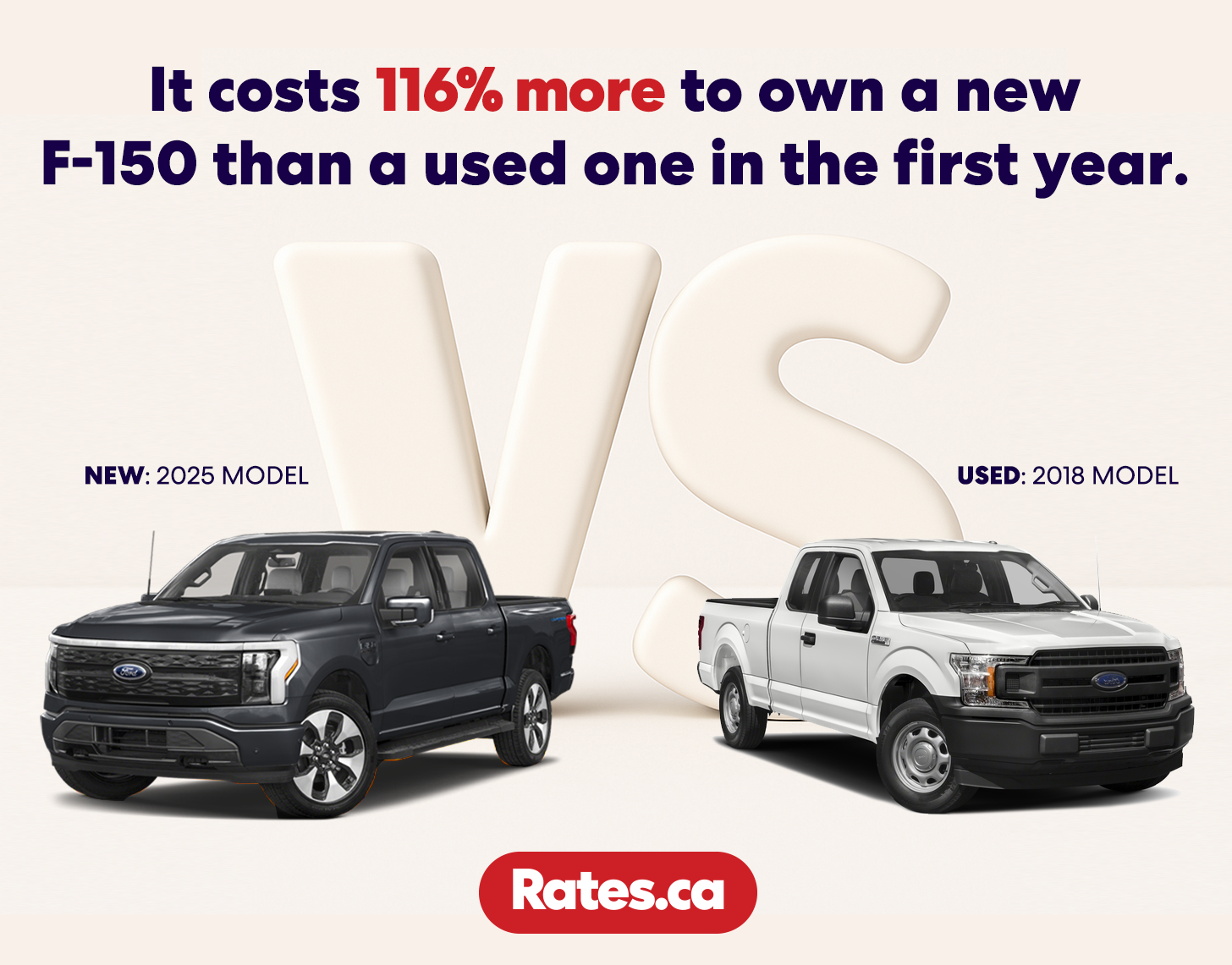
Ford F-150: New vs. old model cost breakdown
| Category | 2025 Ford F-150 (New) | 2018 Ford F-150 (Used) |
|---|---|---|
| Purchase Price | $74,501 | $42,379 |
| Interest Rate (%) | 6.89% | 9.00% |
| Interest Paid | $4,730 | $3,529 |
| Depreciation (Yearly) | $17,667 | $3,570 |
| Fuel (Yearly) | $1,695 | $1,590 |
| Maintenance (Yearly) | $788 | $1,296 |
| Insurance (Yearly) | $3,684 | $2,864 |
| Administrative Fees | $547 | $650 |
| Total Cost (Yearly) | $29,111 | $13,498 |
Mark Whinton, automotive expert and owner of the CarQuestions Youtube channel, says this significant difference in TCO isn’t surprising. Vehicle prices have climbed roughly 30% since 2019, he notes, and Ford’s switch from steel to aluminum added significant manufacturing costs.
But the cost to consumers goes beyond the financial if they opt for the newer model. Whinton pointed out Ford’s troubling recall record: Between the 2023, 2024 and 2025 models F-150 have racked up 29 safety-related recalls despite very little change between these models.
“[Lack of] safety means death,” he says. “They’re serious issues: steering doesn’t work, brakes fail, airbags malfunction, cameras stop working.”
While the older 2018 model has its own problems, with 15 recalls to date, it still fares better than the newer version.
"Recalls typically accumulate as a car ages. That’s very typical,” Whinton explains. “A brand-new vehicle usually has none. After three or four years, you might see a couple, and by 10 years, maybe three or four. But this 2025 Ford F-150? It already has 10 recalls, and it hasn’t even been on the road for a year.”
Depreciation matters in TCO
The Total Cost of Ownership (TCO) for a car goes beyond what you pay out of pocket. TCO also looks at how much value the car loses over time—otherwise known as depreciation.
Depreciation is simply how much your car’s resale value drops as it ages. It affects the real cost of owning a car, whether you bought it new or used. For example, two people might buy the same car but have different monthly payments based on their loans.
Still, the car itself loses the same amount of value for both owners. That makes depreciation a fair way to compare cars.
Monthly payments show what you’re paying now, but they don’t tell the whole story. Depreciation shows the bigger picture. For example, a 2025 Ford F-150 loses about $17,667 in its first year, while a 2018 model loses only $3,570.
Similarly, a 2025 Toyota RAV4 drops $4,711 in its first year, compared to $2,320 for the 2018 version. These numbers show how much depreciation can add to your overall cost, even though you never write a cheque for it.
Read more: Higher car expenses leading more Canadians to make changes to their driving
Toyota RAV4: Too close to call
The Toyota RAV4 shows a far smaller difference in total cost of ownership between new and used models. A 2025 RAV4 costs $12,636 annually, while a 2018 model costs $10,966—a difference of 15%.
Just like with the Ford F-150 insurance and financing costs make up a chunk of the disparity in ownership costs between RAV4 models. Insurance for the newer RAV4 is slightly higher, and interest payments are similar: about $2,701 for the 2025 model versus $2,731 for the 2018.
Fuel and administrative fees for each model are similar, but maintenance costs can vary wildly: the 2025 model averages $429 per year; significantly lower than the $1,141 for the older version. This is an advantage that could make it more appealing to buyers.
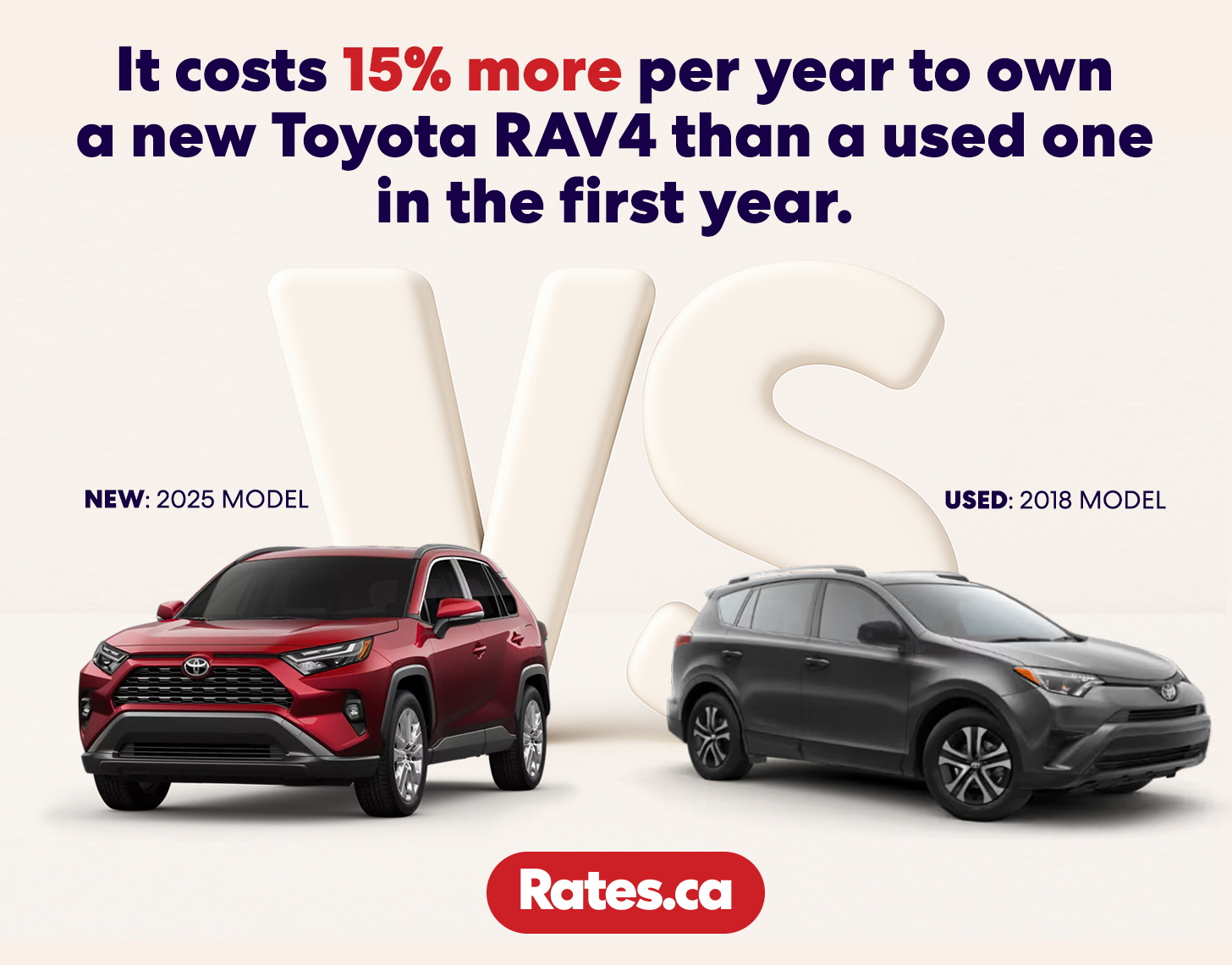
Toyota RAV4: New vs. old model cost breakdown
| Category | 2025 Toyota RAV4 (New) | 2018 Toyota RAV4 (Used) |
|---|---|---|
| Purchase Price | $42,557 | $32,805 |
| Interest Rate (%) | 6.89% | 9.00% |
| Interest Paid | $2,701 | $2,731 |
| Depreciation (Yearly) | $4,711 | $2,320 |
| Fuel (Yearly) | $1,275 | $1,425 |
| Maintenance (Yearly) | $429 | $1,141 |
| Insurance (Yearly) | $2,921 | $2,699 |
| Administrative Fees | $599 | $650 |
| Total Cost (Yearly) | $12,636 | $10,966 |
Why are interest rates higher for used cars?
One reason used cars often come with higher interest rates is the increased risk for lenders. Used vehicles are more likely to depreciate further during the loan term, and their older age can make them less reliable as collateral.
Additionally, lenders may charge higher rates to offset the potential for default, as buyers of used cars are often more budget-conscious. This difference in interest rates can significantly impact the total cost of ownership, especially for long-term loans.
When it comes to safety, Whinton says Toyota’s reputation for reliability is well-earned:
"I’m just stating the facts,” he says. “Toyota is hands down that much more quality."
He adds that choosing a used Toyota often means fewer trips to the service department and significant savings over time. The RAV4 also has a much better recall record compared to the Ford F-150 in general.
“The old Toyota from 2018...has got a total of three [recalls],” Mark noted. In contrast, the 2025 RAV4 has had two recalls so far.
Learn more: Thinking of upgrading to a 2024 Dodge Ram? Prepare to pay 408% more for comprehensive insurance
Is a used car truly the better option?
Choosing between a new and a used car often feels like a trade-off between savings and reliability. Depending on the model, a used vehicle can offer significant savings, while a new car provides peace of mind with a full warranty and the latest features.
So, is a used car always the smarter choice? According to Whinton and Mayer, the answer isn’t always straightforward.
Used cars often win on total cost of ownership. The Ford F-150 is a clear example: a 2018 model costs less than half as much to own for a year compared to the 2025 version. The reason is depreciation—new vehicles lose a large portion of their value in the first year.
“If someone else takes that depreciation hit for you, you can save quite a bit of money,” Mayer explains. Still, he advises comparing prices carefully, especially for low-mileage, newer used vehicles.
But as we see with the Toyota RAV4, maintenance can eat up more of your budget. While the 2018 RAV4 is cheaper overall, its annual maintenance costs are more than double those of the 2025 model.
Whinton notes that with a dependable used car, “you’d save a ton of money,” but Mayer cautions that if you go “more than five or eight years older, you might have to budget for higher maintenance costs.”
However, both experts acknowledge that for many, car buying is an emotional decision.
Mayer points out that some buyers “really want the new shiny car” and are accustomed to leasing every few years. “Sometimes it’s about having the latest and greatest, even if they know it’ll cost more.”
But whether you’re led by your head or your heart, it’s worth it to do your homework.
Recall history is one of the clearest indicators of how much you’ll save in the long run. Whinton’s advice? “Look up the history of its sister from the year before and see what it was like.”
And don’t stop there—dig deeper into the numbers. “Look at all the expenses—insurance, maintenance, everything—and make your decision accordingly,” says Mayer.
In the end, the smartest choice isn’t just about new or used—it’s about doing the math, checking the facts, and finding the ride that fits your life (and wallet) best.
Learn more: Can you negotiate the price of a used car in today's market?
Methodology
The costs of ownership for the Ford F-150 and Toyota RAV4 were based on data from the following sources:
- Statistics Canada: Funds advanced, outstanding balances, and interest rates for new and existing lending
- CarFax Canada Free Car Valuation
- Ford F-Series | Ontario | CAA Driving Costs Calculator
- Natural Resources Canada Fuel Consumption Ratings (10,000 km annually)
- RepairPal: Ford F-150 Repair Costs
- Thorncrest Ford
- Cambridge Ford
- Finder Canada: After-Purchase Car Costs
- Toyota RAV4 | Ontario | CAA Driving Costs Calculator
- RepairPal: Toyota RAV4 Repair Costs
- Cornwall Toyota: 2025 Toyota RAV4 XLE
The costs were averaged across these sources to ensure accuracy. Individual project costs may vary depending on specific circumstances.
Driver Profile
Insurance and fuel costs were estimated using a typical driver profile:
- Single vehicle and driver
- Clean driving record
- Mid-30s age range
- Urban location in Toronto, Ontario
- Standard coverage with collision and comprehensive protection
- Annual driving distance: approximately 10,000 km
- Personal use only

Aya AlHakim
Aya AlHakim, Data reporter
Aya Al-Hakim is a data reporter with Rates.ca. Previously, she worked as an online journalist, reporting on a wide range of topics including business, politics, and health. Her work has been featured in Global News, CBC, Yahoo Lifestyle Canada and Canadian Business.
Featured Topics
While dealers clear inventory in the fall, best car deals depend on vehicle demand, supply stock, and when the next model year arrives at dealerships.

Eastern Ontario dominates Ontario's cheapest car insurance markets, with annual premiums starting at $1,824 in 2026.

Colour of your car won't change your auto insurance rate but could impact vehicle repair costs and resale value.

How 'Dieselgate', stricter emissions rules, and changing economics reshaped Canada's passenger vehicle market away from diesel.
Premium gas costs nearly 30¢ more per litre than regular, meaning drivers whose vehicles don't require it could save $400 to $700 a year at the pump.
CEO of Rates.ca, Igal Mayer explains how Covid-era price increases reshaped the auto market and what could bring costs down for consumers.
Accident forgiveness is an extra layer of protection for drivers at fault in their first collision; and helps prevent an increase in premiums.

Adaptive driving equipment won't always raise your car insurance premium, but disclosure of changes that could impact a car's value is mandatory.

Buying Canadian cars may be top of mind in ongoing tit-for-tat tariff spat with U.S., but price advantages aren’t connected to assembly location.